Soft pastry, wet pesto and loosely rolled filling can turn a promising tray of pinwheels into flat, greasy spirals. The fix is simple: control the moisture, chill the roll and bake it on a hot tray.
Why Vegan Pinwheels Go Soggy
Dry filling and cold pastry create crisp pinwheels. Most failures start before the oven. Sun-dried tomatoes carry oil, pesto contains oil and basil, and puff pastry releases steam as its layers expand. Add too much of any one of these and the centre stays damp while the edges brown.
Drain the wet ingredients properly
Use sun-dried tomatoes packed in oil, but drain them for at least five minutes. Press them between kitchen paper, then chop them into pieces no larger than a pea. This spreads their flavour without creating wet pockets. Stir the pesto before measuring because oil often rises to the top of the jar. If the pesto looks loose, use 70g rather than spreading a thick layer across the pastry. You need enough to flavour every bite, not enough to soak the dough.
Keep the pastry cold
Cold pastry gives the butter-free fat in vegan puff pastry a better chance to form separate layers. Work on a lightly floured surface and spread the filling while the sheet is still cool. If the dough becomes soft, slide it onto a board and chill it for 10 minutes. Roll the finished log in baking paper and chill it again for at least 20 minutes. This firms the fat and makes clean slices possible. The best result is a pinwheel with a firm spiral, visible pastry layers and a centre that feels dry rather than doughy.
The Ingredient Ratios That Make Them Work
The most reliable batch uses one standard UK pastry sheet and a restrained filling. The quantities below make 18 to 22 pinwheels, depending on slice thickness. The verdict is clear: use more pastry than filling by weight, and drain every ingredient that arrives in oil.
Use this base ratio
| Ingredient | Amount | Purpose |
|---|---|---|
| Vegan puff pastry | 320g | Forms the crisp, layered base |
| Vegan pesto | 70 to 80g | Adds basil, garlic and savoury depth |
| Sun-dried tomatoes | 90 to 100g drained | Provides acidity and a chewy texture |
| Fresh basil | 15g, finely chopped | Freshens the rich filling |
| Plant milk | 1 tablespoon | Helps the top brown |
| Plain flour | 1 tablespoon | Stops sticking during rolling |
Know what can change
Skip extra olive oil. The pesto and tomatoes already supply enough fat. A tablespoon of nutritional yeast can add a cheese-like savoury note, but it is optional and does not improve the pastry texture. For a sharper filling, add half a teaspoon of lemon zest. Avoid adding fresh tomato, courgette or wet spinach unless you cook and cool it first. Those ingredients release water inside the roll.
If your pesto contains large pine nuts, chop them before spreading. Large pieces can tear the pastry and make the slices split. Keep the filling within 1cm of the edges, then brush the final edge with plant milk before sealing. That small gap gives the roll room to close without forcing filling out.
How to Make Vegan Pesto Pinwheels
Use a metal baking tray if you have one. It heats quickly and gives the bottom layer a firmer start. Set the oven to 200°C conventional or 180°C fan, and place the empty tray inside while it heats.
Follow these seven steps
- Prepare the filling. Drain and blot the sun-dried tomatoes. Chop them finely and mix them with the pesto, basil and lemon zest if using.
- Unroll the pastry. Leave it on its paper and check that the sheet is cold but flexible. Patch any cracks with your fingers.
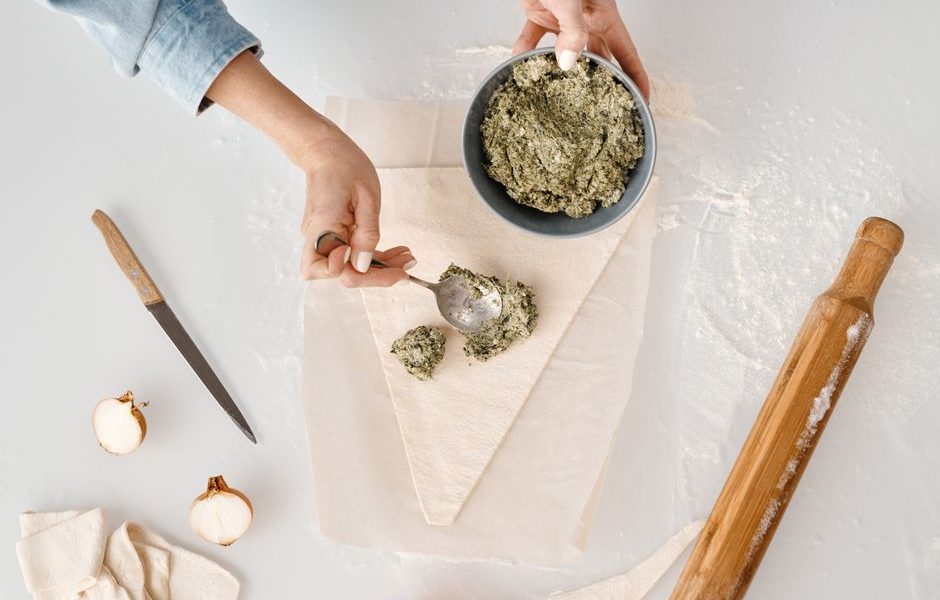
- Spread thinly. Use a palette knife or the back of a spoon. Leave a 1cm border on all four sides.
- Roll from the long edge. Keep the roll firm, but do not crush the layers. Use the paper to guide the pastry forward.
- Seal and chill. Brush the final edge with plant milk, press lightly, then wrap the log and chill for 20 to 30 minutes.
- Slice evenly. Cut rounds about 1.5cm thick with a sharp knife. Wipe the blade after every few cuts if filling sticks.
- Bake until the centre is dry. Put the slices on the hot tray with space between them. Bake for 20 to 25 minutes, turning the tray once, until puffed and golden.
Let the tray finish the job
Transfer the baked pinwheels to a wire rack after five minutes. Leaving them on the hot tray traps steam underneath and softens the base. They should cool for at least 10 minutes before serving. The centre will firm as it cools, while the pastry remains crisp at the edges.
Do not crowd the tray. Eighteen pieces usually fit comfortably on a standard 30cm by 40cm baking sheet. If the slices touch, they steam instead of browning. Bake a second tray if needed.
What to Do When the Recipe Goes Wrong
The fix depends on where the failure happens. These answers cover the problems that show up most often after the first attempt.
Why did the pinwheels unravel?
The log was too loose, the pastry was warm or the final edge was not sealed. Roll from the long side with steady pressure, then chill before cutting. If the outer edge still lifts, place each slice seam-side down on the tray. A small brush of plant milk under the seam can help it stick.
Why is the middle raw?
The slices may be too thick, the oven may be running cool or the tray may have been crowded. Use slices close to 1.5cm thick and give them space. An oven thermometer is useful because many domestic ovens can be 10 to 20 degrees away from the displayed setting. Bake until the centre pastry looks layered, not pale and wet. If the tops brown early, lower the tray one shelf and cover the pinwheels loosely with foil for the final five minutes.
Why did the filling leak out?
Too much pesto is the usual cause. Keep the layer thin and leave a border. Large tomato pieces can also push through the pastry, so chop them finely. A little leakage is harmless and adds flavour to the tray, but a puddle of oil signals an overfilled roll. Do not try to rescue it by adding flour to the filling. Reduce the pesto next time and blot the tomatoes more thoroughly.
How to Serve Them for the Best Texture
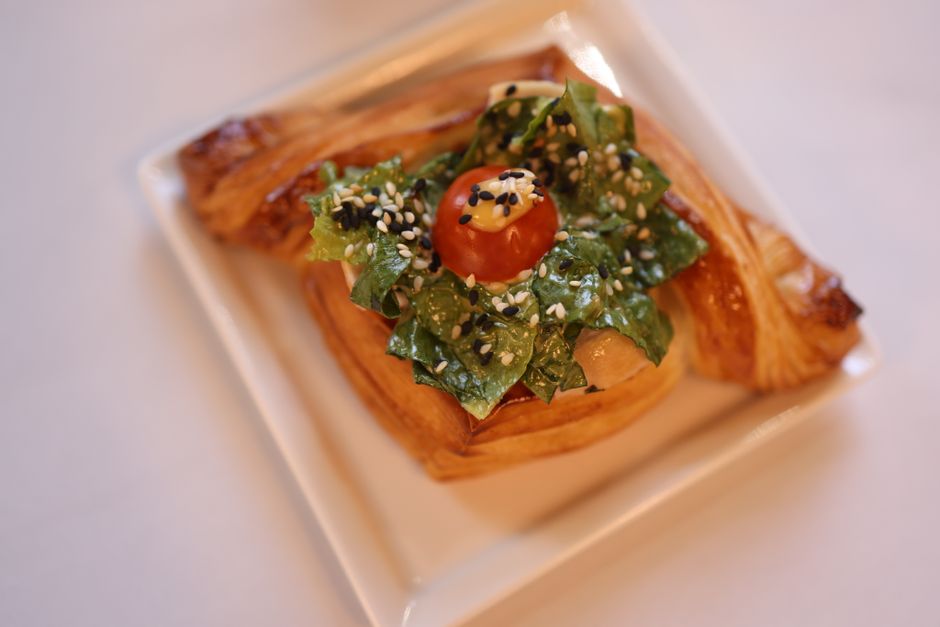
Serve these pinwheels warm or at room temperature, not straight from the fridge. That is the best balance between crisp pastry and a settled filling. They work as a packed-lunch snack, a picnic contribution or a small starter with soup.
Choose the right timing
For immediate serving, bake them 20 to 30 minutes before eating and leave them on a rack. For a picnic, bake them fully, cool them completely and pack them in a single layer in a shallow box. Add baking paper between layers if you must stack them. Avoid sealing warm pinwheels in a container because trapped steam softens the pastry.
Pair them with something sharp
A crisp green salad, lemon-dressed rocket or a tomato and cucumber salad cuts through the oil in the pesto. A bowl of red pepper soup makes the pinwheels feel like a complete lunch. Keep dips light: hummus can make the meal too rich, while a lemony white bean dip adds contrast without extra sweetness.
They are best on the day they are baked, but leftovers can be reheated at 180°C fan for 5 to 7 minutes. Avoid the microwave. It warms the filling quickly but turns puff pastry soft and chewy. The reheating step cannot restore the original crunch if the pinwheels have been stored while warm.
When to Change the Recipe
Change the filling when the main need changes. For children, reduce the garlic and use finely chopped tomatoes. For a nut-free batch, choose a pesto made with seeds or breadcrumbs, then check the packaging for cross-contamination information.
Use an alternative filling for different results
- For more protein: add 60g of mashed cannellini beans, but keep the mixture thick and spread it thinly.
- For a milder flavour: replace half the pesto with dairy-free cream cheese and add black pepper.
- For a sharper bite: mix in 1 teaspoon of lemon zest and 1 teaspoon of capers, finely chopped.
- For gluten-free guests: use a certified gluten-free vegan pastry, knowing that the layers may be less tall and more fragile.
Know when not to make pinwheels
Choose a flat tart if you need to use a wet filling or serve more than 12 people quickly. A tart is easier to spread, easier to check for doneness and less sensitive to rolling pressure. Choose bread-based crostini when you need a recipe that can sit out for several hours. Puff pastry loses its best texture over time, so pinwheels are a better choice for a short serving window.
For the classic use case—a vegan snack with crisp layers, basil flavour and a savoury tomato centre—these pinwheels remain the best format. Once you control moisture and chilling, the method is flexible enough to carry many other plant-based fillings.