Are you trying to make a roasted fruit crumble with soft, jammy fruit and a topping that stays crisp instead of sinking into juice? The result depends on four choices: how much topping you use, how much water the fruit releases, when you add a thickener, and how you manage oven heat. A make-ahead crumble needs one extra decision: keep the fruit and topping separate until the last possible moment.
This method works for apples, pears, berries, peaches, plums, cherries, and mixed fruit. It also explains why the same recipe can turn out dry with apples and soupy with frozen berries. The goal is not a fixed recipe. It is a reliable set of ratios and timings you can adjust to the fruit in front of you.
What is the best fruit-to-topping ratio for crumble?
Use weight, not a deep layer of crumbs
Start with a 3:1 fruit-to-topping ratio by weight. For a family-size crumble, use about 1.2 kg of prepared fruit and 400 g of topping. That gives each spoonful enough fruit without burying it under a thick, dry blanket of oats and flour. If you prefer a more biscuit-like dessert, move toward 2.5:1. If you want a lighter baked fruit dish, use 4:1.
The fruit weight should exclude stems, pits, cores, and bruised sections. A bowl that holds 1.2 kg of whole peaches will not produce 1.2 kg of usable fruit. Weigh the prepared pieces after cutting them. This small step prevents the common mistake of making too much topping for the amount of fruit.
Match the topping to the baking dish
A 20 cm or 8-inch square dish usually holds 700 to 900 g of prepared fruit and 225 to 300 g of topping. A 23 by 33 cm or 9 by 13-inch dish suits 1.2 to 1.5 kg of fruit and 400 to 500 g of topping. Keep the fruit layer around 4 to 5 cm deep. A very shallow layer loses moisture quickly; a very deep layer creates a pool of hot juice beneath the crumbs.
| Prepared fruit | Topping | Best dish | Typical bake time |
|---|---|---|---|
| 700-900 g | 225-300 g | 20 cm square | 30-40 minutes |
| 1.2 kg | 350-400 g | 23 x 33 cm | 40-50 minutes |
| 1.5 kg | 450-500 g | 23 x 33 cm, deep | 50-60 minutes |
Do not press the topping into a solid crust. Scatter it loosely so steam can escape. Large pieces stay crunchy; fine crumbs absorb juice faster. For the best balance, make some pieces about the size of peas and others about the size of almonds.
How do different fruits release juice in the oven?
Apples and pears release juice slowly
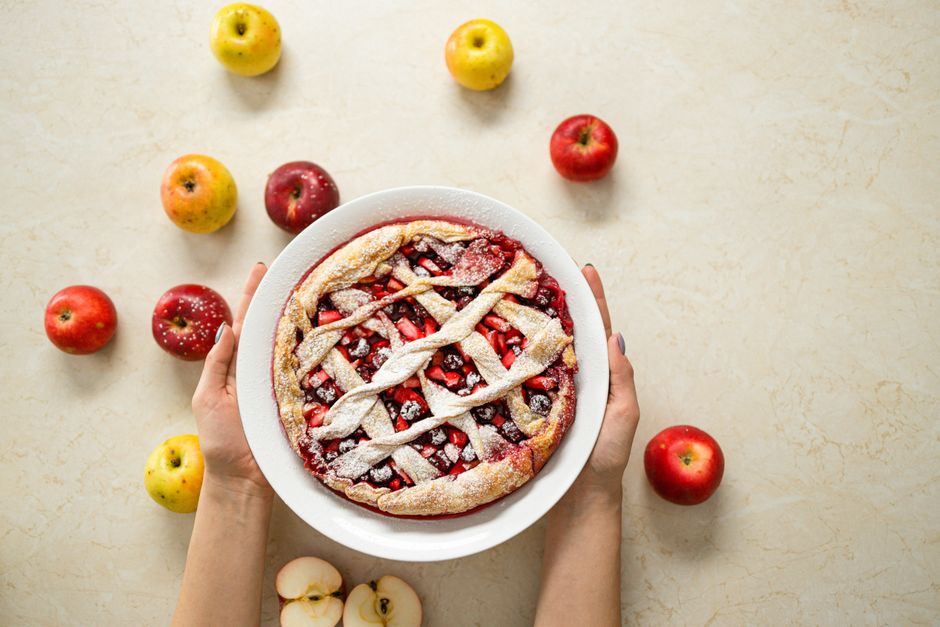
Firm apples and pears behave like the safest crumble fruit because their cells hold water fairly well during the first part of baking. They soften gradually, and their natural pectin helps the juices feel thick rather than watery. Use peeled or unpeeled fruit according to texture, but cut the pieces evenly. A mixture of 2 cm cubes and thin slices gives both structure and softness.
For apples, use little or no added thickener when the fruit feels firm and dry. A tablespoon of lemon juice and 50 to 75 g of sugar per kilogram of fruit usually creates enough syrup without making the base runny. Pears contain more water than many apples, especially when fully ripe. Add a small amount of flour or cornstarch if the pears feel soft enough to dent under light pressure.
Berries, peaches, plums, and cherries release juice quickly
Berries break down faster because heat bursts their thin skins. Raspberries and blackberries release juice early, while blueberries often keep their shape longer before splitting. Strawberries contain a great deal of water and can make a loose filling unless you cut them into large pieces and combine them with firmer fruit.
Peaches, nectarines, plums, and cherries sit between apples and berries. Ripe stone fruit can release a surprising amount of juice, but the amount varies with ripeness. A firm plum may need only a little flour. A very soft peach may need cornstarch or tapioca starch. Cherries also bring a high liquid load after pitting, so give them a thickener if you use more than half a kilogram.
Frozen fruit acts differently from fresh fruit. Ice crystals damage the cell walls, so frozen berries release liquid almost as soon as they heat. Do not thaw and drain them unless the recipe specifically tells you to. The lost juice carries flavor. Add the thickener while the fruit remains frozen, then give the crumble an extra 10 to 15 minutes in the oven.
Mixed fruit needs a middle-ground decision. For 1 kg of apples with 300 g of blackberries, treat the mixture as juicy because the berries will dominate the liquid. For apples with only a handful of blueberries, keep the thickener low. The fruit that releases the most water controls the filling.
When should you add a thickener to fruit crumble?
Should apples or pears always get cornstarch?
No. Firm apples rarely need much thickener, and too much cornstarch can create a cloudy, rubbery gel. Use 1 tablespoon of plain flour per 700 g of apples when you want a softly bound filling. Use 1 tablespoon of cornstarch instead when the apples look especially juicy or when you add another wet fruit.
Pears need a closer look. If they are firm and slightly underripe, use the apple amount. If they are ripe, fragrant, and soft, use 1 tablespoon of cornstarch per 500 to 600 g. Toss the fruit thoroughly so the powder coats every piece instead of forming a lump at the bottom of the dish.
How much thickener do berries and stone fruit need?
For 500 g of fresh berries, start with 1 tablespoon of cornstarch or 1 1/2 tablespoons of tapioca starch. Use 2 tablespoons of cornstarch for frozen berries. Tapioca gives a clearer, more glossy filling and tolerates freezing well, but it can leave small gelled beads if the fruit does not produce enough liquid.
For peaches, plums, or cherries, use 1 tablespoon of cornstarch per 500 g of prepared fruit. Add another teaspoon if the fruit is very ripe or if the dish contains frozen fruit. Flour works when you want a more opaque, softly thickened filling, but it needs a full bake to lose its raw taste.
What happens if you add too much thickener?
The filling may look perfect when it first leaves the oven and then set into a stiff paste as it cools. Start conservatively. The fruit will continue to thicken for 20 to 30 minutes after baking, and a crumble should spoon easily rather than hold a clean slice. If you are unsure, use a little less starch and bake the dish in a shallow layer so excess moisture can evaporate.
What oven heat keeps a crumble topping crisp?
Use a two-stage bake
The two-stage bake is the most reliable method for juicy fruit. Heat the oven to 220°C or 425°F. Bake the prepared fruit, uncovered, for 15 to 20 minutes, until it starts to bubble at the edges. Add the cold topping, reduce the oven to 190°C or 375°F, and bake for another 25 to 35 minutes.
- Preheat the oven fully. A partly heated oven gives the fruit time to steam before the topping browns.
- Roast the fruit alone until the syrup begins to bubble. This lets you judge the liquid before adding the crumbs.
- Scatter cold topping over the hot fruit. Cold butter takes longer to melt and gives the crumbs more time to set.
- Lower the heat to 375°F after adding the topping. The fruit stays active while the flour, oats, sugar, and butter brown at a steadier rate.
- Rotate the dish once if your oven has a hot side. Stop when the center bubbles slowly and the topping looks deeply golden.
A single-temperature bake also works. Use 190°C or 375°F for 40 to 50 minutes with fresh apples, or 50 to 65 minutes with frozen berries. The topping may brown before the filling thickens, so cover it loosely with foil if the crumbs become dark while the center still looks watery.
Do not bake at 230°C or 450°F for the whole time. The sugar can scorch before the fruit cooks through. Do not cover the crumble with foil from the start either. Trapped steam softens the topping. Cover only the top, and only after it reaches the color you want.