Why a vegan cherry traybake does not need eggs
A common baking mistake is to assume that removing eggs and dairy leaves a cake flat, crumbly or dry. This traybake proves the opposite. The right balance of plant milk, oil, sugar and raising agents gives the sponge enough moisture and lift, while ground almonds add richness without making the crumb heavy.
What replaces the structure of an egg?
Eggs normally bind ingredients, add water and help a cake set as it cools. In this recipe, the flour and ground almonds provide the main framework. Plant milk hydrates that mixture, oil keeps the crumb soft, and baking powder creates lift. A small amount of lemon juice reacts with the bicarbonate of soda, which helps the batter rise before the heat sets it.
Why cherries can make cake soggy
Cherries contain a lot of water. Fresh cherries release juice as they bake, while frozen cherries release even more as they thaw. The answer is not to remove them. Instead, drain or blot them well, coat them lightly with flour, and spread them across the batter rather than placing them in one thick layer. This keeps the fruit flavour clear and reduces wet pockets.
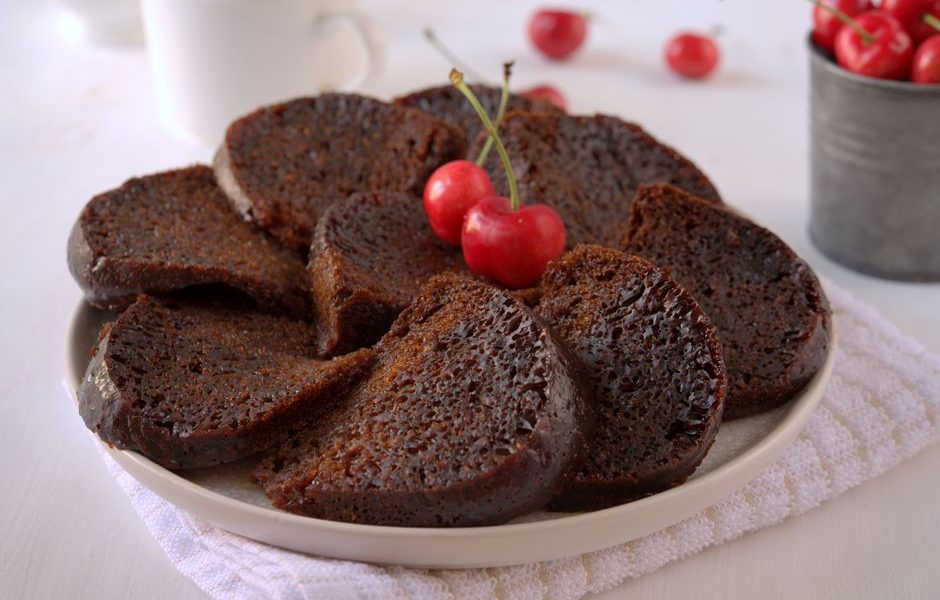
The result is a soft almond sponge with sharp cherry pieces and a lightly crisp top. It is a practical bake for afternoon tea, packed lunches or a dessert served warm with dairy-free custard.
Ingredients and measurements for a UK traybake
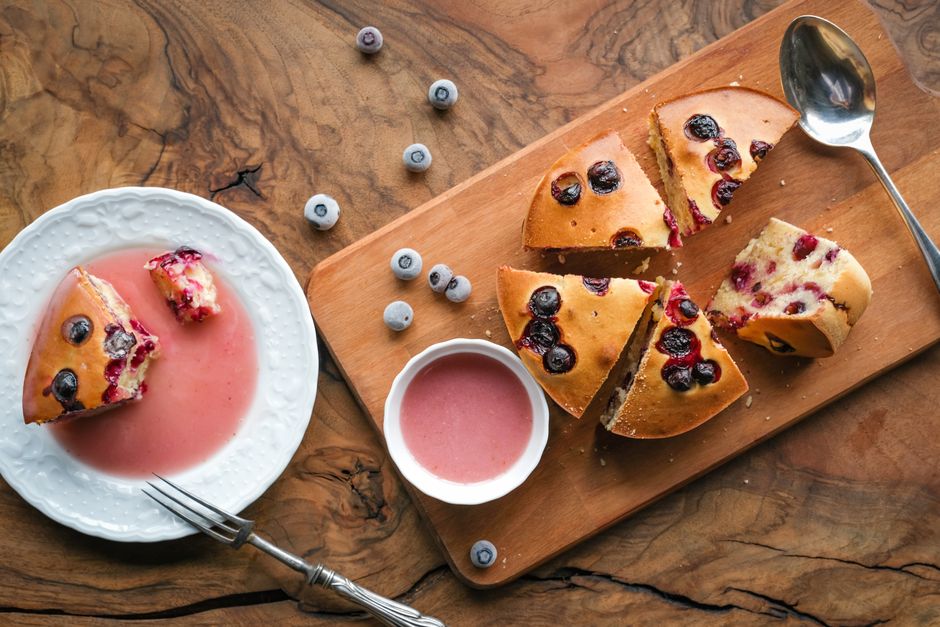
Use a 20cm square tin, ideally with a loose base or a sheet of baking parchment hanging over two sides. The quantities below make 12 moderate squares. Weighing the flour and sugar in grams gives a more reliable result than using cup measures because small changes in flour volume can make a vegan sponge too dry.
| Ingredient | Amount | Purpose |
|---|---|---|
| Plain flour | 220g | Forms the main cake structure |
| Ground almonds | 100g | Adds moisture, flavour and a tender crumb |
| Light brown sugar | 160g | Sweetens and helps retain moisture |
| Baking powder | 2 teaspoons | Provides lift |
| Bicarbonate of soda | 1/2 teaspoon | Works with the lemon juice |
| Fine salt | 1/4 teaspoon | Sharpens the almond and cherry flavours |
| Unsweetened plant milk | 220ml | Hydrates the batter |
| Neutral oil | 90ml | Keeps the crumb soft |
| Lemon juice | 1 tablespoon | Balances sweetness and activates the soda |
| Vanilla extract | 1 teaspoon | Adds depth |
| Pitted cherries | 250g | Provides the fruit layer |
Choosing the cherries
Use fresh or frozen pitted cherries. If using frozen fruit, do not thaw it completely on the worktop. Let it soften just enough to separate the pieces, then blot away surface ice and liquid. Tinned cherries can work, but drain them thoroughly and avoid cherries stored in heavy syrup, which can make the top overly sweet and wet.
Choosing the plant milk and oil
Unsweetened soya milk gives the most dependable batter because it has enough body to mix with the lemon juice. Oat milk also works and gives a slightly sweeter flavour. Use sunflower, rapeseed or another neutral oil. Olive oil is suitable only if you want its distinctive taste in the finished cake.
How to make the cherry and almond traybake
Heat the oven to 180°C conventional or 160°C fan. Grease a 20cm square tin and line the base and sides with parchment. The oven must be fully hot before the batter goes in; a slow start can leave the centre dense.
Mix the dry ingredients
- Put the flour, ground almonds, sugar, baking powder, bicarbonate of soda and salt in a large bowl.
- Whisk for about 30 seconds to break up almond or flour pockets.
- Reserve two teaspoons of the dry mixture for coating the cherries.
Make and fold the batter
- In a jug, combine the plant milk, oil, lemon juice and vanilla.
- Pour the liquid into the dry ingredients and stir with a spatula until no dry flour remains.
- Stop mixing as soon as the batter looks even. A few small lumps are harmless; vigorous stirring can make the sponge tight.
- Toss the cherries with the reserved dry mixture, then fold three-quarters into the batter.
Bake and cool
- Scrape the batter into the lined tin and level the surface.
- Scatter the remaining cherries on top, pressing them in very lightly.
- Bake for 38 to 45 minutes, until the centre springs back and a skewer inserted between cherries comes out with only a few moist crumbs.
- Leave the cake in the tin for 15 minutes, then transfer it to a rack. Cool fully before cutting.
The batter should be thick enough to hold the fruit in place but loose enough to spread without force. If it seems unusually stiff, add one tablespoon of plant milk. Do not add several extra spoonfuls at once.
How to prevent a soggy centre
The most serious failure point in a cherry traybake is not the lack of eggs. It is excess moisture trapped around the fruit. A cake can look golden at the edges while the middle remains underbaked. This happens most often when wet cherries, a small tin or an inaccurate oven work together.
Control the fruit moisture
Pat fresh or thawed cherries dry with kitchen paper. Frozen cherries need particular care because frost melts into the batter during baking. Do not add a bowl of thawing juice. If using tinned fruit, tip it into a sieve for at least 10 minutes, then blot it. Halved cherries are better than whole cherries in a square cake because they distribute more evenly and create fewer large wet pockets.
Use the correct tin
A 20cm square tin gives the recipe enough depth for a soft centre without making the sponge too tall. A smaller tin creates a deeper cake that needs longer to bake, while a large roasting tin spreads the batter thinly and can dry the edges before the middle sets. Glass dishes also heat more slowly than metal tins, so they may need a longer bake and careful checking.
Check the centre, not just the colour
Begin checking at 38 minutes. Push a skewer into a section of sponge rather than directly through a cherry. A few damp crumbs are fine; glossy batter is not. If the top is brown but the middle is wet, cover the cake loosely with foil and bake for another 8 to 12 minutes. Letting it cool will not turn raw batter into a set crumb.
The clearest verdict is simple: dry the cherries, use the stated tin size and test the centre. Those three steps solve most soggy traybake problems.
Common mistakes and the fixes that work
Vegan cakes reward accurate handling. Small changes can alter the crumb, especially when fruit adds extra liquid.
- Overmixing the batter: Stir only until the flour disappears. Mixing for several minutes develops gluten and can produce a chewy, tight sponge.
- Using self-raising flour without changing the raising agents: This can make the cake rise quickly and collapse. Use plain flour for the listed quantities.
- Adding un-drained cherries: Surface liquid dilutes the batter around each piece. Drain and blot the fruit first.
- Replacing oil with extra plant milk: Milk adds water but not the fat that keeps the crumb tender. If you need a lower-fat bake, use a recipe designed for that change.
- Opening the oven too early: Leave the door shut for at least 30 minutes. A sudden drop in heat can make the centre sink.
- Cutting the cake while hot: The crumb is still setting. Wait until it is cool, or the squares may appear gummy and break apart.
- Ignoring cherry stones: Even fruit sold as pitted can contain an occasional stone. Check each cherry before adding it.
If the finished cake is slightly dry, serve it with warm custard, dairy-free cream or a spoonful of cherry compote. If it is wet in the middle, return it to a moderate oven rather than trying to disguise the texture with icing. A topping can hide a problem, but it cannot fix an unset crumb.
Vegan and gluten-free alternatives: what changes?
Can you make it gluten-free?
Yes, but use a gluten-free plain flour blend that contains a binder such as xanthan gum, or add about 1/4 teaspoon xanthan gum if the blend has none. The batter may be slightly more fragile, so cool the cake completely before slicing. A gluten-free blend often absorbs liquid differently from wheat flour. If the batter looks much thicker than a soft spoonable mixture, add one tablespoon of plant milk and reassess.
Can you use frozen or tinned cherries?
Frozen cherries are the best alternative to fresh because they retain a bright flavour and are available all year. Use them partly frozen and blot away surface moisture. Tinned cherries are acceptable when fresh fruit is unavailable, but choose fruit in juice rather than thick syrup. Drain them well and expect a softer, sweeter result.
Can you make it without almonds?
Replace the 100g ground almonds with 80g plain flour and 20g extra cornflour. The texture will be less rich and slightly less moist, but the traybake will still hold together. Do not replace the almonds with 100g extra flour without adjusting the liquid, because that can make the cake heavy.
For a sharper bake, reduce the sugar by 20g and add a little lemon zest. For a warmer flavour, add 1/2 teaspoon almond extract, but use it sparingly because it can overpower the cherries. The strongest alternative is the gluten-free version with frozen cherries: it keeps the fruit-led character while meeting two common dietary needs.