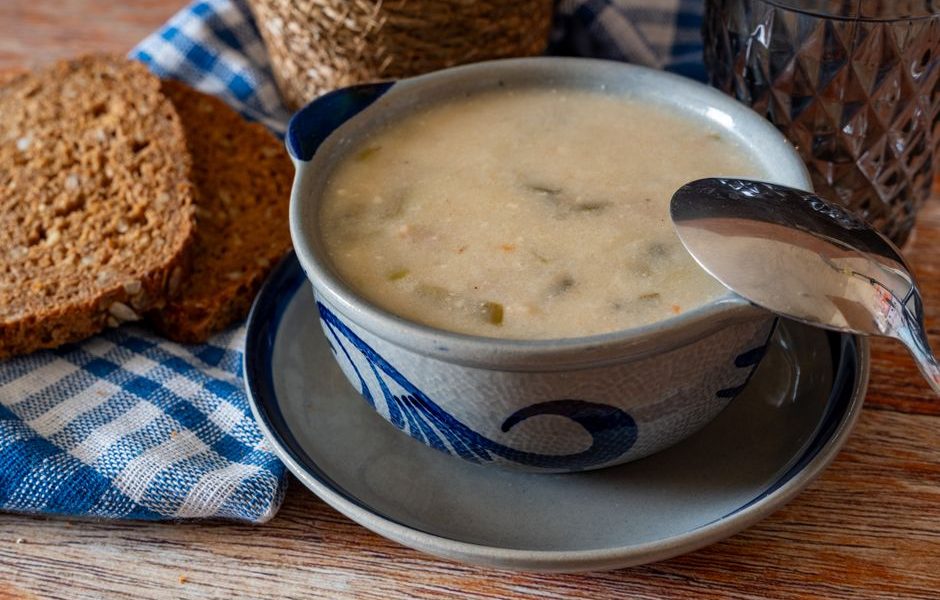
Their starch thickens the cooking liquid as the pieces soften, while leeks bring a mild onion flavour that tastes sweeter after slow cooking.
The recipe below uses plant-based stock and oat milk, but the method works with other unsweetened plant milks. The key decisions are simple: cook the leeks gently, use floury potatoes, blend only part of the pan if you want texture, and add salt in stages.
Why do leeks and potatoes make a creamy vegan soup?
The first principle is texture. Traditional leek and potato soup often gets its body from cream, but cream is not the only source of richness. Potatoes release starch as they simmer. When that starch mixes with stock and the softened leek, it gives the liquid a smooth, rounded feel. Blending then breaks the vegetables into smaller particles, making the soup seem thicker without adding dairy fat.
How potato starch replaces dairy cream
Choose floury or all-rounder potatoes rather than very waxy salad potatoes. Maris Piper, King Edward, or another floury British potato usually breaks down well. Peel the potatoes if the skins are rough, then cut them into pieces no larger than 2 centimetres. Small, even pieces cook at the same speed, which matters because undercooked potato leaves a gritty soup while overcooked leek can taste flat.
Do not rinse the chopped potatoes after cutting. Rinsing removes surface starch that can help the soup thicken. The potatoes will cook directly in the stock, so any starch that leaves the pieces stays in the pan. That is useful here.
Why gentle leek cooking matters
Leeks contain more water and less sharpness than many onions, but they still need time in the pan. Cook the white and pale green parts over medium-low heat for 8 to 10 minutes with oil and a pinch of salt. The aim is soft and glossy, not brown. Browning is not forbidden, but it changes the soup towards a roasted, sweeter flavour and can make the delicate leek taste less clear.
Use the dark green tops for stock if you have them, but inspect them carefully. Soil often sits between the layers. Slice the leeks first, place them in a bowl of cold water, separate the rings with your fingers, and lift them out rather than pouring the water and grit back over them. Clean preparation is part of the recipe, not an optional extra.
What ingredients and quantities make four bowls?

If you prefer a thinner bowl, keep 100 millilitres of hot stock aside and add it only after blending.
| Ingredient | Amount | Purpose |
|---|---|---|
| Leeks, trimmed and sliced | 3 medium, about 450 g | Sweet, mild onion flavour |
| Potatoes, peeled and diced | 600 g | Body and natural creaminess |
| Olive oil | 2 tablespoons | Softens the leeks and carries flavour |
| Garlic, finely chopped | 2 cloves | Background savoury flavour |
| Vegetable stock | 900 ml | Cooking liquid |
| Unsweetened oat milk | 150 ml | Extra softness and richness |
| Fresh thyme | 4 sprigs, or 1 teaspoon dried | Herbal depth |
| Fine salt | 1 teaspoon, then adjust | Brings the flavours into focus |
| Black pepper | Half a teaspoon | Warm finish |
| Lemon juice | 1 teaspoon | Balances the starch and salt |
Which potato and milk choices work best?
Floury potatoes give the smoothest result after blending. All-rounder potatoes also work, but the finished soup may need a little less stock. Waxy potatoes hold their shape and can leave the soup thinner, so they are better when you plan to blend only a small portion. Avoid sweetened or vanilla plant milk. Even a small amount of sugar can make a savoury soup taste strangely dessert-like.
Oat milk is the easiest choice because it adds body without a strong flavour. Unsweetened soya milk gives a slightly more neutral result and usually handles heat well. Coconut milk is a deliberate flavour change, not a direct substitute: 150 ml will make the soup taste noticeably coconutty. Use it only if that flavour suits the meal.
What can be added without losing the classic flavour?
A small carrot adds sweetness and colour, while 100 g of frozen peas adds freshness near the end. Neither belongs in the most traditional version, so use them when you want a more substantial bowl rather than a classic pale soup. A teaspoon of Dijon mustard can deepen the savoury taste, but add it after blending and taste before adding more.
For a richer finish, stir in one tablespoon of vegan cream or extra-virgin olive oil. The soup does not need either ingredient to become creamy. That is the useful distinction: added fat changes richness, while potato starch creates the basic texture.
How do you cook creamy vegan leek and potato soup?
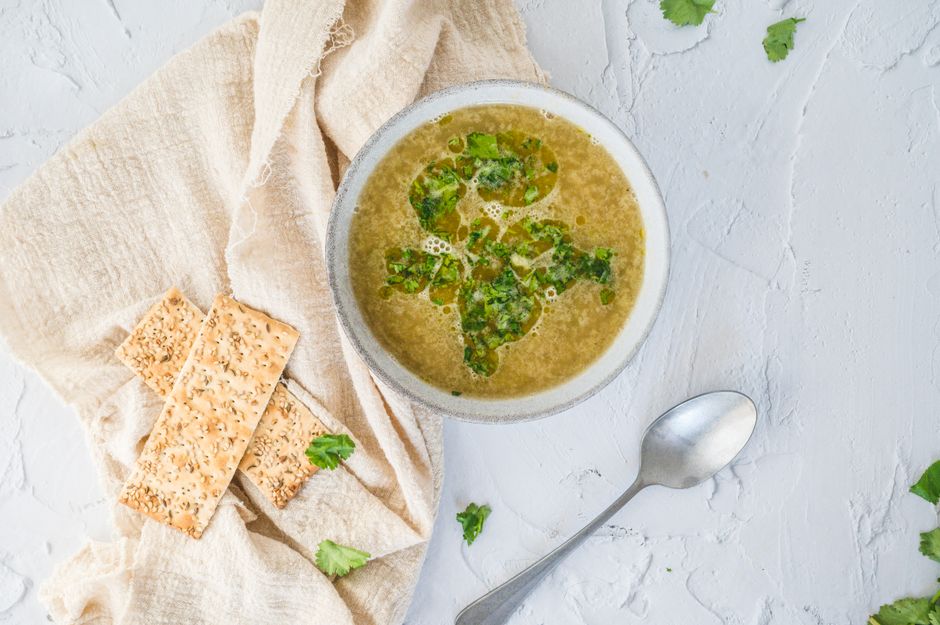
The safest method is a controlled sequence. Each step has a reason, and skipping one can change the flavour or texture.
- Prepare the vegetables. Trim the roots and tough dark green tops from the leeks. Slice the pale sections into thin rounds and wash them well. Peel the potatoes and cut them into 2-centimetre cubes. Chop the garlic finely. Keep the pieces close in size so they cook evenly.
- Soften the leeks. Warm the olive oil in a large saucepan over medium-low heat. Add the leeks and half a teaspoon of the salt. Cook for 8 to 10 minutes, stirring every minute or two. They should collapse and look glossy. If the pan starts to catch, add one tablespoon of water and reduce the heat.
- Add garlic and thyme. Stir in the garlic and thyme for 60 seconds. Garlic burns quickly, so do not leave it in the hot oil while you prepare another ingredient. The short cooking time removes its raw edge without making it bitter.
- Simmer the potatoes. Add the diced potatoes and stock. Scrape the base of the pan with a wooden spoon. Bring the liquid to a gentle boil, then reduce the heat. Partly cover the saucepan and simmer for 18 to 22 minutes, until a potato piece crushes easily against the side of the pan.
- Blend to the texture you want. Remove the thyme stems. For a fully smooth soup, use a stick blender in the pan and move it slowly through the liquid. For a textured soup, blend only half the pan, or remove two ladlefuls, blend the rest, and return the reserved pieces. Do not blend aggressively for several minutes; that can make potatoes gluey.
- Add plant milk carefully. Stir in the oat milk after blending. Warm the soup for 2 to 3 minutes, but do not boil it hard. A strong boil can make plant milk look split and can dull the fresh leek flavour.
- Balance the finish. Add the remaining salt, black pepper, and lemon juice. Taste from a clean spoon. If the soup tastes flat, add salt a pinch at a time. If it tastes heavy, add another half teaspoon of lemon juice. If it is too thick, use hot water or stock rather than cold liquid.
- Rest before serving. Turn off the heat and leave the soup for 5 minutes. The starch settles into its final texture during this short rest. Serve with black pepper, chopped chives, toasted bread, or a thin drizzle of olive oil.
How long should the soup simmer?
Most pans need 18 to 22 minutes after the stock reaches a gentle simmer. The time depends on the size of the potato pieces and the width of the saucepan. Do not rely on the clock alone. Test a piece with a fork: it should break with light pressure. If it resists, keep cooking for another 3 to 5 minutes. Blending firm potatoes produces a rough soup and puts extra strain on a stick blender.
How can you control smoothness?
A completely smooth soup looks polished, but a partly blended version has a more satisfying bite and does not require perfect vegetable cuts. For a family meal, blend about two-thirds and leave the rest chunky. For a starter, blend until smooth and pass it through a sieve only if you want a restaurant-style finish. That extra step is rarely needed at home and removes some of the useful vegetable texture.
What mistakes make vegan leek and potato soup thin, bitter, or gluey?
Most failed batches come from a small number of predictable errors. The corrections below are practical, not cosmetic.
Why did blending make the soup sticky?
Potatoes release more starch when they are beaten hard. That is why a stick blender should move slowly and stop as soon as the soup reaches the desired texture. Overcooking can also make the problem worse. If the soup becomes gluey, loosen it with hot stock and add a handful of chopped parsley or chives for contrast. The flavour may still be good, but the texture will not return fully to a light purée.
Another common mistake is salting the stock heavily at the start. Stock varies widely in salt content, so the final seasoning must wait until the potatoes have cooked and the liquid has reduced. Add a small amount early to help the leeks soften, then make the final decision at the end.