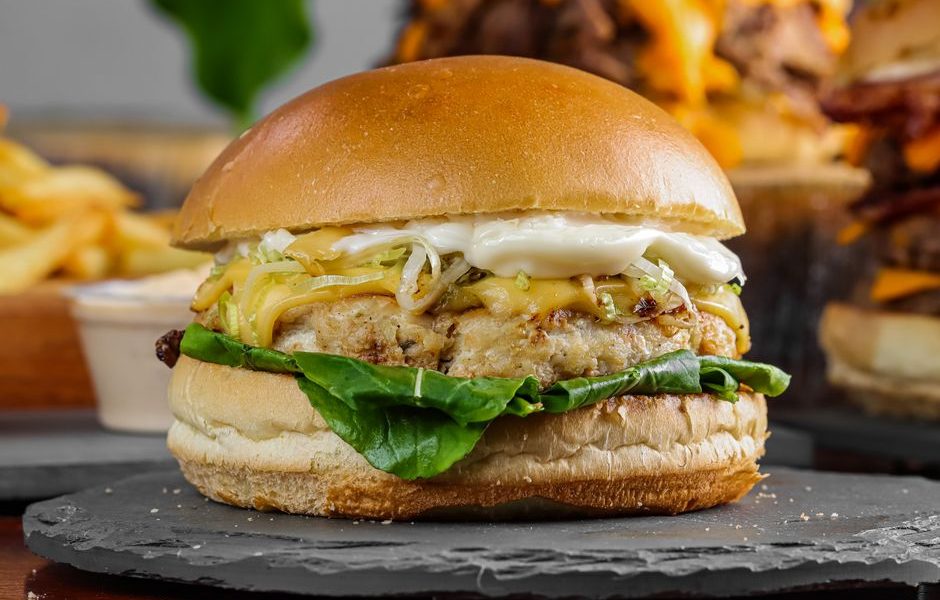
These black bean barbecue burgers have crisp edges, a firm centre, and enough smoky flavour to stand up to a toasted bun. The key is simple: dry the beans, keep the mixture coarse, add a real binder, and chill the patties before cooking. Skip those steps and you get bean paste.
What Makes a Black Bean Burger Hold Together?
The formula in one glance
A good vegan burger needs three jobs covered. The beans provide body, the oats absorb loose moisture, and ground flax mixed with water creates a sticky binder. Barbecue sauce adds flavour, but too much makes the mixture wet and sweet. Use two tablespoons. That is enough.
| Ingredient | Amount | Job in the burger |
|---|---|---|
| Black beans, drained and rinsed | 2 cans, 15 ounces each | Main structure and protein |
| Quick oats | 1/2 cup | Absorbs moisture and adds bite |
| Ground flaxseed | 1 tablespoon | Forms the plant-based binder |
| Water | 2 1/2 tablespoons | Hydrates the flax |
| Barbecue sauce | 2 tablespoons | Adds smoky, sweet flavour |
| Tomato paste | 2 tablespoons | Deepens flavour without excess liquid |
| Finely chopped onion | 1/2 cup | Adds savoriness and moisture |
| Smoked paprika | 1 teaspoon | Builds the barbecue flavour |
The texture target
Drain the beans for at least five minutes, then spread them on a clean towel and pat them dry. Wet beans are the main reason homemade patties collapse. Mash about three-quarters of the beans with a fork. Leave the rest partly whole. A completely smooth mixture cooks like a dip, not a burger.
Pulse the oats briefly if they are large and dry, but do not turn them into flour. You want small flakes that disappear into the mixture while leaving a little chew. Mix everything by hand until the ingredients hold when squeezed. If the mixture feels wet, add one tablespoon of oats. If it cracks before shaping, add one teaspoon of water.
How to Make Black Bean Barbecue Burgers Step by Step
1. Build the binder first
- Stir 1 tablespoon of ground flaxseed with 2 1/2 tablespoons of water. Leave it for 5 to 10 minutes, until it becomes thick and gel-like.
- Heat the oven to 220°C (200°C fan) if you plan to bake the burgers. For a frying pan, you can prepare the mixture while the pan heats later.
- Drain and rinse two 15-ounce cans of black beans. Pat them dry. This step takes one minute and prevents a soft centre.
- In a large bowl, mash three-quarters of the beans with a fork. Keep some pieces visible.
2. Mix and shape
- Add 1/2 cup quick oats, 1/2 cup finely chopped onion, two minced garlic cloves, 2 tablespoons tomato paste, 2 tablespoons barbecue sauce, 1 tablespoon soy sauce or tamari, 1 teaspoon smoked paprika, 1/2 teaspoon ground cumin, and 1/2 teaspoon salt.
- Stir in the flax mixture. Mix until the ingredients cling together when pressed.
- Divide the mixture into four portions. Shape each into a patty about 2cm thick and 10cm wide. Press the edges firmly so they do not split.
- Chill the patties for at least 20 minutes. Thirty minutes is better. Cold patties are easier to turn and less likely to crack.
3. Cook until the surface sets
For the oven, place the patties on an oiled baking sheet and brush the tops with a little oil. Bake for 12 minutes, flip carefully, then bake for another 10 to 12 minutes. For a frying pan, use 1 tablespoon of neutral oil over medium heat. Cook for 4 to 5 minutes per side. Let the burgers rest for 5 minutes before serving.
The Skillet Wins for Crisp Edges
Use a frying pan if you want the best black bean barbecue burgers. The direct contact gives the outside a browned crust that an oven struggles to match. The oven is easier for a crowd, but the frying pan produces the stronger contrast between crisp edges and a tender centre.
Control the heat, or the crust will fail
Heat the pan over medium, not high. Add the oil only when the pan feels hot. A small drop of water should sizzle and vanish quickly. If the oil smokes, the pan is too hot. A high flame burns the barbecue sauce and onion before the middle warms through.
Place the patties in the pan with room between them. Crowding traps steam and softens the crust. Cook for 4 to 5 minutes without moving them. That first side needs uninterrupted contact with the pan. When the edges look darker and the patty releases with a thin spatula, flip it once. Repeated flipping breaks the surface.
Why the oven still has a place
Baking works better when you need six or eight burgers at once. Arrange the patties in a single layer, leave at least 2.5cm between them, and oil both sides lightly. Bake at 220°C (200°C fan) for 22 to 24 minutes total, flipping at the halfway point. The edges will be firm, but the crust will be lighter than a frying pan version.
Do not press down on the patties while they cook. That pushes out moisture and makes the centre dense. Do not cover the pan either. Steam is useful for vegetables. It is the enemy of a browned burger.
Black Bean Burger Questions, Answered
Why are my patties falling apart?
Usually, the beans were too wet or the mixture was not chilled. Pat the beans dry before mashing, then give the shaped patties at least 20 minutes in the refrigerator. Also check the size. Patties thicker than 2cm stay soft in the middle while the outside becomes fragile. If the mixture still feels loose, mix in one tablespoon of oats and wait five minutes before shaping again.
Can I make the mixture ahead of time?
Yes. Keep the mixed burger dough in a covered container for up to 24 hours. Shape the patties just before cooking, or shape them in advance and separate them with parchment. The mixture becomes easier to handle after a few hours because the oats absorb more moisture.
Can I freeze these vegan burgers?
Freeze the uncooked patties on a tray until firm, then transfer them to an airtight container with parchment between each layer. Cook them from thawed for the most even result. If cooking from frozen, use medium-low heat and add 3 to 4 minutes per side. High heat will brown the outside before the centre defrosts.
What should go on top?
Keep the toppings sharp and fresh. Pickled red onions, shredded cabbage, sliced jalapeno, and a spoonful of barbecue sauce cut through the dense bean mixture. Avoid piling on wet tomato, watery lettuce, and too much sauce at once. A soggy bun can ruin a properly cooked patty faster than a cooking mistake.
When These Burgers Fail—and When to Choose Something Else
Fix the common failure modes
- Mushy centre: Dry the beans more thoroughly, add one or two tablespoons of oats, and cook the patties longer over moderate heat.
- Crumbly edges: The patties may be too thin, too dry, or missing enough binder. Add the flax mixture and press the edges firmly during shaping.
- Burnt outside: The pan is too hot, or the barbecue sauce contains a lot of sugar. Lower the heat to medium-low and cook for an extra minute or two.
- Bland flavour: Add salt, smoked paprika, cumin, garlic, and a little acid. One teaspoon of lime juice can wake up the whole mixture.
- Flat texture: Leave some beans partly whole. A smooth puree removes the bite that makes the burger feel substantial.
Know when not to use this recipe
These burgers are not the best choice when you want a rare-style centre, a very juicy patty, or a fast dinner with no chilling time. A commercial frozen patty will cook faster and hold a cleaner shape. A lentil-and-mushroom patty gives a softer, more savoury texture. A chickpea burger works better for Mediterranean toppings and herbs. Choose the black bean version when you want smoky barbecue flavour, pantry ingredients, and a crisp-edged burger that feels like dinner rather than a side dish.
Plant-based burgers are moving toward better texture through simple ingredients, stronger binders, and smarter cooking methods. That is good news. The best future version will not need to imitate beef; it will make beans, grains, and vegetables taste worth choosing on their own.