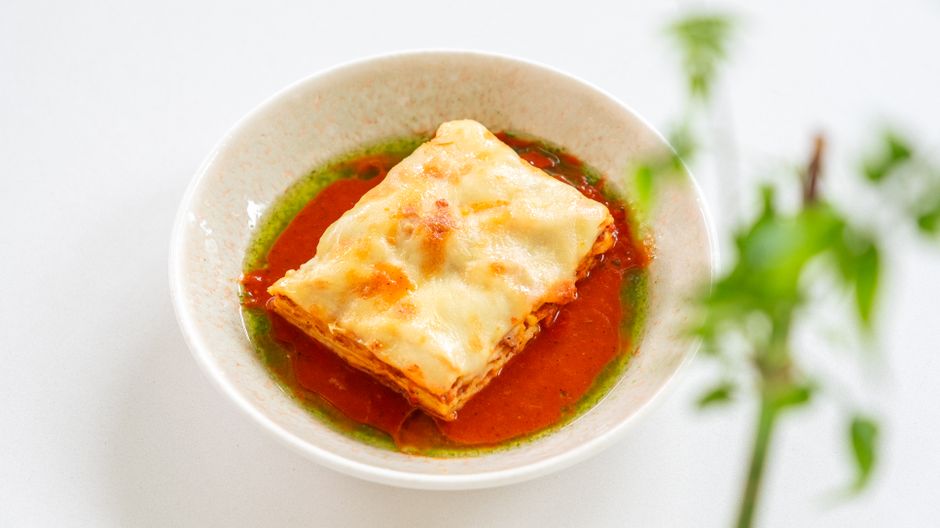
The fix is simple: cook the vegetables hard, thicken the white sauce properly, and rest the dish before slicing. This vegan spinach and mushroom lasagne serves six, uses easy-to-find UK ingredients, and gives you firm layers with a creamy centre.
Why This Vegan Lasagne Holds Its Shape
The real problem is excess water
Lasagne needs moisture, but it does not need loose liquid. Dried pasta sheets absorb some sauce as they cook. The remaining sauce should cling to the vegetables and pasta rather than pool at the bottom of the dish. Mushrooms release water as their cells break down in the pan. Spinach collapses quickly and can add even more moisture, especially if you use frozen leaves without squeezing them well.
The best result comes from treating each filling as a separate job. Brown the mushrooms until their liquid has evaporated. Wilt the spinach briefly, then drain it. Build a white sauce that coats the back of a spoon. These steps create a lasagne that cuts cleanly instead of sliding across the plate.
Why the white sauce matters
A vegan béchamel gives the dish its richness without relying on cheese. Olive oil or vegan block replaces butter, plain flour provides structure, and unsweetened oat or soya milk creates the creamy base. Nutritional yeast adds a savoury note, but it cannot thicken the sauce. The flour and fat do that work.
The clear verdict: bake this lasagne when you want a comforting main course that can be prepared ahead. It is more reliable than a tomato-heavy version because the white sauce softens the pasta while the mushroom filling supplies deep, savoury flavour.
Ingredients and Quantities for Six Servings
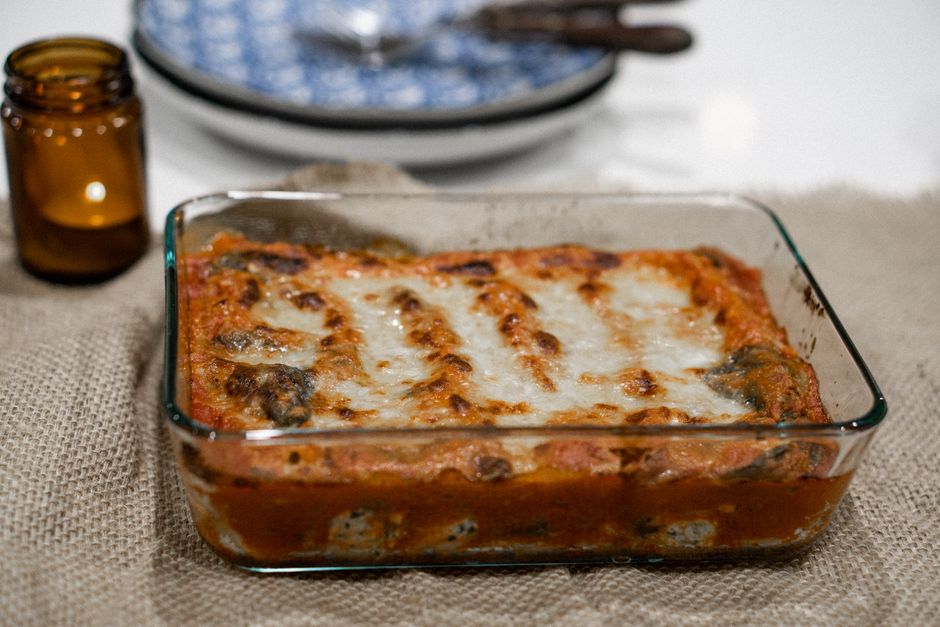
Use a 23 x 33cm baking dish, roughly 2.5 litres in capacity. The quantities below create three pasta layers and enough sauce to cover the top. Choose plain, unsweetened plant milk. Sweetened milk will make the béchamel taste wrong.
Vegetable and pasta layer
| Ingredient | Amount | Purpose |
|---|---|---|
| Lasagne sheets | 250g | Three layers of pasta |
| Chestnut mushrooms | 500g, thinly sliced | Savoury filling |
| Fresh spinach | 300g | Green vegetable layer |
| Brown onion | 1 large, about 180g | Sweetness and depth |
| Garlic | 3 cloves, finely chopped | Aromatic base |
| Olive oil | 2 tablespoons | Cooking the filling |
| Dried thyme | 1 teaspoon | Herbal flavour |
Vegan béchamel
| Ingredient | Amount | Purpose |
|---|---|---|
| Olive oil or vegan block | 50g | Fat for the roux |
| Plain flour | 50g | Thickener |
| Unsweetened oat or soya milk | 750ml | Creamy sauce base |
| Nutritional yeast | 3 tablespoons | Cheesy, savoury flavour |
| Dijon mustard | 1 teaspoon | Sharpness |
| Fine salt | 1 teaspoon, plus more to taste | Seasoning |
| Black pepper | ½ teaspoon | Seasoning |
Check the lasagne packet because some dried sheets contain egg. For a fully vegan dish, use sheets labelled vegan. The recipe does not need vegan cheese; the béchamel gives the top enough colour and flavour.
How to Make Vegan Spinach and Mushroom Lasagne
Cook the filling before assembling. That single decision gives you the biggest improvement in texture. A cold, wet filling will steam inside the dish and dilute the sauce.
Prepare the mushrooms and spinach
- Heat the oven to 190°C fan, or 210°C conventional. Put a large frying pan over medium-high heat.
- Add one tablespoon of olive oil and the sliced mushrooms. Spread them out. Cook for 8 to 10 minutes, stirring only every few minutes, until their liquid has evaporated and the edges turn brown.
- Add the remaining oil, onion and garlic. Cook for 5 minutes until the onion softens. Stir in the thyme, half a teaspoon of salt and the black pepper.
- Add the spinach in two handfuls. Turn it through the hot mushroom mixture until wilted, which takes about 2 minutes.
- Tip the filling into a sieve and press gently with the back of a spoon. Leave it for 5 minutes so extra liquid drains away.
Make the sauce and assemble
- For the béchamel, melt the olive oil or vegan block in a saucepan over medium heat. Whisk in the flour and cook for 1 minute.
- Add the plant milk in small splashes, whisking after each addition. Once smooth, add the remaining milk gradually.
- Simmer for 6 to 8 minutes, whisking often, until the sauce thickly coats a spoon. Stir in the nutritional yeast, mustard and salt.
- Spoon a thin layer of béchamel into the baking dish. Add pasta, one-third of the vegetable filling and another layer of sauce.
- Repeat twice. Finish with pasta and the remaining béchamel. The top sheets must be completely covered so they do not dry out.
- Cover tightly with foil and bake for 25 minutes. Remove the foil and bake for another 15 to 20 minutes until bubbling and lightly golden.
- Rest for 15 minutes before cutting. Use a sharp knife and serve with a flat spatula.
The full cooking time is about 55 minutes, followed by a 15-minute rest. Do not skip the rest. It allows the sauce to settle around the pasta and makes neat portions possible.
How to Prevent a Watery Vegetable Lasagne
What if the sauce is too thin?
Keep cooking it. A proper béchamel should leave a clear line when you run a finger through the sauce on the back of a spoon. If it still looks loose after 8 minutes, mix one tablespoon of plain flour with two tablespoons of cold water, whisk it in, and simmer for another 3 minutes. Never add dry flour directly to hot sauce because it will clump.
Useful Swaps and When Not to Use Them
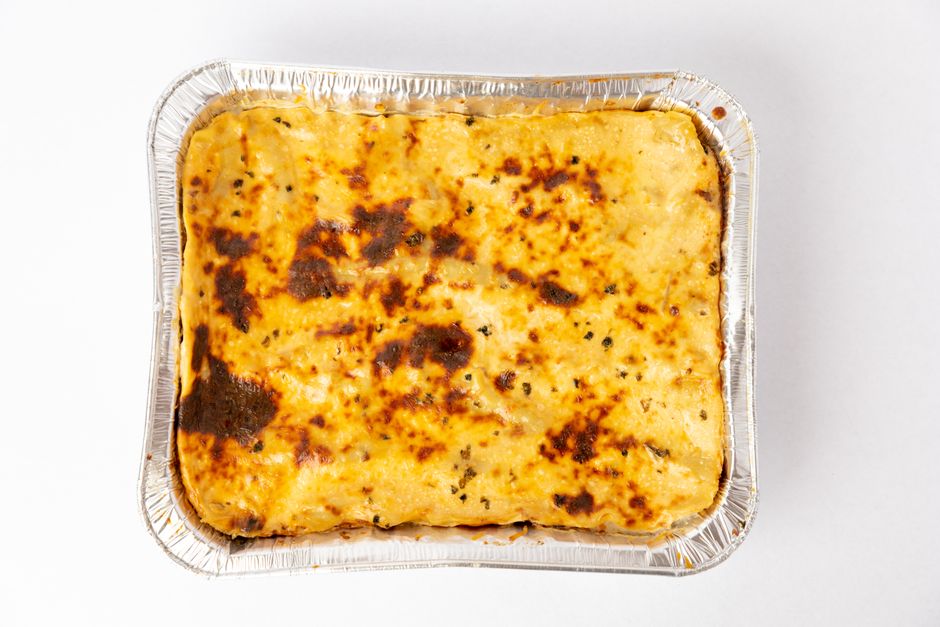
Keep the main recipe as written for the most balanced result. Make changes when you have a clear reason, not just to use every vegetable in the fridge.
- For nut-free cooking: use oat or soya milk. Both make a smooth sauce without cashews. Soya milk gives the firmest finish because it contains more protein.
- For gluten-free cooking: choose gluten-free lasagne sheets and replace plain flour with an equal weight of gluten-free plain flour. Check the packet because gluten-free pasta often needs more sauce.
- For a stronger mushroom flavour: replace 100g of the chestnut mushrooms with finely chopped portobello mushrooms. Do not use more than 600g total or the filling becomes too bulky and wet.
- For extra protein: stir 240g of drained, mashed tofu into the cooked spinach and mushroom mixture. Add another ¼ teaspoon of salt and one teaspoon of lemon juice.
- For a tomato-based lasagne: add 400g chopped tomatoes only if you want a lighter, sharper dish. Drain them first. Undrained tomatoes make the layers loose.
- When not to use frozen spinach: avoid it when you want visible green leaves and a fresh flavour. Frozen spinach works, but only after thorough defrosting and squeezing.
Do not add courgette unless you salt and drain it first. Do not add raw sliced tomatoes between the layers. Both vegetables release water during baking, and neither adds enough flavour to justify the weaker texture.
The best alternative for a quick weeknight meal is a skillet version without pasta layers. Cook the filling, stir in the béchamel, and serve it over toast or baked potatoes. Choose that route when you have less than 45 minutes. Choose the layered lasagne when you want leftovers or a centrepiece meal.
Serving, Storage and the Final Choice
How to store and reheat it
Cool leftovers within two hours, then cover and refrigerate for up to three days. Store portions in shallow containers so they chill quickly. Reheat one portion at 180°C fan for 20 to 25 minutes, covered with foil, until the centre is piping hot. Add a tablespoon of plant milk before reheating if the edges look dry.
You can freeze the assembled, unbaked lasagne for up to three months. Wrap it tightly, thaw it overnight in the fridge, then bake as directed, adding 10 to 15 minutes under the foil. You can also freeze baked portions, but the pasta will be softer after thawing.
What to serve with it
Keep the side dish sharp and fresh. A salad of rocket, cucumber and lemon dressing cuts through the creamy sauce. Steamed green beans work well too. Garlic bread is comforting but makes the meal much heavier, so serve small slices rather than a full baguette.
The recipe is ready when the top bubbles, the pasta is tender, and the centre feels hot when tested with a knife. For the cleanest slices, rest it for 15 minutes. For the creamiest serving, rest it for only 10 minutes.
| Goal | Reason |
|---|---|
| Firm slices | The sauce settles and the layers hold |
| Fast weeknight dinner | No layering or resting time |
| Nut-free recipe | Both make a creamy béchamel without nuts |
| Freezer meal | The pasta keeps a better texture |
| Lowest risk of watery filling | Most excess moisture leaves before assembly |
For a family dinner, this vegan spinach and mushroom lasagne is the best choice because it gives you rich flavour, dependable texture and useful leftovers from ordinary ingredients.