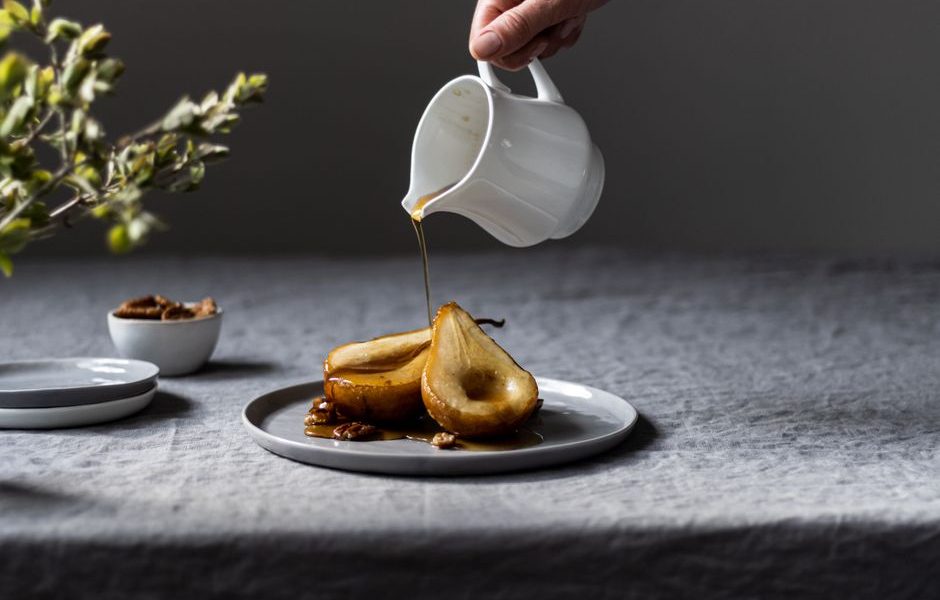
The pears are ripe, the rain is tapping against the window, and you want a warm pudding that does not need eggs, butter, or a specialist ingredient. This baked vegan pear and ginger sponge pudding answers that brief. It has soft fruit at the base, a light ginger sponge on top, and enough golden syrup to make each spoonful feel properly comforting.
The method uses UK measurements, a 20cm baking dish, and a 45-minute oven time. It also explains how to stop the common problems: watery pears, a sunken middle, and sponge that turns heavy instead of tender.
Vegan pear and ginger pudding ingredients by weight
Core sponge ingredients
Use a digital scale for the flour, sugar, oil, and plant milk. Small changes matter in a sponge, especially when there is no egg to absorb extra liquid. Plain unsweetened soy milk gives the most dependable texture because it has enough body without adding a strong flavour. Oat milk also works, but the batter may be a little softer.
| Ingredient | Amount | Purpose |
|---|---|---|
| Self-raising flour | 180g | Structure and lift |
| Baking powder | 1 teaspoon | Extra rise |
| Ground ginger | 1 teaspoon | Warm spice |
| Light brown sugar | 90g | Sweetness and colour |
| Unsweetened plant milk | 140ml | Liquid for the batter |
| Neutral oil | 70ml | Soft crumb |
| Ripe but firm pears | 3 medium, about 450g | Fruit layer |
| Golden syrup | 2 tablespoons | Gloss and caramel flavour |
Pear and ginger choices
Conference pears are the strongest choice because they soften while holding their shape. Williams pears give a more fragrant result but can release more liquid when very ripe. Avoid pears with bruised, watery flesh. Add a pinch of fine salt to the batter because it sharpens the ginger and keeps the brown sugar from tasting flat.
For extra ginger, use 25g of finely chopped stem ginger and reduce the plant milk by 1 tablespoon. Do not add both fresh ginger juice and extra milk. That combination can push the batter past the point where it sets cleanly.
How to prepare pears so the pudding is not watery
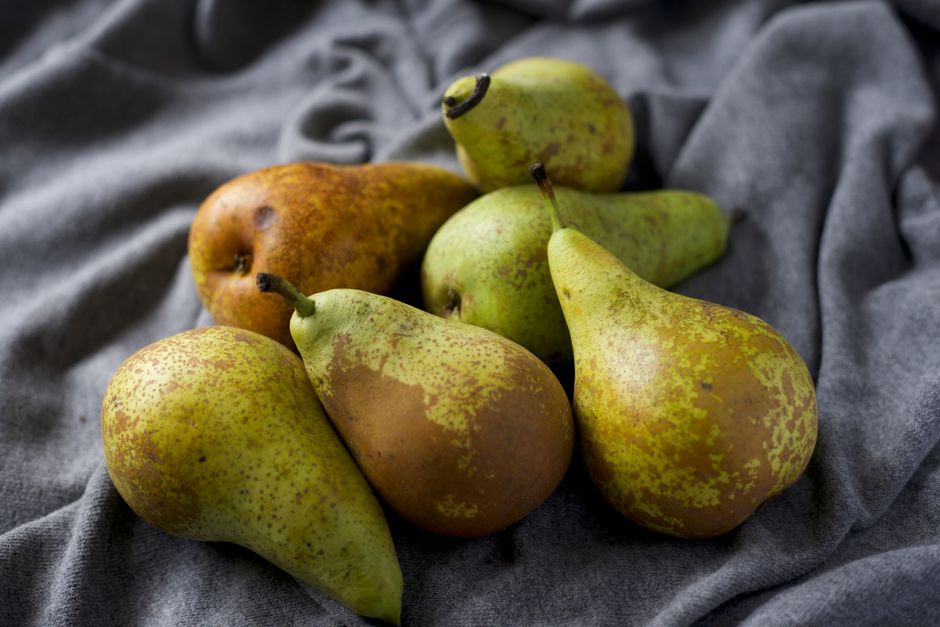
Choose and cut the fruit
Use pears that yield slightly near the stem but still feel firm around the widest part. Peel them, quarter them, remove the cores, and cut two pears into 1cm cubes. Slice the third pear into thin fans for the top. Small cubes spread through the dish and cook quickly; large chunks stay firm and release juice in one place.
- Peel and core all three pears.
- Cut two pears into 1cm cubes and slice the final pear into 3mm to 5mm pieces.
- Put the cubed pears in a bowl with 1 tablespoon of golden syrup and half of the ground ginger.
- Leave them for only 5 minutes, then tip away any liquid collected in the bowl.
- Arrange the drained cubes across the base of a greased 20cm baking dish.
- Lay the thin pear slices over the batter just before baking.
Control the released juice
Do not macerate the pears with sugar for half an hour. Sugar pulls water from fruit, and that liquid will sit under the sponge. A short 5-minute coating gives the fruit flavour without creating a pool in the dish. If your pears are already very soft, skip the syrup coating and drizzle the syrup over the finished pudding instead.
This is also the stage to check the dish size. A deep 20cm dish gives the pudding enough height to stay moist. A wide, shallow dish spreads the batter thinly and can leave the edges dry before the centre sets. The fruit should cover the base in one even layer, not form a mound.
How to mix and bake the vegan sponge
Build the batter without overmixing
Heat the oven to 180C or 160C fan. Grease a 20cm ovenproof dish with a little oil and place it on a baking tray. The tray catches any syrup that bubbles over and makes the dish easier to move.
Whisk 180g of self-raising flour, 1 teaspoon of baking powder, 1 teaspoon of ground ginger, 90g of light brown sugar, and a pinch of salt in a large bowl. In a jug, mix 140ml of plant milk, 70ml of neutral oil, and 1 tablespoon of golden syrup. Pour the liquid into the dry ingredients and stir with a spatula until no dry flour remains.
The batter should fall slowly from the spatula. If it looks stiff, add 1 tablespoon of plant milk. If it looks runny, add 1 tablespoon of flour. Stop mixing as soon as the texture is even. Long mixing develops the flour and knocks out the small air pockets that help the sponge rise.
Bake, test, and rest
Spoon the batter over the pears and spread it gently to the edges. Place the sliced pear on top, then bake for 40 to 45 minutes. The surface should look golden, the edges should pull back slightly from the dish, and a skewer inserted into the sponge should come out with a few moist crumbs rather than wet batter.
If the top browns before the middle sets, cover it loosely with foil after 30 minutes. Do not open the oven during the first 25 minutes because the sudden drop in heat can sink the centre. Leave the pudding for 10 minutes after baking. That short rest lets the fruit juices thicken and gives the sponge time to finish setting.
Best baking target: aim for a soft centre, not a dry cake. The pudding continues cooking from its stored heat, and overbaking removes the contrast between tender sponge and juicy pear.
Why vegan pear sponge pudding fails: quick fixes
Why is the middle wet?
The usual cause is too much liquid from the pears or an undersized baking dish. Check that the pears were drained after cutting and that the batter was not made with a large extra splash of milk. Bake for another 5 to 10 minutes, covering the top if it is already dark. A deep dish can also slow the centre, so test the middle rather than trusting the edge colour.
Why is the sponge dense?
Dense sponge usually comes from overmixing, old raising agents, or a cold oven. Mix only until the flour disappears, check that the baking powder is within date, and preheat fully before the dish goes in. Do not beat the batter in a stand mixer for several minutes. A quick hand mix is better for this small pudding.
Why did the top sink?
A slight dip is normal when a fruit pudding cools, but a deep collapse means the centre was not set or the oven door opened too early. Keep the door closed for the first 25 minutes. If the pears are very juicy, reduce the plant milk by 15ml next time. Do not add extra flour to compensate for wet fruit after the batter has been mixed; it makes the finished crumb tough.
Another mistake is using pear halves that are too thick. They hold cold moisture in the centre and stop the sponge cooking evenly. Small cubes underneath and thin slices on top give the best result.
Which kitchen tools help most for a reliable bake?
The tools that earn their space
The OXO Good Grips 11lb/5kg Everyday Glass Food Scale is the best upgrade for this recipe. It measures in 1g increments, has a tare function, and switches between grams, ounces, millilitres, and kilograms. The scale removes the biggest variable in vegan baking: inaccurate flour and liquid measurements.
You do not need a stand mixer. A bowl and spatula are enough.
How to serve, store, and reheat the pudding
Best serving texture
Serve the pudding warm after a 10-minute rest. This gives the sponge enough time to settle while keeping the pear juices loose and glossy, and the best partner is cold dairy-free custard or a spoonful of unsweetened oat cream because the cool, creamy contrast makes the ginger taste cleaner without adding more sugar.
Storage timetable
Keep leftovers covered in the fridge for up to 3 days, then reheat one portion in the microwave for 60 to 90 seconds or place the whole dish in a 160C oven for 15 minutes; add a teaspoon of plant milk to each portion if the sponge has firmed up, but do not pour extra syrup over the entire dish before reheating because it can make the base soggy.
The pudding is best on the day it is baked, but it freezes successfully in individual portions for up to 1 month when wrapped tightly; thaw overnight in the fridge and reheat until steaming in the centre, checking that the pears have softened again rather than serving it cold, where the oil-set crumb can seem heavier than it did fresh.