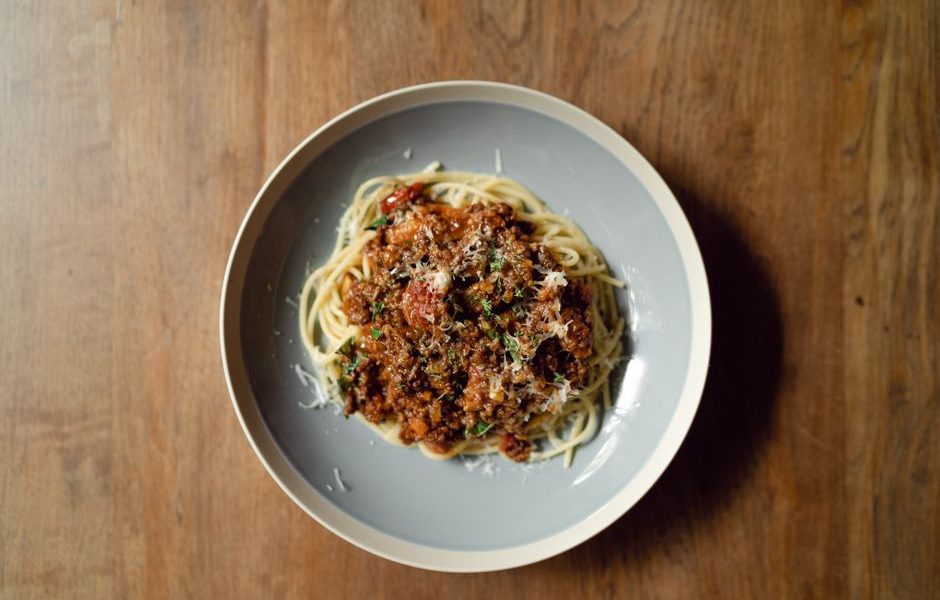
A common misconception is that lentil bolognese should taste like minced beef with lentils stirred through it. That expectation creates a weak sauce. Lentils do a different job: they bring body, fibre and a gentle nutty taste, while browned vegetables, tomato puree and a long simmer build the deep savoury flavour.
Why lentils make a proper bolognese
What replaces the mince?
Lentils replace the bulk and structure of mince, not every part of its flavour. Dried green or brown lentils keep a pleasant bite after simmering, so the finished sauce feels substantial rather than like tomato soup. They also absorb stock and tomato juices as they cook, which thickens the sauce without flour or dairy.
The best texture comes from using about 150g dried lentils for four people. That amount produces a generous sauce without overwhelming the pasta. Red split lentils also work, but they break down faster and create a softer, almost dal-like texture. Choose them when you want a smooth sauce; choose green or brown lentils when you want more chew.
Where does the savoury flavour come from?
The flavour starts before the tomatoes go into the pan. Onion, carrot and celery provide sweetness and aroma. Cooking them in olive oil for 8 to 10 minutes gives the sauce a rounded base. Tomato puree then adds concentrated acidity and umami when it fries for a minute or two. Garlic, oregano, black pepper and smoked paprika add warmth, but they should support the tomato rather than cover it.
A small amount of soy sauce or tamari gives the sauce extra savoury depth. Balsamic vinegar works at the end because its acidity brightens the tomatoes after the lentils have softened.
Why does the sauce need time?
Lentils need enough liquid to cook through, but the sauce also needs to reduce. Start with 500ml vegetable stock and two 400g cans of chopped tomatoes. Simmer the mixture uncovered for 30 to 35 minutes, stirring every few minutes. The steam escapes, the lentils absorb liquid and the tomato flavour becomes less sharp.
Texture is the goal: the sauce should sit on a spoon for a moment before slowly sliding off. If it runs across the plate, keep simmering. If it looks dry before the lentils soften, add 100ml hot water rather than more oil.
How to cook vegan lentil bolognese with spaghetti
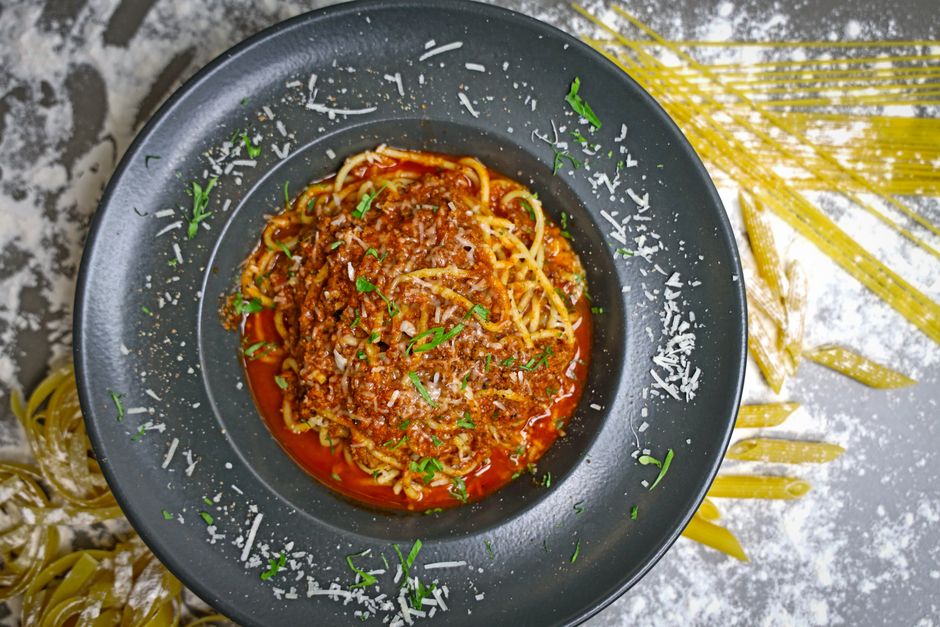
1. Prepare the base
- Rinse 150g dried green or brown lentils under cold water and remove any small stones or damaged lentils.
- Finely dice one medium onion, one carrot and one celery stick. Aim for pieces no larger than a pea so they soften into the sauce.
- Warm 1 tablespoon of olive oil in a large, deep frying pan or casserole over medium heat. Add the onion, carrot and celery with a pinch of salt.
- Cook for 8 to 10 minutes. Stir often, but let the vegetables catch a little colour. Add three finely chopped garlic cloves for the final minute.
- Stir in 30g tomato puree, 1 teaspoon dried oregano, 1 teaspoon smoked paprika and plenty of black pepper. Cook for 90 seconds.
2. Simmer the lentils
- Add the rinsed lentils, two 400g cans of chopped tomatoes and 500ml vegetable stock.
- Bring the sauce to a steady bubble, then lower the heat. Leave the pan uncovered so excess water can escape.
- Simmer for 30 to 35 minutes, stirring every 5 minutes. The lentils should feel tender but not collapsed.
- Stir in 1 tablespoon soy sauce and 1 teaspoon balsamic vinegar. Taste before adding more salt because stock and soy sauce vary in saltiness.
- If the sauce tastes sharp, simmer for another 5 minutes. If it tastes flat, add a small splash of balsamic vinegar or another teaspoon of soy sauce.
3. Cook and finish the spaghetti
- Boil 350g spaghetti in a large pan of well-salted water until just al dente. Follow the packet timing, then taste one strand two minutes before the suggested end time.
- Reserve 150ml pasta water before draining. Do not rinse the spaghetti; its surface starch helps the sauce cling.
- Add the drained spaghetti to the lentil sauce and toss for 60 to 90 seconds. Add pasta water a tablespoon at a time if the sauce feels too thick.
- Serve immediately with chopped parsley, black pepper and a drizzle of olive oil. A spoonful of nutritional yeast adds a cheese-like savoury note without changing the recipe.
Keep the sauce slightly looser than you think you need. The lentils continue to absorb liquid while the pasta rests, so a perfect pan sauce can become stiff on the plate if you cook it down too far.
Why does lentil bolognese go wrong?
Why is the sauce watery?
The usual cause is a covered pan. A lid traps steam, so the tomatoes and stock cannot reduce. Cook uncovered and give the sauce another 5 to 10 minutes. A second problem is adding too much stock at the start. Lentils vary slightly in age and size, so begin with 500ml and add more only if the pan looks dry before they soften.
Do not thicken watery sauce with flour. Flour can make the texture pasty and hide the tomato flavour. Reduction gives a cleaner result.
Why are the lentils still crunchy?
Acid slows softening. Tomatoes, vinegar and wine can all make lentils take longer to cook, especially if the lentils have been stored for a long time. The fix is simple: simmer longer and add a little hot water if needed. Keep the sauce bubbling gently for another 10 to 15 minutes, then taste again.
Rinsing helps remove dust, but soaking is not required for ordinary green or brown lentils. Do not boil them separately unless you want to control the texture very closely; cooking them in the tomato sauce gives the dish more flavour.
Why does it taste flat or too sweet?
Flat sauce usually needs salt, acidity or savoury depth, not more herbs. Add soy sauce in half-teaspoon amounts, then taste. If the tomatoes taste sweet, add balsamic vinegar or a small squeeze of lemon. If they taste harsh, let the sauce simmer for a few more minutes and add a drizzle of olive oil.
Avoid adding sugar automatically. Sugar covers sharpness without fixing the balance. Also avoid drowning the sauce in dried herbs. One teaspoon of oregano is enough for this quantity.
Serve it boldly, then store it properly
How should you store leftovers?
Cool the sauce quickly, transfer it to a covered container and refrigerate it for up to three days. Store the sauce separately from the spaghetti whenever possible. Reheat the sauce in a pan over medium-low heat with 2 to 3 tablespoons of water. Stir until steaming hot throughout, then cook fresh pasta for the best texture.
The sauce freezes well for up to three months. Freeze it in single portions, label the date and thaw it overnight in the fridge. Do not freeze cooked spaghetti with the sauce; it tends to become soft and break apart after reheating.
When should you make something else?
This recipe is not the best choice when you need dinner in 15 minutes, dislike tomato-based sauces or want a high-protein meal without pasta. For those situations, use the lentil sauce over baked potatoes, rice or roasted vegetables, or choose a tofu-based stir-fry instead. For a traditional long-simmered ragù flavour, a mushroom and walnut sauce gives more chew but takes longer to prepare.
The single most important takeaway is to cook the lentils in a well-seasoned tomato sauce until tender, then toss the spaghetti through it while both are still hot.