This vegan asparagus and lemon puff pastry tart looks elegant but uses simple ingredients and one reliable technique: control moisture before the pastry goes into the oven. The result is crisp, flaky pastry, tender asparagus, bright lemon, and a creamy plant-based filling.
Why this vegan tart stays crisp instead of soggy
The main problem with a vegetable puff pastry tart is not the pastry. It is water. Asparagus releases moisture as it cooks, while vegan cream cheese and lemon juice can add even more. If all of that liquid reaches raw pastry at the same time, the base turns soft before the layers have time to rise.
How asparagus affects the pastry
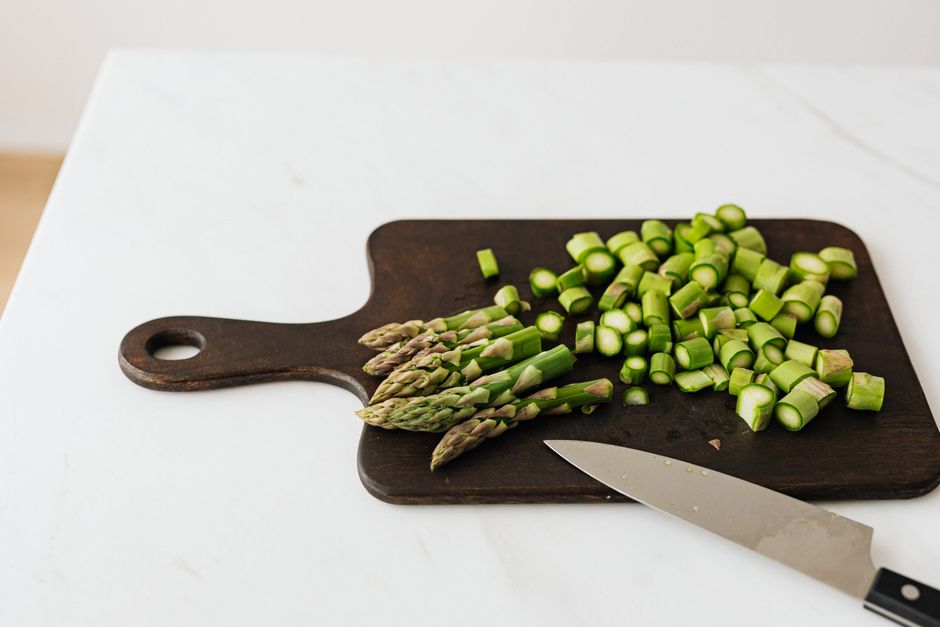
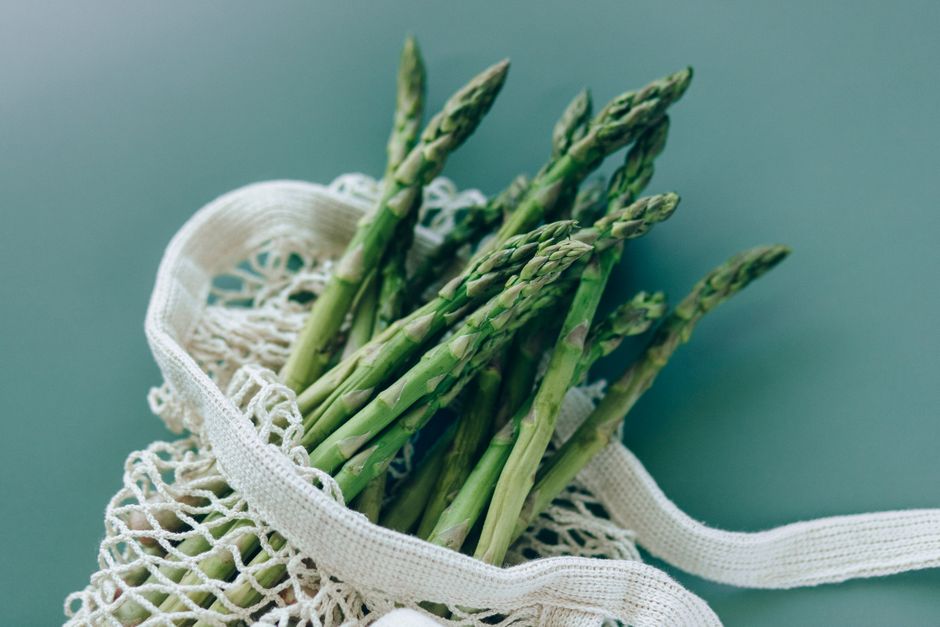
Thin asparagus cooks quickly but still contains enough water to soften the centre of a tart. Thick spears need more oven time, so their juices have longer to collect on the pastry. Choose spears that are roughly 1/2 inch thick, then trim away the woody ends. Blanch them for 2 minutes in salted water, transfer them to ice water, and dry them very well. This gives the asparagus a head start without leaving it wet.
Dry asparagus matters more than perfect sizing. Pat each spear with a clean towel. If the towel feels damp after one pass, use a second towel.
The pastry needs heat and a barrier
Keep the pastry cold until the oven is fully heated to 200°C (180°C fan). Cold fat creates steam in the oven, and that steam pushes the layers apart. A thin spread of vegan cream cheese creates a barrier between the pastry and the vegetables. It also gives the tart a creamy centre without needing a heavy sauce.
Score a 1-inch border around the pastry without cutting all the way through. The border rises higher than the middle and holds the filling in place. Dock the centre with a fork, but leave the border untouched. This combination gives the tart a crisp base and a defined edge.
How to make the tart step by step
Use one thawed puff pastry sheet, 8 to 10 asparagus spears, 5 ounces of plain vegan cream cheese, 1 lemon, 1 tablespoon of olive oil, 1/2 teaspoon of garlic powder, 1/4 teaspoon of black pepper, and 1/4 teaspoon of salt. The recipe serves 4 as a light main course or 6 as a starter.
Prepare the filling before touching the pastry
- Heat the oven to 200°C (180°C fan). Place a baking sheet inside while it heats. The hot surface helps the pastry base begin cooking at once.
- Trim the asparagus. Blanch the spears for 2 minutes, chill them in ice water, and pat them completely dry.
- Mix the vegan cream cheese with the zest of half the lemon, 1 teaspoon of lemon juice, garlic powder, salt, and black pepper.
- Cut the asparagus into pieces that fit across the pastry. Keep a few full spears for the top if you want a cleaner presentation.
Assemble and bake with control
- Unroll the cold pastry onto parchment paper. Score a 1-inch border on all four sides.
- Dock the centre with a fork, leaving the border alone. Spread the filling inside the scored line.
- Arrange the asparagus in one layer. Brush it with olive oil and add a little more lemon zest.
- Slide the parchment and tart onto the preheated baking sheet. Bake for 22 to 28 minutes.
- Remove the tart when the border is deeply golden and the underside feels firm. Cool for 5 minutes before slicing.
The tart should not look pale when it comes out. Puff pastry needs strong colour to develop a crisp structure. If the top browns before the base firms, lower the oven to 190°C (170°C fan) and bake for another 5 minutes.
Which vegan pastry base gives the best result?
For this recipe, the best choice is a plain vegan puff pastry sheet with enough surface area for a 1-inch border. Do not choose pastry by brand alone. Check the ingredient list, package size, and thawing instructions. Formulas can change between countries, and some products that look plant-based contain butter or milk ingredients.
Pastry comparison for a crisp tart
| Pastry | Package size | Best use | Main tradeoff |
|---|---|---|---|
| Pepperidge Farm Puff Pastry Sheets | 17.3 oz (493 g), two sheets | Large tart or two small tarts | Thicker pastry may need 3 to 5 extra minutes |
| Jus-Rol Puff Pastry Sheet | 320 g, one sheet | Quick single tart | Sheet dimensions vary by market |
| Dufour Vegan Puff Pastry | 14 oz (397 g), one sheet | Rich, visibly layered pastry | More delicate and expensive than standard sheets |
My pick is Dufour Vegan Puff Pastry when the tart is the centerpiece because its layers give the edge a dramatic lift. For a weeknight meal, Jus-Rol is the practical choice because one sheet matches the recipe closely. Pepperidge Farm works best when you want to make two tarts or freeze one assembled tart for later.
Thaw the pastry according to the package directions, then use it while it still feels cool. Warm pastry stretches, tears, and loses its layers. Never press hard while rolling it out. The goal is to keep the laminated structure intact.
What to do when the tart goes wrong

Most tart problems have a visible cause. Use the texture of the pastry as your guide rather than adding random bake time.
Why is the centre soft?
A soft centre usually means the asparagus or filling was too wet, the pastry was too warm, or the baking sheet was cold. Move the tart to a lower oven rack and bake at 190°C (170°C fan) for 5 to 8 more minutes. If the top is already dark, cover only the border with foil. Next time, dry the asparagus longer and preheat the baking sheet.
Why did the border rise unevenly?
Uneven rising comes from an uneven pastry sheet or a border scored at different depths. Score with the tip of a sharp knife and use light pressure. Cut through only the top layers. If one side stays flat, that section may have been pressed down during assembly.
Can the tart be made gluten-free or without vegan cream cheese?
Yes, but the texture changes. Use a certified gluten-free puff pastry if you need to avoid gluten, and check that it is also free from dairy. For a cream-cheese-free filling, blend 1/2 cup of drained white beans with 1 tablespoon of olive oil, 1 teaspoon of lemon juice, salt, and pepper. The bean spread is firmer and less rich, but it creates a useful moisture barrier.
Do not pile on extra asparagus to make the tart look fuller. Two layers trap steam and leave the centre undercooked. One even layer gives better texture.
How to serve, store, and reheat the tart
Serve the tart warm, not hot. Five minutes of cooling lets the filling set and keeps the pastry from collapsing when sliced. Add lemon zest after baking rather than before if you want the sharpest citrus flavour.
Best serving combinations
Cut the tart into four large pieces for lunch or six narrow pieces for a starter. Pair it with a salad dressed with lemon juice, olive oil, and a small amount of Dijon mustard. Bitter greens such as arugula or radicchio balance the rich pastry. A spoonful of pea and mint soup also works well because it repeats the spring flavours without competing with the lemon.
Add chopped chives, toasted almonds, or a pinch of chili flakes just before serving. Avoid adding watery tomato slices or cucumber. They soften the pastry within minutes.
How to store and reheat leftovers
Cool leftover tart completely, then refrigerate it in a shallow container for up to 3 days. Do not seal it while warm, or trapped steam will soften the crust. Reheat individual slices on a rack at 190°C (170°C fan) for 8 to 12 minutes. An air fryer set to 180°C (160°C fan) (175°C) takes about 5 to 7 minutes.
Microwaving is the wrong tool for this tart. It warms the filling but turns the pastry chewy. If you want to prepare ahead, assemble the tart, chill it for up to 4 hours, and bake it directly from the refrigerator. Add 3 to 5 minutes to the baking time.