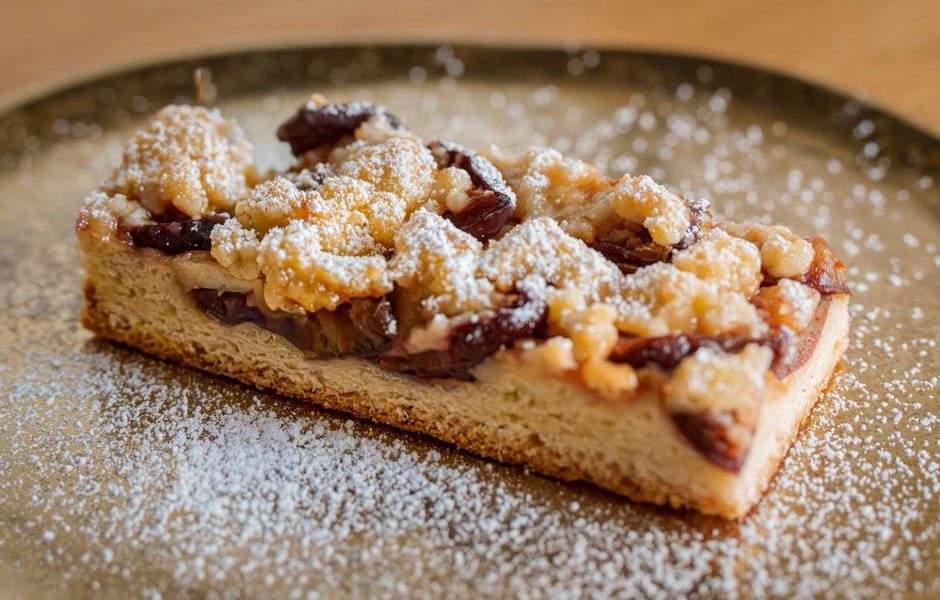
Rhubarb does not need to be cooked into a loose compote before it goes into a crumble bar. That common shortcut creates the main problem: a wet filling that softens the base. These vegan rhubarb crumble bars use finely cut rhubarb, a measured amount of sugar and cornflour, plus a short rest before slicing. The result is a sharp, jammy centre between a firm biscuit base and a golden oat topping.
The recipe makes 16 bars in a 20cm square tin. Plan on 25 minutes for preparation, 45 minutes in the oven and at least 2 hours of cooling. The bars taste good warm, but they cut cleanly only when fully cold.
Why do vegan rhubarb crumble bars go soggy?
Keep the filling thick and the base cool before baking. Rhubarb contains a lot of water, and its juice escapes as the stalks soften. A bar needs that liquid to turn into a thick syrup rather than soak through the shortbread layer.
The base needs fat, not extra liquid
Vegan pastry works because cold solid fat coats the flour and limits gluten formation. If the fat is warm, the dough becomes greasy and spreads. If you add plant milk to make the mixture bind faster, the base can turn soft and bready. Rub or pulse the flour, sugar and cold vegan block until the mixture looks like damp sand, then press it firmly into the tin.
Cornflour controls the rhubarb juice
Use 18g cornflour for 500g trimmed rhubarb. That amount thickens the juice without making the centre rubbery. Toss the rhubarb with sugar and cornflour immediately before adding it to the base. Do not leave the coated fruit sitting for half an hour; the sugar will pull out more liquid before the oven has a chance to set it.
A glass dish holds heat differently and often leaves the bottom pale.
Which ingredients give the best texture?
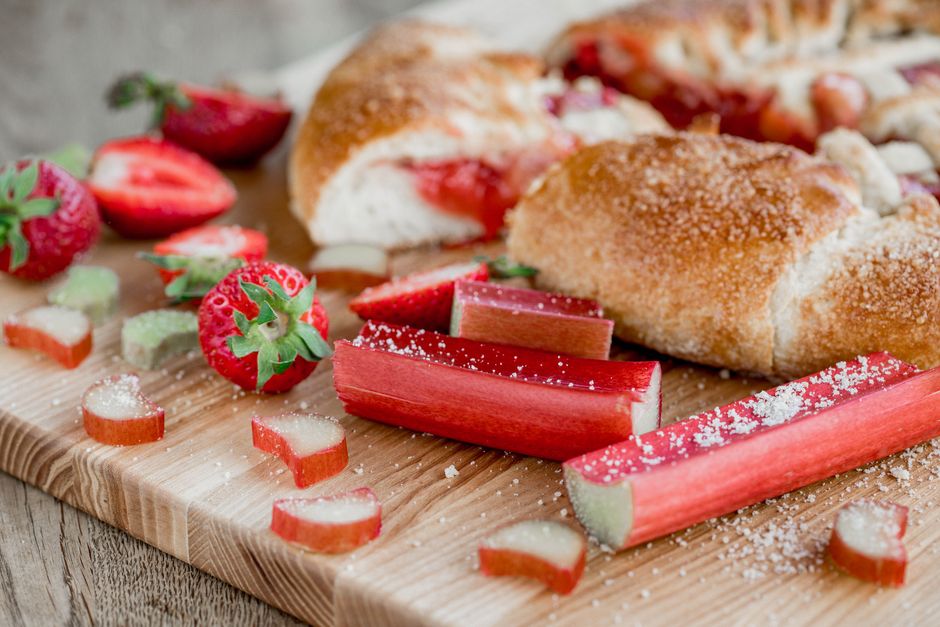
Use a block-style vegan fat rather than a soft spread sold in a tub. The block contains less water and behaves more like dairy butter, so it gives the base sharper edges and a less greasy crumb. You also need plain flour, rolled oats, caster sugar, brown sugar, cornflour, lemon and a small amount of plant milk.
Ingredient list for one 20cm tin
| Ingredient | Amount | Purpose |
|---|---|---|
| Plain flour | 250g | Structure for the base and topping |
| Cold vegan block | 180g | Richness and a short, crumbly texture |
| Golden caster sugar | 100g | Sweetness in the base |
| Rolled oats | 100g | Toasty crumble texture |
| Light brown sugar | 80g | Colour and caramel flavour |
| Trimmed rhubarb | 500g | Sharp fruit filling |
| Cornflour | 18g | Thickens the fruit juices |
| Lemon juice | 15ml | Balances the sugar |
| Unsweetened plant milk | 30ml | Helps the topping clump |
How do you make vegan rhubarb crumble bars?
Press the base firmly, add the fruit in an even layer and bake until the edges are visibly browned. This sequence matters more than fancy equipment. A kitchen scale gives the most reliable result because rhubarb stalks vary in size and a packed cup of flour can weigh much more than a loose one.
Method
- Heat the oven to 180°C fan, or 200°C conventional. Line a 20cm square metal tin with baking paper, leaving enough paper over the sides to lift the cooled bars out.
- Cut 500g trimmed rhubarb into pieces about 1cm thick. Put the pieces in a bowl with 60g of the caster sugar, 18g cornflour, 15ml lemon juice and one teaspoon of vanilla extract. Toss until every piece has a light coating.
- Make the base. Rub 180g cold vegan block into 250g plain flour and the remaining 40g caster sugar. Stop when the mixture resembles fine breadcrumbs and holds together when squeezed.
- Reserve 170g of the mixture for the topping. Press the rest into the lined tin. Use the flat bottom of a glass to compact it, especially along the corners.
- Bake the base for 12 minutes. It should look set but still pale. A partial bake stops the fruit from sinking straight into raw dough.
- Mix the reserved base mixture with 100g rolled oats, 80g light brown sugar and 30ml plant milk. Squeeze handfuls together to form rough clumps. Do not stir until smooth.
- Spread the rhubarb over the hot base. Keep the pieces level rather than piling them in the middle. Scatter the oat mixture over the fruit and press a few clumps lightly into place.
- Bake for 30 to 35 minutes, until the topping is golden and the filling bubbles around the edges. If the topping browns early, cover the tin loosely with foil.
- Cool in the tin for 30 minutes, then refrigerate for at least 90 minutes. Lift out using the paper and cut into 16 bars with a sharp knife.
The best visual cue is not the clock. The edges should be browned, the centre should wobble only slightly and the topping should feel dry when tapped. A completely loose centre will not firm up into neat bars.
How should you prepare rhubarb for a firm filling?
Rhubarb is naturally tart, fibrous and watery. Good bars respect all three qualities. The goal is not to remove every drop of juice. The goal is to hold that juice in a thickened layer so the filling stays bright and spoonable without flooding the crust.
Cut the stalks evenly
Choose firm stalks with no soft patches. Trim the leaves and the dry ends. You do not need to peel young pink rhubarb; removing the outer skin can make the pieces collapse too quickly. Cut every stalk into 1cm slices. Thin slices turn to mush before the base is ready, while large chunks remain hard and release juice unevenly.
Balance sharpness with sugar
Use 60g caster sugar for 500g rhubarb. This produces a distinctly tart bar rather than a sweet jam square. If your rhubarb is especially green and sharp, add 10g more sugar, not 50g. Too much sugar draws out water and hides the fruit flavour. Lemon juice may seem unnecessary, but its fresh acidity keeps the filling from tasting flat after baking.
Do not pre-cook the fruit
Pre-cooking rhubarb is useful for a pie or a spoonable compote, but it is the wrong move here. The extra cooking releases juice before the filling has the flour-and-oat barrier above and below it. Toss the raw rhubarb with cornflour just before assembly instead. The oven then softens the fruit and sets the syrup at the same time.
For the strongest flavour, let the baked bars cool completely before tasting. Warm sugar makes the filling seem sweeter and can hide the rhubarb’s clean acidity.
What are the common mistakes?
These bars are forgiving once the moisture is controlled. Most failures come from changing two measurements at once or cutting before the filling has set.
Why did the topping sink into the fruit?
The fruit was piled too high, or the base was not partially baked. Keep the rhubarb in one level layer and bake the base for the full 12 minutes. The topping should sit on the fruit, not disappear into it. Large oat clumps also hold their shape better than a fine, sandy mixture.
Why is the filling runny after cooling?
Check three points: the rhubarb may have weighed less after trimming, the cornflour may not have been measured, or the bars may have been removed before the centre cooled. Use 18g cornflour for 500g prepared rhubarb. If the fruit is visibly swimming in juice before baking, add one extra teaspoon of cornflour and mix again.
When should you skip this recipe?
Skip crumble bars when you need a dessert that can be sliced and served hot. The filling is deliberately soft when warm. Make a rhubarb crumble in a wide baking dish instead. Choose these bars for packed lunches, afternoon tea or a make-ahead dessert where clean portions matter.
How should you store and serve the bars?
Cool the bars completely before storing them in a sealed container. Keep them in the fridge for up to 4 days. The base softens slightly overnight, but the filling becomes easier to handle and the flavour improves. Place baking paper between layers so the oat topping stays intact.
Serving choices
Serve the bars cold for the neatest edges. Bring them to room temperature for 20 minutes if you want a softer base. A spoonful of unsweetened vegan yoghurt balances the sharp filling, while vanilla ice cream makes the dessert richer. Dusting with icing sugar is optional; the bars already contain enough sweetness for most servings.
Freezing and reheating
Freeze cut bars on a tray for 2 hours, then transfer them to a sealed freezer container. They keep for up to 2 months. Defrost them overnight in the fridge. To refresh the topping, warm individual bars at 160°C fan for 8 minutes, then let them stand for 10 minutes before eating. Microwave reheating softens the base and makes the filling runny.
| Need | Reason |
|---|---|
| Clean slices | The cornflour-thickened filling sets fully |
| Warm dessert | A loose centre is better in a bowl than in a bar |
| Make-ahead baking | The flavour develops and the bars stay sliceable |
| Longer storage | Individual portions defrost evenly |
For crisp edges and a sharp fruit centre, these vegan rhubarb crumble bars are at their best when baked the day before and cut cold. The recipe earns its place because it turns a watery fruit into a portable dessert without hiding rhubarb’s character.