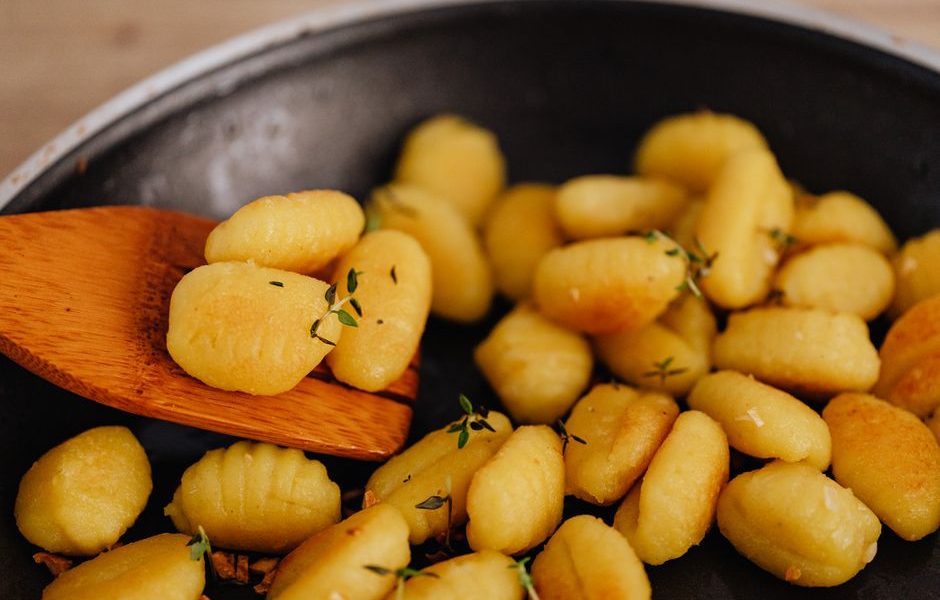
When autumn brings a squash surplus and the cupboard holds a bag of potatoes, this vegan pumpkin and sage gnocchi turns both into a soft, savoury dinner. The key is controlling moisture, because wet pumpkin and overworked dough produce heavy dumplings instead of light gnocchi.
Why pumpkin gnocchi turns fluffy instead of wet
Dry dough beats extra flour every time. Pumpkin contains far more water than a floury potato, and that water changes how much flour the dough needs. Add too little flour and the gnocchi falls apart in the pan. Add too much and the result tastes dense, chewy and floury.
Pumpkin adds flavour but also moisture
Roast the pumpkin rather than boiling it. Boiling puts more water into the flesh, while roasting drives moisture out and brings out a sweeter, deeper flavour. Use a firm pumpkin or butternut squash. Cut it into 3cm cubes, spread them across a baking tray and roast at 200°C fan, 220°C conventional or gas mark 7 until the edges brown and the centre feels soft. Do not cover the tray. Steam trapped under foil works against the texture you need.
Cool the roasted pumpkin before mixing the dough. Warm puree can make the flour absorb unevenly, which encourages extra kneading. Mash it with a fork or potato masher rather than blending it into a smooth, wet paste. A little texture is harmless and gives the finished gnocchi a more handmade feel.
Potato provides the structure
Use floury potatoes such as Maris Piper or King Edward. Bake them in their skins at 200°C fan for around 50 minutes, depending on size, then split them while hot and scoop out the flesh. Baking keeps the potato drier than boiling. Pass the flesh through a ricer or mash it very finely, then leave it for five minutes so steam can escape.
The dough should feel soft and slightly tacky, but it should not cling heavily to clean fingers. Mix only until the flour disappears. Kneading develops a more elastic texture, which is useful for bread but unwanted here. The clear verdict is simple: roast both vegetables, cool them enough to handle, and mix with a light touch. That method gives you a better chance of tender gnocchi than trying to fix wet dough with a mountain of flour.
How to make vegan pumpkin and sage gnocchi
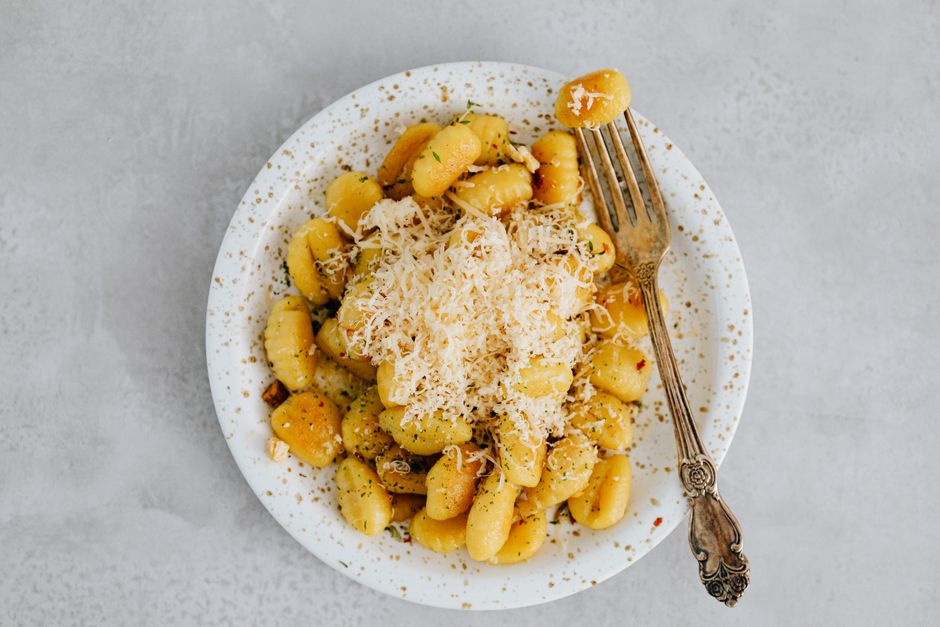
The method has three stages: dry the vegetables, form the dough, then cook the gnocchi briefly before finishing it in the sauce. Keep the work surface lightly floured, but do not coat every piece heavily. Extra flour ends up in the cooking water and can make the sauce cloudy.
Prepare the dough
- Heat the oven to 200°C fan, 220°C conventional or gas mark 7. Toss the pumpkin cubes with one teaspoon of oil and roast for 25 to 35 minutes, until soft and browned at the edges.
- Bake the potatoes in their skins until a knife slides through the centre. Split them, scoop out the flesh and mash or rice it while hot.
- Measure 300g of roasted pumpkin and combine it with the potato, one teaspoon of salt and the nutmeg. Add 180g of flour and mix with a fork.
- Turn the mixture onto a lightly floured surface. Press it together with your hands. Add more flour one tablespoon at a time only if the dough cannot hold its shape.
- Divide the dough into four pieces. Roll each piece into a rope about 2cm thick, then cut it into 2cm pillows. Press each piece gently against a fork or gnocchi board if you want ridges to catch the sauce.
Cook and finish the gnocchi
- Bring a large pan of salted water to a steady boil. Drop in the gnocchi in two or three batches so the water keeps its temperature.
- Boil only until they float, then give them another 30 seconds. Lift them out with a slotted spoon and place them on a lightly oiled tray.
- Melt the vegan butter in a wide frying pan over medium heat. Add the sage leaves and cook for two minutes until the edges curl and crisp.
- Add the sliced garlic and cook for 30 seconds. Do not let it turn dark, because burnt garlic will overpower the pumpkin.
- Add the cooked gnocchi and toss for one to two minutes. Finish with lemon juice, black pepper and the chopped hazelnuts.
Do not crowd the frying pan. If all the gnocchi will not fit in one layer, make the sauce in a large pan and toss the cooked pieces in batches. The result should be tender inside, lightly golden outside and coated rather than swimming in butter.
Vegan gnocchi troubleshooting: answers to common problems
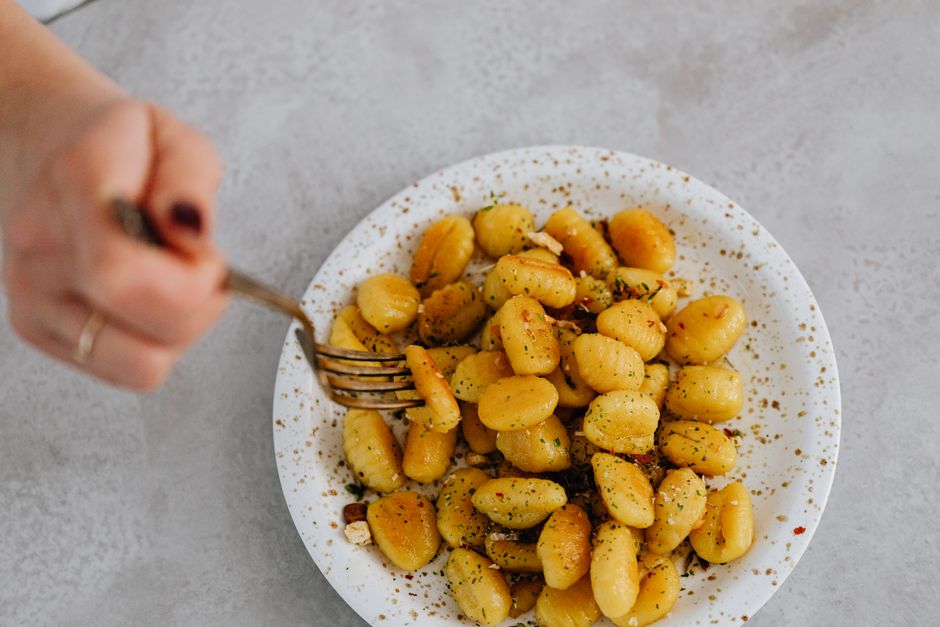
Why did the gnocchi fall apart in the water?
The dough was probably too wet or the water was boiling too violently. Pumpkin puree varies in moisture, even when it comes from the same type of squash. Test one piece before cooking the whole batch. If it breaks apart, knead a tablespoon of flour into the remaining dough, test another piece and repeat only once if needed.
A rolling boil can also split soft gnocchi. The water should bubble steadily, not churn like a storm. Add the pieces gradually and avoid stirring for the first 30 seconds. Once they rise, lift them out instead of leaving them in the pan.
Why did the gnocchi turn heavy and chewy?
Too much flour and too much handling are the usual causes. Flour is not a measure of success here. The goal is the smallest amount that lets the dough hold together. If you boiled the potatoes, the extra water may have forced you to add more flour. Baking the potatoes next time will improve the dough before you even reach the mixing stage.
Cutting the pieces too large can also make them seem dense. A 2cm pillow cooks more evenly than a thick 4cm chunk. Cook a test piece, cut it open and check the centre. If the outside is firm while the middle is pasty, lower the heat slightly and extend the cooking time by 30 seconds.
Serving, storing and the final verdict
Make it fresh for the first serving. That is the strongest recommendation for this recipe. Freshly cooked gnocchi has the soft centre and crisp edges that make the dish worth the effort. Serve it with a bitter green salad, roasted tenderstem broccoli or steamed kale to cut through the rich vegan butter.
Choose the right finish
Use lemon and hazelnuts when the pumpkin tastes sweet. Use a spoonful of oat fraiche when you want a creamy bowl. Add chilli flakes if the sage and garlic feel too gentle. A small amount of nutritional yeast gives a savoury note without turning the sauce into a heavy cheese substitute. Keep the garnish restrained; too many toppings hide the texture of the gnocchi.
For a nut-free version, leave out the hazelnuts and add toasted pumpkin seeds. For a gluten-free version, use a tested gluten-free plain flour blend and expect the dough to be more delicate. Do not replace the flour with almond flour alone. It lacks the starch needed to bind the dumplings.
Store leftovers safely
Cool leftover gnocchi quickly, refrigerate it in a sealed container and use it within three days. Reheat it in a frying pan with a splash of water and a small amount of vegan butter. Microwaving works, but it softens the crisp edges and can make the sauce separate. Freeze uncooked gnocchi when possible; frozen cooked gnocchi tends to lose its spring.
The opening problem was simple: a pile of pumpkin, a few potatoes and the risk of a wet dough. Roast the vegetables, add flour slowly, test one dumpling and finish the batch with crisp sage. That sequence turns inexpensive autumn ingredients into a reliable vegan dinner with a clear payoff: tender gnocchi, a savoury sauce and no need for eggs or dairy.