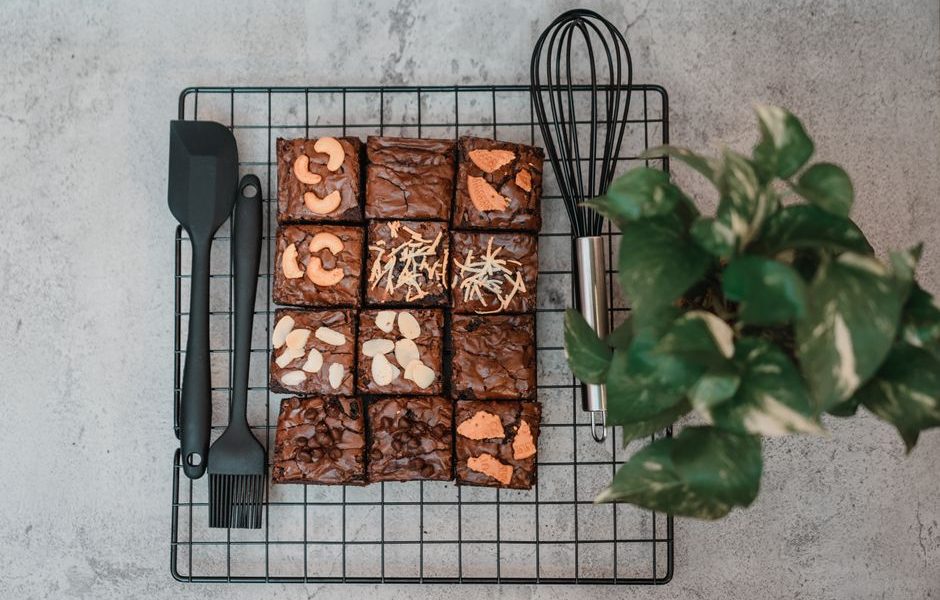
Vegan brownies are not supposed to taste like chocolate cake with the eggs removed. That is the common mistake. A good brownie needs a dense centre, a thin crackled top, enough fat to carry the cocoa, and orange flavour that cuts through the sweetness instead of tasting like perfume. This method gets those points right.
Why vegan chocolate orange brownies stay fudgy
The best vegan brownie is built around texture, not egg replacement. Eggs normally add water, fat, structure, and emulsifying power. A plant-based brownie has to replace those jobs separately. That is why simply mixing flour, cocoa, and a mashed banana often produces something soft but cakey. Banana adds moisture and sweetness, yet it does not create the rich, tight crumb people expect from a brownie.
The fat-and-water balance
Melted vegan butter supplies fat for tenderness, while a small amount of plant milk gives the flour enough moisture to hydrate. Use too much liquid and the brownies turn loose and gummy. Use too little and the cocoa pulls moisture from the crumb, leaving dry corners. For an 8-inch square pan, 115 g of melted vegan butter and 120 g of unsweetened plant milk is a strong starting point.
What orange zest actually does
Orange zest carries fragrant oils, so it gives a brighter result than orange juice alone. Use the finely grated zest of one large orange, roughly 2 teaspoons. Add juice only in a small amount because extra liquid weakens the structure. The clear verdict: zest belongs in the batter; juice belongs in a glaze or should be skipped.
The ingredient formula that works
Use weight, not cups, for the core ingredients. Cocoa powder and flour settle differently from one scoop to the next, and a heavy flour measure is the fastest route to a stiff brownie. The table below gives a dependable 8-inch pan formula. It makes 12 compact squares or 9 larger pieces.
Base formula for one 8-inch pan
| Ingredient | Amount | Job |
|---|---|---|
| Plain flour | 125 g | Creates a light structure |
| Unsweetened cocoa powder | 45 g | Provides deep chocolate flavour |
| Granulated sugar | 180 g | Adds sweetness and moisture |
| Vegan butter, melted | 115 g | Builds a rich, tender crumb |
| Unsweetened plant milk | 120 g | Hydrates flour and cocoa |
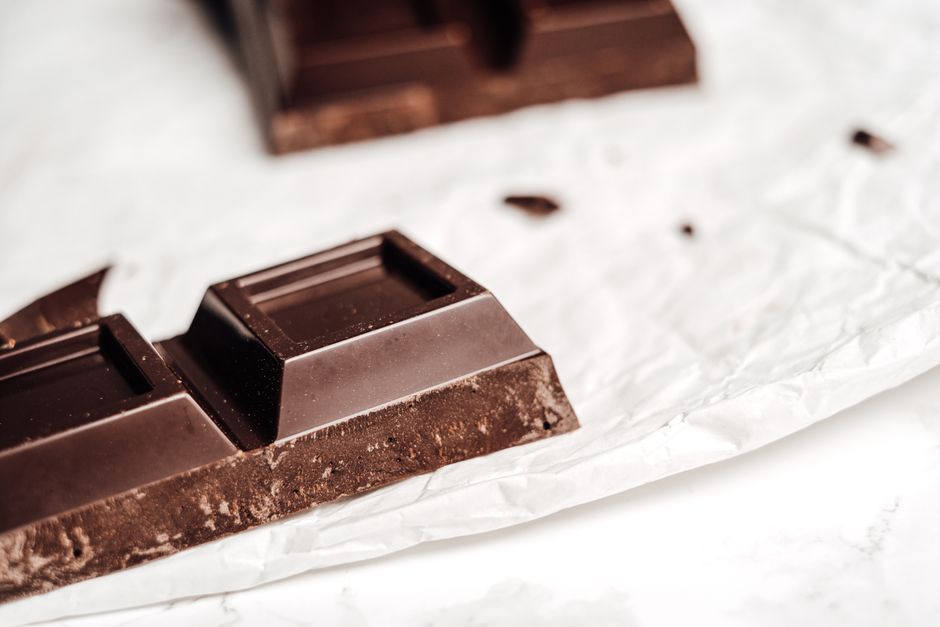
| Dark chocolate, chopped | 100 g | Adds melted pockets of chocolate |
| Orange zest | 2 teaspoons | Adds fresh citrus oil |
| Baking powder | 1 teaspoon | Gives slight lift without turning cakey |
The ingredients worth measuring carefully
Weigh the flour and cocoa directly into separate bowls before combining them. Pack neither ingredient into the scale. Keep the sugar at 180 g; cutting it sharply makes the brownies drier and removes the glossy top. A teaspoon of fine salt also matters because it stops the chocolate from tasting flat.
The texture target
The finished batter should fall from a spatula in a thick ribbon. It should not pour like pancake batter. If it looks sandy after adding the plant milk, stir for another 20 seconds before adding more liquid. That small pause lets the cocoa hydrate and prevents an over-wet correction.
How to bake vegan chocolate orange brownies
Follow the order. The method is simple, but the timing decides whether the centre stays fudgy or turns cakey. Choose an 8-inch metal square pan for the most even bake. Glass pans heat more slowly and often leave the middle underdone while the edges harden.
Seven steps for a reliable batch
- Heat the oven to 175°C (155°C fan). Line the pan with parchment, leaving paper over two sides so the slab lifts out cleanly.
- Melt the vegan butter in a small saucepan or microwave. Let it cool for five minutes so it does not scorch the sugar.
- Whisk the melted butter, sugar, plant milk, orange zest, and vanilla until the mixture looks smooth.
- Sift in the flour, cocoa powder, baking powder, and salt. Fold just until no dry streaks remain.
- Fold in the chopped dark chocolate. Stop as soon as the pieces are spread through the batter.
- Scrape the batter into the pan and level the surface. Bake for 27 to 32 minutes.
- Cool in the pan for at least 45 minutes. Chill for cleaner slices, or serve warm for a softer centre.
How to judge doneness
A toothpick should come out with moist crumbs, not clean. The edges should look set, while the centre should still have a slight wobble when the pan moves. Pulling the brownies at a clean-toothpick stage is the mistake that ruins most vegan batches.
Why vegan brownies turn dry, gummy, or cakey
Most failures come from one of three choices: too much flour, too much mixing, or too much oven time. None of these problems requires a fancy ingredient to fix. The answer is tighter measuring and a better stopping point.
Dry edges and a hard centre
Dryness usually means the batter carried too much flour or stayed in the oven too long. Flour should be weighed at 125 g for this formula. If you use cups, spoon the flour into the cup and level it; do not scoop straight from the bag. Check the brownies at 27 minutes, especially if your oven runs hot. A dark nonstick pan can also brown the edges quickly, so reduce the temperature by 5°C if the sides set before the centre.
Gummy middle that never sets
Gumminess is different from fudginess. A fudgy brownie holds its shape after cooling. A gummy brownie smears under the knife because the batter contains too much liquid, too much melted chocolate, or an underbaked flour layer. Do not judge the texture while it is hot. Let the pan cool fully, then chill it for 30 minutes. If the centre still looks like paste, bake the next batch for three to five minutes longer and keep the plant milk at 120 g.
Cakey brownies with no crackled top
Extra baking powder and aggressive whisking create more lift. That is useful for cake, not brownies. Keep baking powder to one teaspoon and fold the dry ingredients in by hand. Sugar also helps the top turn glossy, so do not slash it to 100 g unless you accept a drier, less crackled result. The verdict: under-mix and slightly underbake, then let cooling finish the set.
Common questions about vegan brownie swaps
The best substitutions protect the texture first. Replace one function at a time, and do not change the flour, fat, sweetener, and liquid all at once.
Can you replace vegan butter with oil?
Yes, but use 90 g neutral oil instead of 115 g vegan butter because oil is pure fat while vegan butter contains water. Canola, sunflower, or light olive oil works. The brownies will be softer and less buttery, so this swap wins only when you need a dairy-free pantry recipe with no butter substitute available.
Can you use almond flour?
Not as a direct replacement. Almond flour contains no gluten and holds more fat, so a one-for-one swap produces a fragile, oily centre. For a gluten-free version, use a tested cup-for-cup flour blend with xanthan gum. Do not add almond flour by guesswork. The best result comes from changing the flour blend while keeping the liquid close to the original amount.
Can you make them without refined sugar?
Maple syrup and coconut sugar change the water balance and colour. Coconut sugar can replace the caster sugar by weight, but the brownies will taste less sweet and have a rougher top. Maple syrup needs a lower plant-milk amount, usually 80 to 90 g instead of 120 g. This is a valid alternative, but the classic granulated-sugar version gives the better fudgy texture.
The final verdict on vegan chocolate orange brownies
Vegan chocolate orange brownies succeed when you treat them as a moisture-and-fat problem, not as a hunt for one magical egg substitute. Use weighed flour, melted vegan butter, plenty of sugar, dark chocolate, and fresh orange zest. Bake in metal, pull the pan when moist crumbs cling to the tester, and wait before slicing.
Best method for a fudgy centre
For the most reliable result, use the 8-inch formula above and bake for about 29 minutes. The edges should set before the middle. Chill the slab if neat squares matter; serve it warm if you want molten chocolate pockets. This method beats adding banana, applesauce, or extra baking powder because it controls the structure instead of masking weak batter.
When to choose a different dessert
Skip brownies if you need a light, fluffy cake or a dessert with very low sugar. Brownies depend on sugar for tenderness and surface gloss. They also need cooling time, so they are a poor last-minute choice if guests are already waiting. For a lighter citrus dessert, make an orange olive-oil cake instead. For dense chocolate flavour with no oven, use a chilled ganache tart.
As plant-based baking improves, the useful shift is away from imitation and toward better control of texture, flavour, and ingredient function. Chocolate orange brownies do not need to apologize for being vegan; they simply need to be made with enough precision to taste like brownies.