The pan is ready, the greens are wilted, and the first forkful tastes flat, watery or sharply sour. Spring greens and lemon pasta only needs a few ingredients, but the order of cooking decides whether the sauce clings to the noodles or pools at the bottom of the bowl.
What makes spring greens and lemon pasta taste balanced?
The underlying problem is balance. Spring greens bring a mild cabbage flavour, a little bitterness and plenty of water. Lemon brings acidity and aroma, but too much juice can make the dish taste sour. Pasta water supplies starch, which gives the sauce body without cream. Olive oil carries the lemon zest across the noodles and softens the sharper edges.
Why spring greens need a short cooking time
Young spring greens cook quickly. Slice away the thick central ribs, then cut the leaves into ribbons about 2 centimetres wide. The ribs need roughly 3 minutes in boiling water; the leaves usually need only 60 to 90 seconds. Longer cooking turns the leaves dull and soft, while a short blanch keeps a fresh flavour and a little bite.
Blanching also gives you control over the final sauce. The greens release some water before they meet the pasta, so the pan does not become flooded. Reserve the cooking water separately and add it by the tablespoon. That small detail prevents a common failure: adding a full mug of water and trying to rescue a thin sauce with extra oil.
How lemon should enter the dish
Use the zest for fragrance and the juice for acidity. Zest one unwaxed lemon before cutting it, then add most of the zest to the warm oil. Add the juice after the heat is lowered. High heat can make the lemon taste harsh, especially if the pan contains no fat or starch to soften it.
For four portions, start with 1 teaspoon of lemon juice per serving and taste before adding more. The finished dish should taste bright, not like a bowl of lemon dressing. A small pinch of salt and a generous amount of black pepper make the greens taste fuller without hiding their flavour.
How to prepare the ingredients and cook the pasta
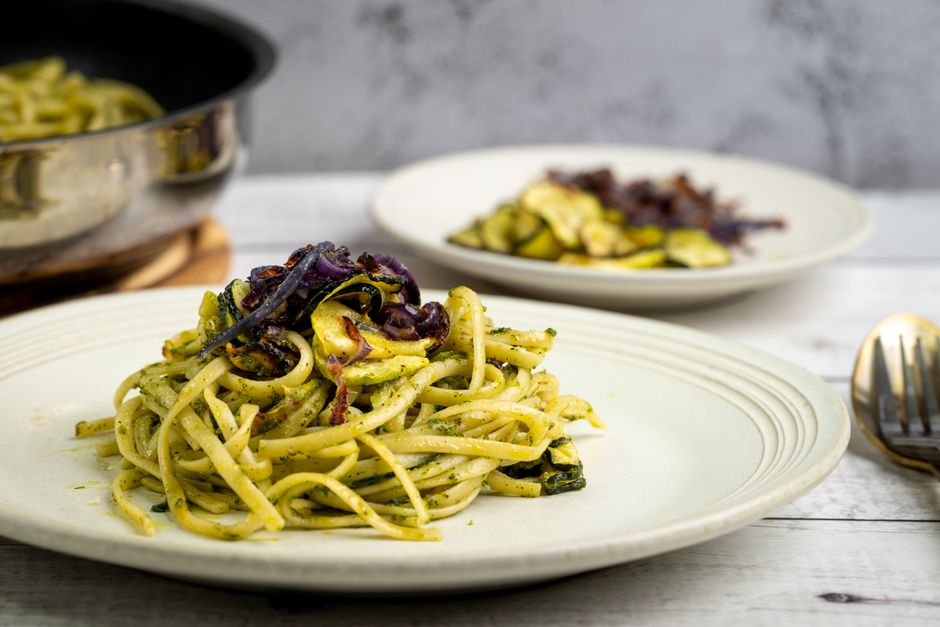
The following amounts serve four people as a main meal. They are designed for a 30-centimetre frying pan and a large saucepan. Weights are more reliable than vague measures because spring greens vary in size and water content.
| Ingredient | Amount | Purpose |
|---|---|---|
| Dried pasta | 320 g | Provides four 80 g portions |
| Spring greens | 300 g trimmed | Fresh flavour and texture |
| Garlic | 2 cloves, finely sliced | Savoury base |
| Unwaxed lemon | 1, zest and 4 tbsp juice | Aroma and acidity |
| Extra-virgin olive oil | 4 tbsp | Carries flavour and coats pasta |
| Reserved pasta water | 150 to 250 ml | Builds the sauce |
| Fine salt | 20 g for the pasta water | Seasoning |
| Black pepper | 1 teaspoon, or to taste | Warm spice |
The method that keeps the sauce silky
- Bring at least 3 litres of water to a rolling boil. Add the salt, then cook the pasta for 2 minutes less than the packet time.
- While the pasta cooks, remove the thick ribs from the greens and slice the leaves. Add the ribs to the pasta pot for the final 3 minutes and the leaves for the final 90 seconds.
- Scoop out at least 250 ml of pasta water before draining. Drain the pasta and greens together.
- Warm the olive oil in the frying pan over medium-low heat. Add the garlic and cook for 60 to 90 seconds, until fragrant but not brown.
- Add the drained pasta and greens. Pour in 100 ml of pasta water and toss for 1 to 2 minutes. Add more water in small splashes until the oil, starch and lemon form a light coating.
- Turn off the heat. Add the lemon zest, 4 tablespoons of juice, black pepper and a final tablespoon of olive oil. Taste and adjust the salt.
The key timing decision is the last one. Lemon juice goes in after the heat is off, while the pasta is still warm enough to spread the flavour. This gives the sauce a clean citrus finish instead of a cooked, bitter note.
The strongest flavour comes from restraint
Do not fry the greens for ten minutes, drown the pasta in lemon juice or pour in all the reserved water at once. Those choices create the three most common defects: cabbage-like bitterness, sourness and a watery plate. A 300 g portion of trimmed greens, 320 g of pasta, 4 tablespoons of olive oil and one lemon give four balanced servings.
The clearest test for doneness
Lift a forkful before serving. The pasta should feel firm at the centre, the greens should bend without collapsing, and a thin sheen of sauce should remain on the noodles. If liquid gathers in the bowl, toss for another 30 seconds over low heat. If the pasta looks dry, add one tablespoon of water, toss and reassess.
Which vegan ingredients improve the dish, and which create problems?
The basic recipe is already vegan, so no specialist product is required. The best choice for this recipe is still ordinary dried pasta, fresh greens, lemon, garlic, olive oil and properly salted water.
When not to add a creamy substitute
Do not add oat fraiche or vegan cheese when the greens already taste mild and the pasta water is making a good emulsion. Extra creaminess can blur the lemon and make the dish heavy. It also hides mistakes instead of fixing them. If the sauce is watery, reduce the liquid and toss. If it lacks flavour, add salt, pepper or zest before reaching for a substitute.