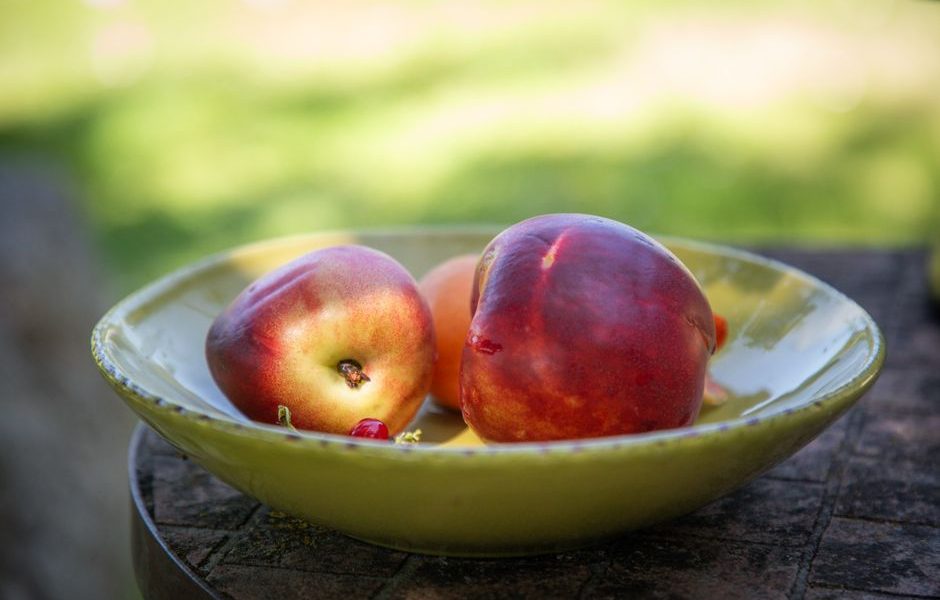
A good peach, tomato and basil salad should taste juicy, sweet, salty, and sharp in the same bite. The trick is controlling ripeness, cutting, and dressing so the fruit stays fresh instead of turning watery.
How to choose ripe peaches and tomatoes for this salad
Pick peaches that give slightly at the stem
Choose peaches with a strong fruity smell and skin that gives a little when you press near the stem. The flesh should feel soft enough to eat but not collapse under your fingers. A rock-hard peach will stay sour and dry, while an overripe peach will leak into the bowl before you add the dressing.
For two large servings, use two medium peaches, about 150g each. Yellow peaches give the salad a brighter sweet-tart flavour. White peaches taste softer and more floral, so pair them with a sharper dressing. Nectarines work when you want a firmer slice because their smooth skin does not need peeling.
Choose tomatoes for flavour, not uniform size
Use tomatoes that smell like tomatoes and feel heavy for their size. A mix of one large heirloom tomato and 150g of cherry tomatoes gives you both juicy slices and firm pieces. Roma tomatoes are a smart choice when your produce is very wet because they have fewer seeds and less loose juice.
Do not refrigerate ripe peaches or tomatoes before making the salad. Cold temperatures mute their aroma and make the texture feel dull. Keep them at room temperature, then chill the finished salad only if you need to hold it for a short time.
What ratio makes peach tomato basil salad taste balanced?
Use the four-part flavour ratio
Start with sweet fruit, add enough salt to wake it up, then bring in acid and fat. This ratio gives the salad structure without hiding the peaches or tomatoes.
| Ingredient | Amount for 2 servings | Purpose |
|---|---|---|
| Peaches | 2 medium, sliced | Sweetness and floral aroma |
| Tomatoes | 2 cups, cut into wedges or halves | Juiciness and savoury depth |
| Fresh basil | 12 to 16 leaves | Peppery, herbal lift |
| Extra-virgin olive oil | 2 tablespoons | Roundness and body |
| Red wine vinegar | 2 teaspoons | Clean acidity |
| Fine sea salt | 1/2 teaspoon, plus more to taste | Brings out fruit flavour |
| Black pepper | 1/4 teaspoon | Gentle heat |
Adjust the dressing before it reaches the fruit
Whisk the oil, vinegar, salt, and pepper in a small bowl first. Taste one drop from a spoon. It should seem slightly too sharp on its own because the peaches and tomatoes will soften the acidity. If it tastes flat, add another pinch of salt before adding more vinegar. Too much vinegar covers the basil and makes the fruit taste thin.
Balsamic vinegar also works, but use only 1 teaspoon at first. Its sweetness can make the salad heavy, especially with very ripe peaches. For a clean summer flavour, red wine vinegar is the better pick.
How to make peach tomato basil salad in 15 minutes
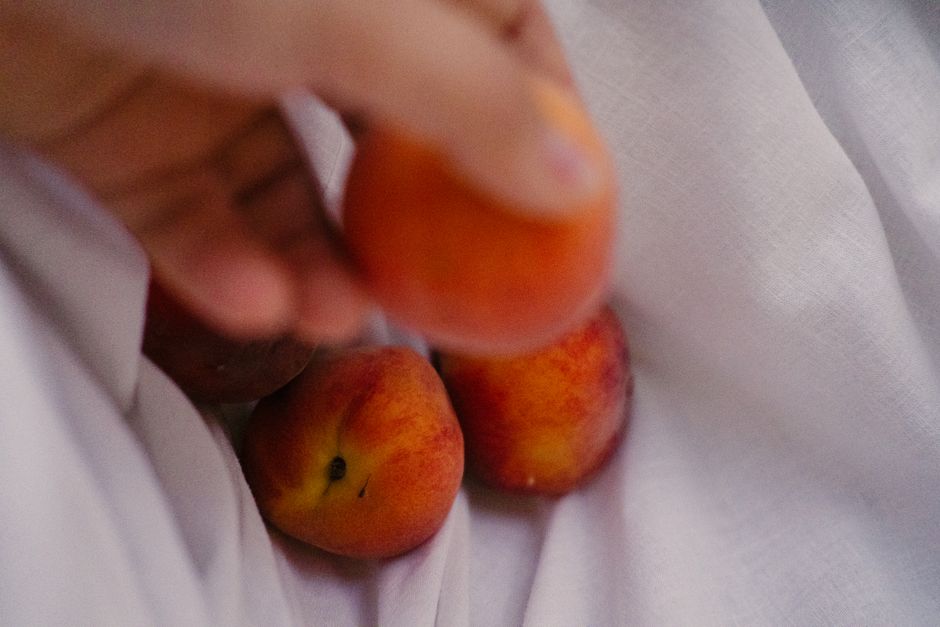
Prepare the ingredients in the right order
- Wash and dry everything. Rinse the peaches, tomatoes, and basil under cool water. Dry the basil and produce well. Extra water dilutes the dressing and causes the salad to pool.
- Make the dressing. Whisk 2 tablespoons of olive oil, 2 teaspoons of red wine vinegar, 1/2 teaspoon of salt, and 1/4 teaspoon of black pepper in a bowl.
- Cut the tomatoes first. Slice a large tomato into wedges or halve cherry tomatoes. If the tomato releases a large amount of liquid, drain the loose juice before it enters the salad.
- Cut the peaches into thick pieces. Make wedges about 1cm thick. Thin slices break quickly and disappear into the dressing.
- Tear the basil by hand. Large torn leaves stay fresher than finely chopped basil. Add the basil after the peaches and tomatoes so it does not bruise under the knife.
- Toss gently. Pour in half the dressing, fold with a wide spoon, then add more only if the fruit still looks dry.
- Rest for five minutes. This short pause lets the salt draw out flavour without turning the fruit soft.
Use a sharp knife and simple measuring tools
A sharp blade gives you clean peach cuts instead of crushed edges.
Use a wide shallow bowl instead of a deep mixing bowl. It keeps the fruit from stacking and lets you fold the dressing through the salad with fewer broken pieces.
Why red wine vinegar is the best dressing for this salad
Choose red wine vinegar for the clearest peach-and-tomato flavour. It has enough acidity to balance ripe fruit but less sweetness than balsamic vinegar, so the salad still tastes fresh rather than syrupy.
When to use lemon instead
Lemon juice is the best swap when the tomatoes taste mild or the peaches are very sweet. Use 1 tablespoon of lemon juice with 2 tablespoons of olive oil, then add salt gradually. Lemon gives a brighter, cleaner finish, but it can make underripe peaches taste even more sour.
When balsamic is the wrong choice
Skip thick balsamic glaze when the fruit is already soft and sweet. The glaze adds sugar, clings to the basil, and can overwhelm the tomato. Regular balsamic vinegar works in a small amount, but red wine vinegar remains the stronger choice for a salad served beside grilled fish, chicken, or crusty bread.
Add one optional ingredient only after tasting the dressed salad. A tablespoon of crumbled feta adds salt and creaminess. Two tablespoons of toasted almonds add crunch. Fresh mozzarella makes the dish more filling but pushes it toward a caprese-style salad, so use it only when the salad needs to serve as a light lunch.
What goes wrong with peach tomato basil salad?
Why did the salad turn watery?
Most watery salads start with wet produce, overripe peaches, or too much dressing. Dry every ingredient before cutting, remove excess tomato juice, and dress the salad five to ten minutes before serving. Do not salt the fruit thirty minutes ahead; salt pulls out water long before you need it.
Why does the basil turn dark?
Cut basil darkens when a knife bruises the leaves and the acid sits on them for too long. Tear the leaves by hand and add them last. If you need to prepare the salad early, keep the basil separate and fold it in just before serving.
When should you make a different salad?
Do not make this salad with hard peaches, pale tomatoes, or basil that has black spots. The recipe depends on fresh produce, so forcing it in winter usually produces a bland bowl. Use watermelon, cucumber, and mint when peaches are unavailable, or make a cucumber-tomato salad when you need a firmer dish that can sit on a buffet.
Keep leftovers covered in the refrigerator and eat them within 24 hours. The texture will soften, but the salad remains useful spooned over toasted bread or served beside scrambled eggs. The single most important takeaway is to use ripe fruit, dry it well, and add only enough sharp dressing to make the peach, tomato, and basil taste brighter.