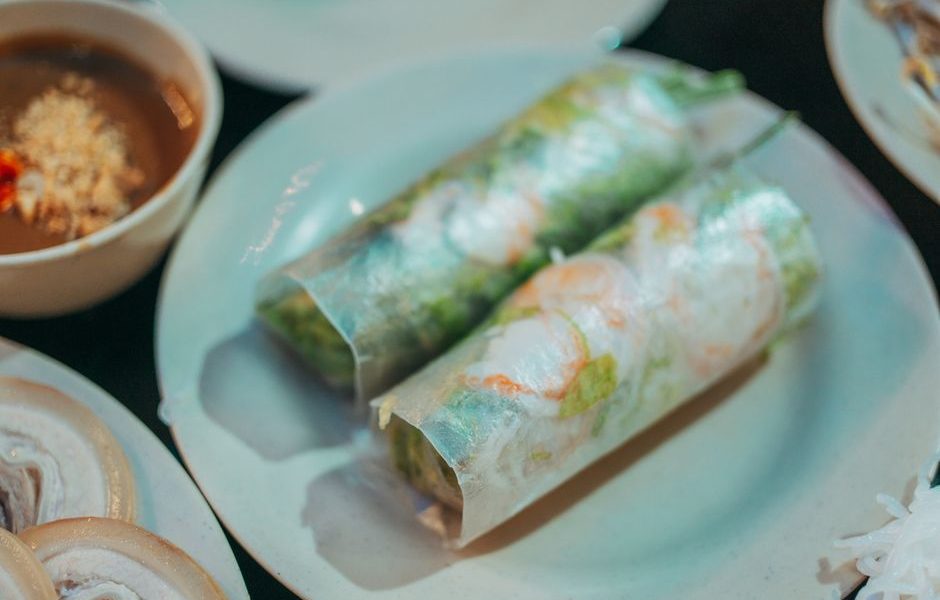
Vegan summer rolls usually fail for one of three reasons: the rice paper gets soaked, the filling is too bulky, or the vegetables release water before serving. The fix is simple. Use briefly softened wrappers, dry every filling well, and build each roll with a narrow strip of ingredients rather than a packed bundle.
Why Vegan Summer Rolls Tear or Turn Soggy
The rice paper wrapper is not meant to become soft in the bowl. It should still feel slightly firm when you place it on the board. It continues absorbing water while you add the filling, fold the sides and roll. Soaking it until it feels completely flexible creates a weak wrapper that sticks to the work surface and tears when you move it.
Use less water than you expect
Fill a wide shallow dish with warm water, not boiling water. Dip one wrapper for about 5 seconds, turning it once so both sides get wet. Lift it while the centre still feels firm. Lay it on a clean, slightly damp tea towel or a smooth chopping board. If the wrapper feels ready to eat before the filling goes in, it has already absorbed too much water.
Control moisture in the filling
Cucumber, lettuce and herbs all carry water. That does not make them unsuitable, but they need preparation. Pat cucumber sticks dry with kitchen paper. Wash herbs early enough to air-dry. Drain cooked noodles in a sieve, rinse them under cold water, then leave them for at least 5 minutes before rolling. Wet noodles make the wrapper slippery and encourage the roll to split at the seam.
Keep the filling narrow
For a 22 cm wrapper, use around 25g of noodles, two or three carrot sticks, two cucumber sticks, one strip of pepper and a small pinch of herbs. That is enough for a full roll. A mountain of filling makes the first fold difficult and puts pressure on the wrapper at both ends. A tight, narrow filling line is more important than a perfectly soft wrapper.
Slice vegetables into similar lengths, roughly 8 to 10 cm. Long pieces create a clean cross-section and help the roll stay straight. Avoid grated carrot unless you squeeze it dry first. Grated vegetables shed water quickly and make the centre slide forward as you roll.
How to Make Vegan Summer Rolls Step by Step
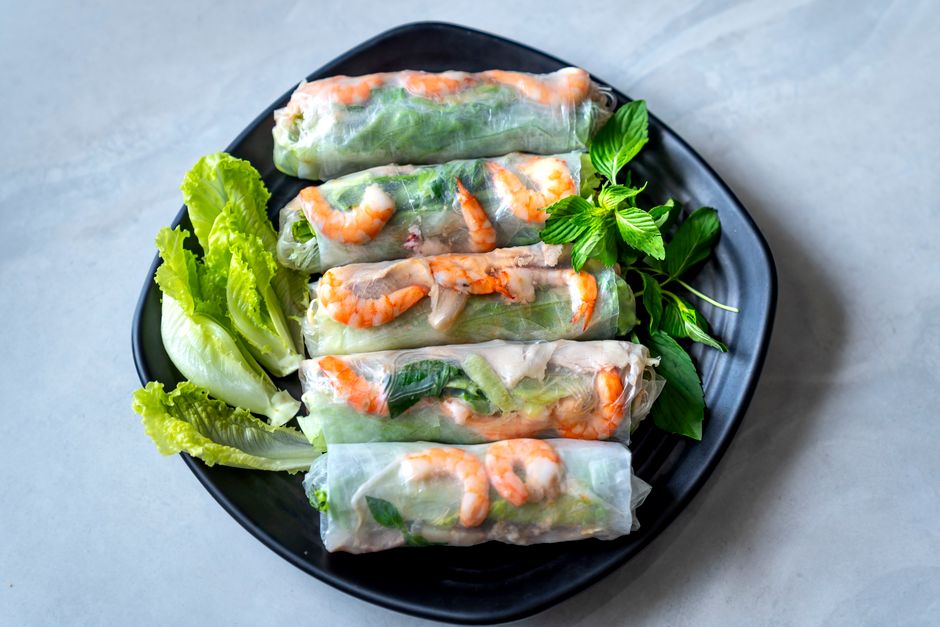
Prepare everything before soaking the first wrapper. Once the rice paper softens, the process moves quickly. Set a large board in front of you, keep the filling within reach and leave space between finished rolls so they do not stick together.
- Drain, rinse under cold water and leave in a sieve until no water drips from the noodles.
- Cut the vegetables. Slice one carrot, half a cucumber and one red pepper into 8 to 10 cm sticks. Shred two spring onions. Separate eight small lettuce leaves and pat all wet ingredients dry.
- Prepare the herbs. Pick about 20g mint and 20g coriander. Remove thick stalks. Keep the leaves loose instead of crushing them into a pile.
- Mix the peanut sauce. Whisk 100g peanut butter with soy sauce, rice vinegar, lime juice, maple syrup, garlic and warm water. Add chilli only after tasting the base.
- Soften one wrapper. Dip it in warm water for about 5 seconds. Lift it while the centre still feels firm, then lay it flat.
- Build the filling. Place a lettuce leaf just below the centre. Add noodles, carrot, cucumber, pepper, spring onion and herbs in a narrow horizontal line. Leave at least 4 cm clear at both sides.
- Fold the bottom edge. Lift the near edge over the filling and pull it back gently so the roll becomes compact. Do not squeeze hard.
- Fold the sides inward. Bring the left and right edges towards the centre. Keep the folds flat rather than pinching them.
- Finish the roll. Continue rolling away from you with steady pressure. The final seam should sit underneath.
- Store correctly. Place finished rolls on a plate with space between them. Cover with a clean damp tea towel and serve within 30 to 60 minutes.
What to do if a wrapper sticks
Do not pull it up immediately. Wait 10 seconds, then slide a damp fingertip under the edge. If the wrapper has fused to the board, the surface was too wet or the wrapper soaked too long. For the next roll, use less water and a dry board. A small tear can be patched with a piece of another softened wrapper, but the texture will be less clean.
How to make the rolls ahead
For a short lead time, prepare the vegetables, noodles and sauce up to 24 hours ahead, then roll close to serving. If you must make the rolls early, wrap each one loosely in a damp tea towel and cover the plate. Do not stack them. Refrigeration firms the rice paper and can make it rubbery, so a cool room is better for a one-hour window.
Peanut Sauce Questions That Change the Result
Can you make the dipping sauce without lime?
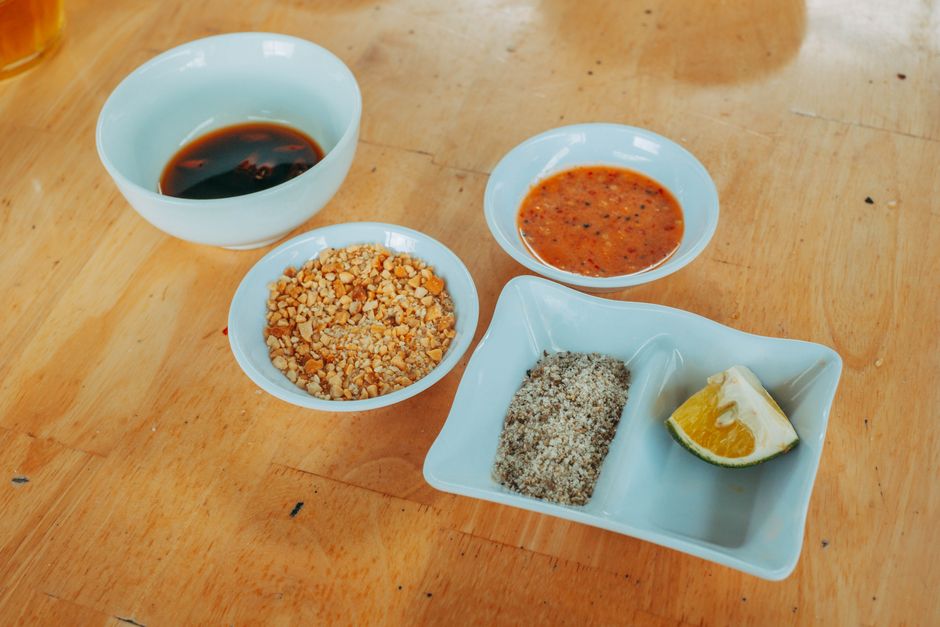
Yes. Use 1 tablespoon rice vinegar plus 1 teaspoon extra maple syrup. Lime gives a sharper, fresher taste, but rice vinegar keeps the sauce balanced. Do not replace the acid with plain water. Without acid, peanut butter and soy sauce taste heavy and salty.
How do you make the sauce less thick?
Add warm water one teaspoon at a time and whisk after each addition. Peanut butter thickens again as it cools, so make the sauce slightly looser than your final target. For a pourable sauce, use around 120ml water in total. For a dip that clings to the roll, 80 to 90ml is enough.
What is the best peanut-free alternative?
Use smooth sunflower seed butter in the same quantity. It has a slightly earthier flavour, so add an extra teaspoon of lime juice and a small pinch of sugar or maple syrup. Tahini also works, but it tastes more bitter and needs extra sweetness. For children or guests with severe allergies, check every wrapper, soy sauce and chilli product for cross-contact warnings.
The sauce can also become a dressing. Thin it with 2 to 3 tablespoons warm water and toss it through shredded cabbage, noodles or leftover vegetables. That gives the ingredients a second use without turning the rolls into a repetitive meal.
Serving, Storage and the Clear Verdict
Make these rolls for fresh eating, not long storage. Their strength is contrast: cool vegetables, soft noodles, fragrant herbs and a rich sauce. After several hours, the wrapper loses that clean bite. For a picnic, transport the filling and wrappers separately, then assemble at the destination if possible. This also prevents the sauce from leaking into the rice paper.
Serve two rolls per person for a light lunch, or three per person if they are the main meal. Add edamame, sliced fruit or a small cabbage salad for more substance. The rolls are naturally low in fat until the sauce is added, so the peanut dip is not a side detail. It supplies most of the richness and makes the meal satisfying.
When to choose another format
Do not make summer rolls for a crowded buffet where they will sit uncovered for hours. Rice-paper rolls dry out at the edges and stick together in a stack. Choose lettuce cups for a faster service, or make a noodle salad if guests need to serve themselves. Choose baked tofu wraps when you need a sturdier packed lunch that can travel for several hours.
Final comparison
| Situation | Reason |
|---|---|
| Fresh lunch within one hour | Best crunch, colour and texture when served soon after rolling. |
| Picnic with assembly space | Prevents soggy rice paper and lets each person build a fresh roll. |
| Long transport | They tolerate storage and movement better than softened rice paper. |
| Peanut allergy | It keeps the creamy texture while removing peanuts; check labels carefully. |
For the best result, roll the vegan summer rolls shortly before eating, keep the filling dry and serve the peanut sauce in a separate bowl. That combination gives you the crispest vegetables, the neatest wrappers and a meal that feels light without tasting incomplete.