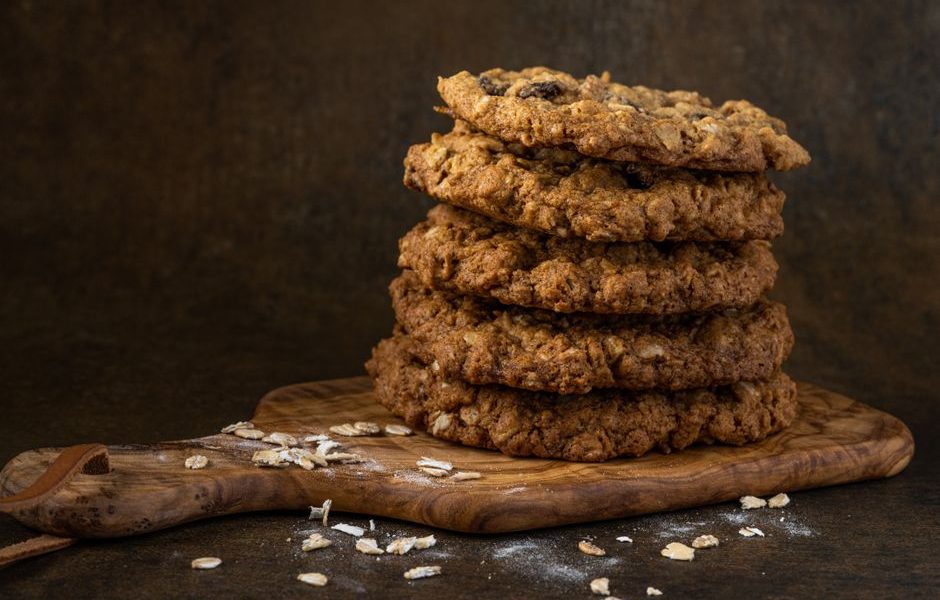
Why vegan oat cookies turn chewy instead of dry
A common misconception is that a chewy cookie needs eggs or dairy. It does not. Chew comes from the balance of moisture, sugar, fat and bake time, and this recipe gets that balance from plant milk, soft brown sugar, golden syrup and rolled oats.
Chewy does not mean underbaked
A properly baked chewy cookie should have set edges and a soft centre. The middle may look slightly underdone when the tray leaves the oven, but it firms as the cookie cools. If you wait for the centre to look completely dry, the finished biscuit will often turn hard.
The three moisture controls
Soft brown sugar holds more moisture than white caster sugar. Golden syrup adds stretch and helps stop the middle from crumbling. Rolled oats absorb liquid slowly, so the dough needs a short rest before baking. That rest gives the oats time to soften without making the dough wet.
What the oven must do
Use a fully heated oven at 180°C conventional or 160°C fan. A cold or crowded oven melts the fat before the dough can set. Bake one tray at a time on the middle shelf for the most even result. The best target is 10 to 12 minutes, depending on cookie size.
The clear verdict: for a soft, bendable cookie, remove the tray when the edges are lightly golden and the centres still look pale.
Which ingredients give the best UK texture?
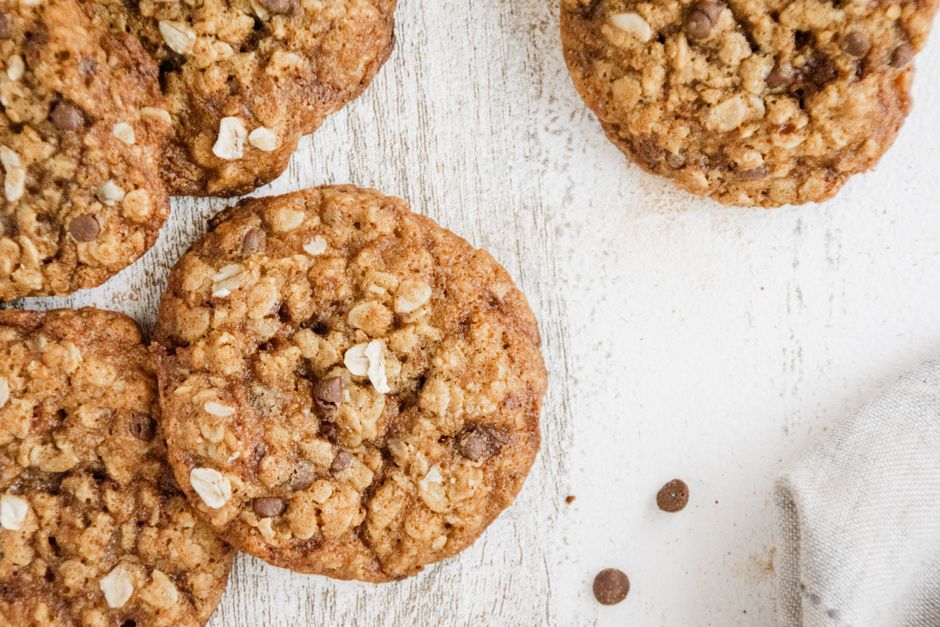
Use a kitchen scale for this recipe. Cup measurements vary, while 10 grams too much flour or oats can make the cookies noticeably firmer. The quantities below make 12 medium cookies, each about 7 centimetres wide.
Ingredient list for 12 cookies
- 100g rolled porridge oats
- 125g plain flour
- 1 teaspoon baking powder
- Half a teaspoon fine salt
- 100g vegan block butter, softened
- 90g light soft brown sugar
- 40g golden syrup
- 60ml unsweetened oat or soya milk
- 1 teaspoon vanilla extract
- 100g raisins
- Half a teaspoon ground cinnamon
Ingredient swaps that work
Use dairy-free block butter rather than a very soft tub spread because tub spreads contain more water. Replace raisins with the same weight of sultanas for a lighter, sweeter bite. If using large, dry raisins, soak them in hot water for 10 minutes, drain them well and pat them dry. Wet raisins can loosen the dough and cause excess spreading.
How to make the cookies step by step
This method needs one mixing bowl, a baking tray, baking paper and a wire rack. Let the softened butter sit at room temperature for 30 to 45 minutes. Do not melt it. Melted butter makes the dough greasy and usually produces flatter cookies.
Step 1: Build the dough
- Heat the oven to 180°C conventional or 160°C fan. Line one large baking tray with baking paper.
- Mix the softened vegan butter, brown sugar and golden syrup for about 60 seconds until smooth. A wooden spoon works well.
- Stir in the plant milk and vanilla. The mixture may look slightly split; that is fine.
- Add the flour, oats, baking powder, salt and cinnamon. Stir only until no dry flour remains.
- Fold in the raisins. Stop mixing as soon as they are spread through the dough.
Step 2: Portion and rest
Divide the dough into 12 portions of about 55g each. Roll each portion into a loose ball and place them at least 5 centimetres apart. Chill the tray for 20 minutes. This short chill keeps the fat firm and gives the oats time to absorb moisture.
Step 3: Bake and cool
Bake for 10 to 12 minutes. The edges should be lightly golden, while the centres remain soft and pale. Leave the cookies on the hot tray for 10 minutes, then move them to a wire rack. They will seem fragile at first. Cooling completes the set without drying the middle.
Why did the cookies spread too much?
The butter may have been melted, the tray may have been warm, or the dough may have skipped its chill. Chill the shaped dough for 30 minutes and use a cool, lined tray. Check the oven with an oven thermometer if the cookies remain flat. An oven that runs below 160°C fan may allow the fat to melt before the flour sets.
Why are the cookies dry or crumbly?
Too many oats, too much flour or overbaking causes dryness. Weigh both ingredients instead of scooping them into a cup. If the dough already feels stiff before baking, mix in one teaspoon of plant milk at a time until it becomes soft but scoopable. Bake for one or two minutes less on the next tray.
Why is the middle still raw?
Large dough balls can brown at the edge while staying wet inside. Make 12 portions rather than 8 large ones, and flatten each ball slightly to about 1.5 centimetres thick. Allow the cookies to cool on the tray for the full 10 minutes. If the centre is still liquid after cooling, bake the next batch for two extra minutes at the same temperature.
Why did the raisins burn?
Raisins exposed on the surface can darken quickly. Press a few into the dough rather than leaving all of them on top. Very dry raisins also burn more easily, so soak them briefly and dry them before mixing.
Can you change the recipe without losing the chew?
Yes, but every swap changes the water or fat balance. Make one change at a time so you can tell what worked. The safest changes preserve the total amount of flour, oats and dried fruit.
Gluten-free version
Replace the plain flour with 125g of a gluten-free plain flour blend that contains a binding ingredient such as xanthan gum. Use certified gluten-free oats if the biscuits are for someone with coeliac disease. Let the mixed dough rest for 25 minutes because gluten-free flour often absorbs liquid more slowly.
Lower-sugar version
Reduce the brown sugar from 90g to 70g, but keep the golden syrup. The cookies will be less sweet and slightly more cake-like. Do not remove both sweeteners, because sugar helps retain moisture and gives the edges their light crispness.
Nut-free and fruit-free options
For a nut-free bake, keep the recipe as written and check every packet for cross-contamination warnings. For fruit-free cookies, replace the raisins with 100g of vegan dark chocolate chunks or 80g of pumpkin seeds. Chocolate gives a softer centre, while seeds add crunch and make the cookies less sweet.
The strongest everyday version remains the original oat-and-raisin dough. Choose the chocolate version only when you want a richer dessert cookie, not a classic breakfast-style biscuit.
How should you store and bake a larger batch?
These cookies keep their best texture when you protect them from air and avoid baking more than you need. A sealed container matters as much as the recipe.
Storage at room temperature
Cool the cookies completely before storing them in an airtight tin. Place baking paper between layers if the centres are very soft. They stay chewy for up to four days at a cool room temperature. A slice of bread in the tin can soften them, but replace it daily and remove it if the tin feels damp.
Freezing the dough
Shape the dough into 12 balls, place them on a lined plate and freeze until firm. Transfer them to a labelled freezer container and use within three months. Bake directly from frozen at 160°C fan for about 14 to 16 minutes. Add two minutes if the portions are larger than 55g.
Scaling the recipe
For 24 cookies, double every ingredient and use two trays. Chill the second tray while the first bakes. Do not double the bake time. For a small six-cookie batch, halve every ingredient, but keep the full teaspoon of vanilla only if you want a stronger flavour. A half batch usually needs the same 10 to 12 minutes because cookie size controls baking time, not dough quantity.
Which version should you bake?
The original recipe is the best choice for a soft, classic cookie with a clear oat flavour and sweet raisin pockets. The alternatives solve specific problems, so use the comparison below before changing the dough.
| Version | Best for | Texture | Main adjustment |
|---|---|---|---|
| Classic oat and raisin | Soft everyday biscuits | Chewy centre, lightly crisp edge | Use 100g raisins and chill for 20 minutes |
| Gluten-free | Gluten-free diets | Soft but slightly more delicate | Use gluten-free flour and certified oats |
| Chocolate chunk | Richer dessert cookies | Soft and fudgy around the chocolate | Replace raisins with 100g vegan dark chocolate |
| Pumpkin seed | Less-sweet, nut-free baking | Chewy with a firm crunch | Replace raisins with 80g pumpkin seeds |
| Frozen dough | Fresh cookies on demand | Chewy if baked from frozen | Bake 14 to 16 minutes at 160°C fan |
The simplest verdict
Choose the classic version when you want the most reliable result.
When not to change it
Do not reduce the oats, skip the chill or replace the block butter with melted fat if chewiness is your priority. Those changes remove the structure that keeps the centre soft.
Final comparison
- For classic chewy cookies: use raisins, brown sugar and a 20-minute chill.
- For a gluten-free batch: use a measured flour blend and certified oats.
- For dessert-style cookies: use vegan dark chocolate instead of raisins.
- For future baking: freeze shaped dough and bake portions as needed.