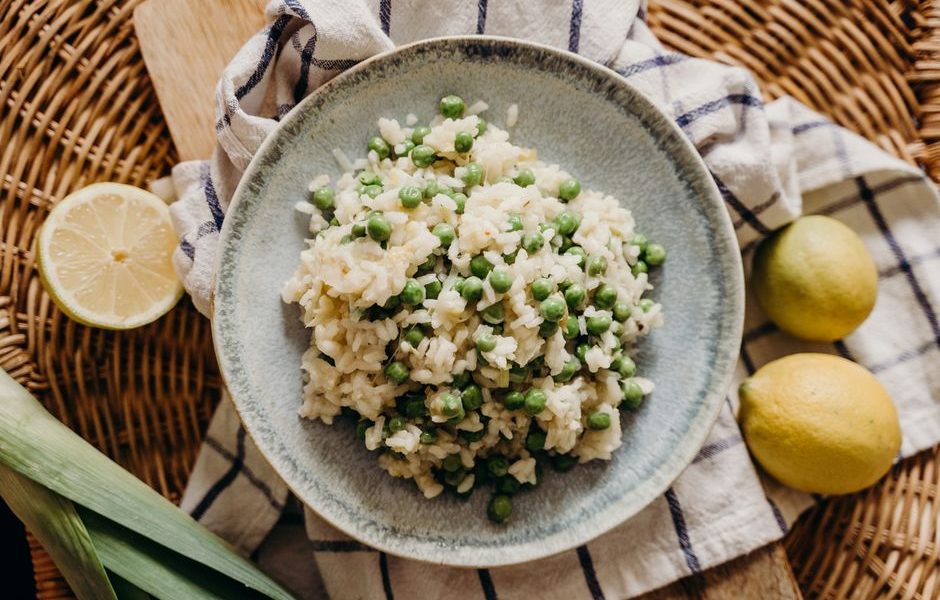
This pea and mint risotto solves those problems with a simple vegan method. The rice stays creamy but keeps a little bite, the peas taste fresh, and mint adds a clean spring flavour without turning the whole dish into toothpaste.
Why Pea Risotto Goes Wrong Before Cooking
Risotto needs starch, not a flood of liquid
Arborio rice works because its short, plump grains release starch as they rub against one another in hot stock. That starch thickens the liquid and creates the creamy texture people want from risotto. The rice itself should remain separate enough to chew. Creaminess comes from the cooking process, not from pouring in dairy cream.
The common mistake is adding all 1.2 litres of stock at once. The rice boils, the outside softens quickly and the centre struggles to catch up. A second mistake is cooking over high heat. The base catches before the grains absorb enough liquid, so you end up with burnt onion, watery sauce and rice that is still firm inside.
Peas and mint need careful timing
Frozen peas are already blanched, so they do not need 20 minutes in the pan. Add them too early and they lose their colour and fresh sweetness. Add them too late and they remain cold in the centre of the dish. For the best result, stir most of the peas through during the final five minutes, then blend a smaller portion with stock and fold it in at the end.
Mint behaves in a similar way. Long cooking makes it dull and slightly medicinal. Chop it while the rice rests, then add it off the heat with lemon zest and juice.
Bottom line: a good risotto is controlled starch cooking, not a creamy rice casserole. Keep the heat moderate and add liquid gradually.
The Ingredients That Make Spring Risotto Taste Fresh
Use this measured ingredient list
Do not treat the ingredients as a rough suggestion. The liquid ratio and the final additions decide whether the dish tastes bright or flat.
| Ingredient | Amount | Purpose |
|---|---|---|
| Arborio or Carnaroli rice | 300g | Creates the creamy base while keeping a firm centre |
| Vegetable stock | 1.2 litres, hot | Provides the cooking liquid and seasoning |
| Frozen garden peas | 300g | Adds sweetness, colour and texture |
| Brown onion | 1 medium, finely diced | Builds the savoury base |
| Garlic | 2 cloves, finely chopped | Adds depth without dominating the peas |
| Olive oil | 2 tablespoons | Softens the onion and coats the rice |
| Dry white wine | 150ml, optional | Adds acidity and lifts the rice flavour |
| Fresh mint | 25g, finely chopped | Gives the risotto its spring character |
| Lemon | 1 zested and juiced | Stops the dish tasting heavy |
| Nutritional yeast | 2 tablespoons | Adds savoury, nutty flavour in place of Parmesan |
What the ingredient list does not need
You do not need vegan cream, coconut milk or a large amount of plant cheese. Those ingredients can make the sauce heavy and hide the peas.
Use low-salt stock if possible. The stock reduces as the rice cooks, and a salty cube can take over the whole pan. If your stock tastes strong before cooking, dilute it with 100 to 150ml water.
Fresh finishing ingredients make a bigger difference here.
How to Cook Pea and Mint Risotto
Prepare the stock and pea purée
Put the vegetable stock in a saucepan and keep it just below a simmer. It should be hot when it reaches the rice; cold stock drops the temperature and slows the cooking. Place 100g of the peas in a blender with 100ml of the hot stock. Blend until mostly smooth, then set the purée aside. It does not need to look perfectly silky.
Warm the olive oil in a wide, heavy frying pan or shallow casserole over medium-low heat. Add the diced onion and a small pinch of salt. Cook for 7 to 8 minutes, stirring occasionally, until soft and translucent rather than browned. Add the garlic and cook for 30 seconds.
Add the rice, then stock in measured ladles
- Stir in the rice and cook for 2 minutes, coating every grain in oil. The edges should look slightly translucent.
- Pour in the wine, if using, and stir until almost completely absorbed. This takes about 2 minutes.
- Add one ladle of hot stock, roughly 150ml. Stir slowly until the liquid is nearly absorbed.
- Continue adding one ladle at a time. Wait until the pan looks thick and the rice is beginning to show through before adding more.
- After 15 minutes, taste a grain. It should be soft outside with a small firm centre. Continue for another 3 to 6 minutes if needed.
- Stir in the remaining 200g peas during the final 5 minutes. They should stay bright green and tender.
- Turn off the heat. Fold in the pea purée, chopped mint, lemon zest, 2 tablespoons of lemon juice and nutritional yeast.
- Cover the pan and rest it for 2 minutes. Taste, then add black pepper and salt only at the end.
The finished risotto should slowly spread across the plate when served. If it sits in a solid mound, stir in 2 tablespoons of hot water. If it runs like soup, leave it uncovered for 1 minute and stir once.
Bottom line: use medium-low heat and patience. The stock should take about 20 minutes to add, not five.
How to Fix Common Vegan Risotto Problems
Why is the rice still hard?
If the rice is hard but the pan is dry, add 100ml hot stock and keep cooking for 3 to 5 minutes. Your heat was probably too high, or the ladles were too small. Do not add cold water, because it interrupts the cooking and leaves the outer grains soft while the centre stays firm.
If the rice is hard and the pan still contains plenty of liquid, lower the heat and stir more often. The stock may not be hot enough, or you may have used a large, deep pan that loses heat when each ladle goes in.
Why does the risotto taste bland or heavy?
Bland risotto usually lacks acid rather than salt. Add lemon juice a teaspoon at a time, tasting after each addition. A little extra black pepper also helps. Heavy risotto needs loosened texture, so stir in hot water rather than adding more oil or plant cream.
Do not rinse the rice. Rinsing removes the surface starch that helps thicken the sauce. Do not wash chopped mint hours before cooking and leave it wet in the fridge, because it bruises and darkens. Finally, do not cook the peas for the full rice-cooking time. That is the fastest route to a grey-green dish.
Bottom line: fix texture with hot liquid and fix dull flavour with lemon before reaching for more salt.
How to Serve and Reheat the Risotto
The best finish for a spring dinner
Serve the risotto in warm, shallow bowls with a few whole peas, torn mint leaves, lemon zest and a thin drizzle of olive oil, because the fresh toppings bring back the colour and aroma that fade during cooking.
What to do with leftovers
Eat the risotto straight away if you can, but refrigerate leftovers within two hours in a shallow container and use them within two days; reheat one portion in a frying pan with 2 tablespoons of water until steaming hot, knowing that the rice will be thicker and less loose than it was on the first night.
Do not freeze this dish if texture matters to you, because thawing breaks the pea purée and makes the rice soft, but you can turn cold leftovers into small patties by mixing them with breadcrumbs, shaping them into cakes and frying them in a little oil until crisp.
For the original problem of a disappointing bowl of risotto, the resolution is simple: keep the rice moving through hot stock, protect the peas from overcooking, and finish with mint and lemon after the heat is off, so the plate in front of you tastes like spring rather than reheated rice.