You have 30 minutes, one frying pan, and a tin of chickpeas that needs a better ending than hummus. The reliable answer is tomato and chickpea shakshuka: a thick spiced tomato sauce, tender legumes, and eggs cooked directly on top. The key decision is simple. Reduce the sauce before adding the eggs, or the finished dish will taste watery and leave the whites loose.
Why Chickpeas Make Shakshuka More Filling
My verdict: chickpeas improve shakshuka when you want a complete vegetarian meal, not just eggs in sauce. Eggs provide protein and richness, but chickpeas add starch, fibre, and a firm bite that keeps the dish satisfying after the first serving. They also stretch a two-egg frying pan into a meal for two without turning the recipe into a heavy casserole.
The base needs enough body
Classic shakshuka depends on a concentrated tomato base. Chickpeas change that balance because they release a small amount of moisture and absorb some of the sauce. Start with 1 tablespoon of olive oil, 1 medium diced onion, and 1 diced bell pepper. Cook them for 7 to 9 minutes until soft and lightly golden. Add 3 minced garlic cloves, 1 teaspoon ground cumin, 1 teaspoon smoked paprika, and one-quarter teaspoon cayenne. Cook the spices for 30 seconds so the oil carries their flavour.
Use the right chickpea amount
For a 25cm frying pan, use one drained and rinsed 400g tin of chickpeas with two 400g tins of chopped tomatoes. That ratio leaves enough sauce for four eggs. Dry the chickpeas before adding them; excess canning liquid thins the base. Simmer the tomato mixture uncovered for 12 to 15 minutes, then stir in the chickpeas for another 3 minutes. The sauce should mound slightly on a spoon. If it runs across the pan like soup, keep reducing it before cracking the eggs.
How to Build the Sauce Without Watery Eggs
The strongest cooking decision is to treat the sauce and eggs as two separate timing problems. Build flavour first, reduce moisture second, and cook the eggs last. That order gives you set whites and yolks that remain soft instead of eggs disappearing into tomato liquid.
A practical seven-step method
- Warm 1 tablespoon of olive oil in a wide frying pan over medium heat.
- Cook the onion and bell pepper for 7 to 9 minutes, stirring twice.
- Add garlic, cumin, paprika, cayenne, and 1 teaspoon salt for 30 seconds.
- Pour in the tomatoes and scrape the bottom of the frying pan.
- Simmer uncovered for 12 to 15 minutes until the sauce thickens.
- Fold in the drained chickpeas and make four shallow wells.
- Crack one egg into each well, cover, and cook for 5 to 8 minutes.
Read the eggs, not only the clock
At medium heat, the whites usually set in 6 minutes while the yolks stay soft. Add 2 minutes for fully set yolks. If the whites around the yolks remain translucent, cover the pan again for 60 seconds. If the sauce bubbles hard, lower the heat; aggressive bubbling can toughen the egg whites before the yolks reach the texture you want. The final pan should show small bubbles at the edges, not a rolling boil.
Common Shakshuka Mistakes That Ruin the Texture
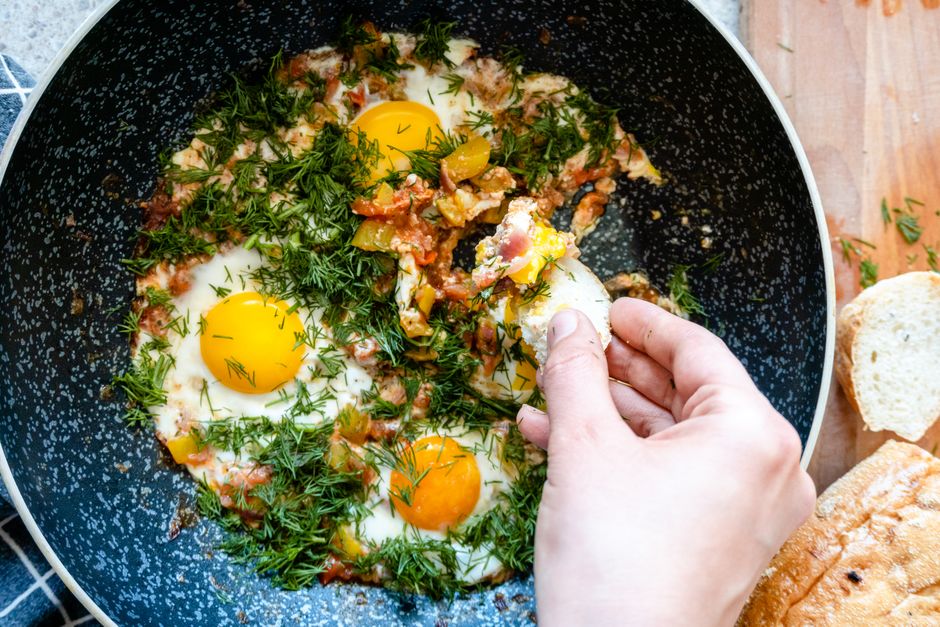
The biggest risk is adding eggs to a sauce that has not reduced. That single mistake causes most disappointing pans. A thick base holds the eggs in place, keeps the chickpeas from sinking, and gives each serving enough sauce to scoop with bread.
Why did the eggs disappear?
The wells were too shallow, or the sauce was too loose. Use the back of a spoon to make four distinct pockets, then crack the eggs close to the surface. If the whites spread immediately, lift them gently back toward the yolk with a spatula. Do not stir the pan after the eggs go in. Stirring breaks the whites and turns the top into a scrambled tomato mixture.
Why does the bottom burn first?
High heat and a thin frying pan are the usual causes. Once the sauce thickens, reduce the burner to medium-low before adding the eggs. A heavy 25cm frying pan distributes heat more evenly, but any pan works if you stir the sauce during reduction and lower the heat as soon as bubbles become large. Add a tablespoon of water only if the sauce becomes pasty before the eggs cook; adding more than that creates the watery texture this dish is meant to avoid.
How to Serve and Adapt Chickpea Shakshuka
My recommendation is to serve tomato and chickpea shakshuka straight from the frying pan with toasted bread, because the bread absorbs the sauce and turns the dish into a complete meal. Add fresh herbs after cooking, not during the long simmer, so their flavour stays sharp.
Build a balanced serving
For two people, use four eggs and serve each person two eggs with half the chickpeas and sauce. Finish with 2 tablespoons of chopped parsley or coriander, a spoonful of plain yogurt, and a small drizzle of olive oil. Toasted sourdough gives the firmest scoop, while pita or flatbread makes the meal softer and more flexible. A simple cucumber salad adds crunch and acidity without competing with the tomato base.
When to choose another version
Skip chickpea shakshuka when you need a very light breakfast or when the meal must be ready in under 15 minutes; plain tomato-and-egg shakshuka cooks faster. Choose white beans when you want a softer texture, or add spinach during the final 2 minutes if you need more vegetables. Do not add courgette or mushrooms at the start unless you are prepared to cook out their water first. For the most dependable result, reduce the tomato sauce until thick, fold in the chickpeas, and cook the eggs gently on top.