You have one dessert left to make before Christmas dinner, the sponge is cooling, and a long split has appeared across the middle. A vegan chocolate yule log can be tender, rich and easy to slice, but the timing matters more than fancy decoration. This UK recipe uses a thin oil-based sponge, a quick chocolate filling and a firm ganache that hides small surface faults without turning greasy.
The quantities make one log for 8 to 10 people. Use a 30cm x 20cm Swiss roll tin, weigh the flour, and prepare the filling before the sponge goes into the oven. The main verdict is simple: roll while warm, then let the filled log cool fully before covering it.
Why vegan chocolate yule logs crack or turn dry
The sponge needs flexibility, not just rise
A traditional Swiss roll gets structure from eggs, which trap air and help the cake stretch as you roll it. A vegan sponge needs a different balance. Oil keeps the crumb soft, plant milk provides moisture, and a small amount of acid reacts with bicarbonate of soda to give lift. Too much flour makes the sheet stiff. Too much liquid leaves the centre sticky and more likely to tear.
That is why this recipe uses plain flour rather than bread flour, cocoa in a measured amount, and a shallow tin. A thick cake has farther to bend. A thin sheet reaches the centre of the spiral with less pressure.
Temperature controls the roll
Roll the cake when it feels warm but not wet. If you wait until it reaches room temperature, the starches set and the sponge loses its stretch. If you roll it straight from the oven, steam can make the surface tacky. Leave it in the tin for five minutes, then turn it onto baking paper dusted with cocoa or icing sugar. Peel away the lining paper and roll the cake with the fresh baking paper inside.
Verdict: a flexible vegan log comes from a thin, lightly baked sponge and fast handling. Extra baking time will not make it safer; it will make it drier.
Vegan yule log ingredients and reliable UK swaps
Exact ingredient list
For the sponge, use 160g plain flour, 35g unsweetened cocoa powder, 150g caster sugar, 1 teaspoon baking powder, half a teaspoon bicarbonate of soda, and a quarter teaspoon fine salt. Mix 180ml unsweetened plant milk with 1 tablespoon lemon juice, then leave it for five minutes. Add 60ml neutral oil and 1 teaspoon vanilla extract.
The filling needs 200g vegan block butter, 180g icing sugar, 25g cocoa powder, 1 tablespoon plant milk and a pinch of salt. For the covering, use 200g dark chocolate with at least 60% cocoa solids and 150ml plant-based single cream.
How to bake and roll the chocolate sponge
Mix the batter in the right order
- Heat the oven to 180°C fan, or 200°C conventional. Line a 30cm x 20cm Swiss roll tin with baking paper, leaving a small overhang on two sides.
- Sift the flour, cocoa, baking powder, bicarbonate of soda and salt into a bowl. Whisk in the caster sugar.
- Stir the lemon juice into the plant milk. Add the oil and vanilla, then pour the wet mixture into the dry ingredients.
- Fold just until no dry flour remains. Do not beat the batter for several minutes; overmixing develops a tighter crumb.
- Spread the batter into the tin. Push it into the corners with a palette knife so the centre and edges have a similar thickness.
- Bake for 10 to 12 minutes. The surface should spring back when pressed lightly, and a skewer should come out with a few moist crumbs rather than liquid batter.
Roll before the cake sets
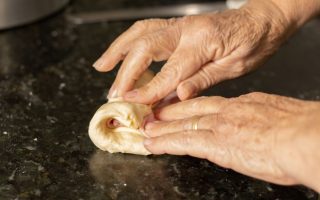
Place a clean sheet of baking paper on the worktop and dust it lightly with cocoa. After five minutes, turn the sponge onto the paper. Trim the two short edges if they look hard. Make a shallow cut about 2cm from one short edge, then roll the cake tightly from that edge, keeping the paper inside the coil. Leave it rolled for 20 minutes.
Unroll it carefully, spread the filling to within 1cm of the edges, and roll again. The first warm roll trains the sponge into its shape; the second roll holds the filling in the centre.
Key control point: start checking at 10 minutes. A dry edge is the most common cause of a split log.
How should the filling and ganache be made?
Can the filling be made without a specialist mixer?
Yes. Beat the vegan block butter for two minutes, then add the sifted icing sugar and cocoa in three additions. Add the plant milk and salt only after the mixture looks smooth. The mixture should spread without pulling at the sponge.
How do you make ganache that sets cleanly?
Warm the plant-based cream until steaming but not boiling. Pour it over the chopped chocolate and leave it untouched for three minutes. Stir from the centre outward until glossy. If the mixture looks thin, wait 10 minutes before adding more chocolate; it thickens as it cools.
Spread the ganache when it has the texture of soft butter. Drag a fork along the log to create bark lines, then chill it for at least 30 minutes. The ganache should cover the cake, not soak into it.
For a sharper chocolate flavour, a vegan dark chocolate with around 70% cocoa is the better choice. For children who prefer a sweeter dessert, use a vegan chocolate closer to 60% cocoa and reduce the filling salt slightly.
Best filling method: use a thin layer of buttercream and a ganache made with a 4:3 chocolate-to-cream ratio by weight. This gives the log a firm centre and a coating that slices cleanly.
Vegan yule log mistakes that ruin the result
If the sponge cracks
Small cracks are normal and easy to cover. A deep split usually points to one of four causes: the sponge baked too long, the edges were thicker than the middle, the cake cooled flat, or the filling was spread too thickly. Trim away a very hard edge, brush the sponge with a tablespoon of plant milk, and use the ganache to close the visible seam.
Do not pour hot ganache over a warm log. The filling will soften, the spiral may slide, and the outside will look oily. Chill the filled cake first, then apply ganache that has cooled to a spreadable consistency.
If the centre is gummy
A gummy centre means the sheet needed more time or the batter was too thick in the middle. Put the next batch into a fully heated oven and level the batter before baking. Do not solve the problem by adding extra flour. That can remove moisture from the edges while leaving the centre heavy.
If the filling leaks
Leave a 1cm border around the sponge and stop the filling short of the final edge. As you roll, pressure pushes the buttercream forward. A cold filling is easier to control than one that has been sitting beside a warm oven. If the log still moves, chill it seam-side down for 20 minutes before decorating.
One more failure mode deserves attention: cutting the log immediately after decorating. The ganache needs time to firm, and the sponge needs time to settle around the filling. A rushed slice can look broken even when the recipe worked.
The practical verdict: do not chase a perfect spiral. A stable sponge, restrained filling and cool ganache matter more than a flawless first roll.
How to decorate and store a vegan chocolate yule log
Use decoration that supports the dessert
Keep the decoration simple: fork-marked ganache, a dusting of icing sugar, and a few fresh cranberries or rosemary sprigs removed before eating. Avoid heavy wet fruit on top, since it can soften the coating. A small cut from one end can be attached to the side with ganache to create a branch shape.
Make it ahead without drying it
Prepare the log one day before serving. Chill it uncovered for 30 minutes so the coating firms, then place it in an airtight container. Bring it out 30 to 45 minutes before slicing. The fridge keeps the filling stable, but serving it ice-cold hides the chocolate flavour.
Freeze the undecorated filled log for up to one month, wrapped tightly; thaw it overnight in the refrigerator before adding the final ganache.
Best serving plan: make the filled log the day before, decorate it on the morning of serving, and slice it after a short rest at room temperature.
Which vegan chocolate yule log version should you make?
Choose by the problem you need to solve
The standard recipe is the strongest choice for a first attempt because it balances a flexible sponge with a firm filling. A gluten-free version works when the flour blend already contains binders, but it may feel slightly more fragile. A richer ganache suits adults who want a dark chocolate finish; a sweeter coating is easier for children and guests who dislike bitter cocoa.
Final comparison
| Version | Best for | Main trade-off |
|---|---|---|
| Standard oil-based sponge | First-time bakers and mixed-age guests | Needs careful timing during the warm roll |
| Gluten-free sponge | Guests avoiding wheat | More delicate and needs a binder |
| 70% dark chocolate ganache | Strong chocolate flavour | Less sweet and firmer when chilled |
| Make-ahead filled log | Christmas lunch planning | Needs airtight storage to protect the sponge |