The trick is not fancy equipment; it is getting the chocolate, coconut cream, orange and chilling time in the right balance.
What makes vegan orange chocolate truffles set properly?
The fat-to-liquid balance matters most
A truffle is a firm ganache rolled into a bite-sized ball. Traditional ganache uses double cream, but a vegan version still needs the same basic balance: enough fat to make the centre smooth, enough chocolate solids to let it firm, and very little extra water.
Thin coconut drink from the fridge aisle is the wrong ingredient. It contains too much water and too little fat, so the mixture can stay loose even after several hours. If the ganache looks oily, the chocolate and cream have not blended into one stable mixture. If it looks dry and pasty, the chocolate is taking over.
Orange brings flavour, acid and moisture
Orange zest gives the strongest flavour without adding much liquid. Finely grate only the bright outer skin of one large unwaxed orange. The white pith underneath tastes bitter. Two teaspoons are enough; a large splash can make the ganache split.
Salt also matters. A small pinch makes dark chocolate taste rounder and stops the orange from seeming flat. The best result is a truffle that tastes of orange first, then cocoa, with no greasy coating on the tongue. That balance is the real reason this category works: ganache turns a few shelf-stable ingredients into a small dessert with a rich texture and a long finish.
How to make vegan orange chocolate truffles step by step
Prepare the mixture
- Chill one 400ml tin of full-fat coconut milk overnight. Open it without shaking and weigh 120g of the thick cream into a small saucepan.
- Finely grate the zest of one large orange. Measure 200g of chopped vegan dark chocolate into a heatproof bowl. Smaller pieces melt more evenly.
- Warm the coconut cream over low heat until steaming but not bubbling. Stir in one tablespoon of maple syrup, the orange zest and a pinch of fine salt.
- Pour the hot cream over the chopped chocolate. Leave it untouched for two minutes, then stir slowly from the centre outwards until glossy.
- Add one teaspoon of orange extract and up to two teaspoons of orange juice. Stop as soon as the mixture looks smooth. More juice does not mean more flavour; it mainly adds water.
Chill, portion and coat
- Cover the bowl and chill the ganache for two to three hours. It should feel firm when pressed but still yield to a spoon.
- Line a tray with baking paper. Scoop portions of about 18g each. A level tablespoon is close, but kitchen scales give much neater results.
- Roll each portion quickly between cool palms. If the mixture softens, chill it again for 20 minutes instead of adding more chocolate.
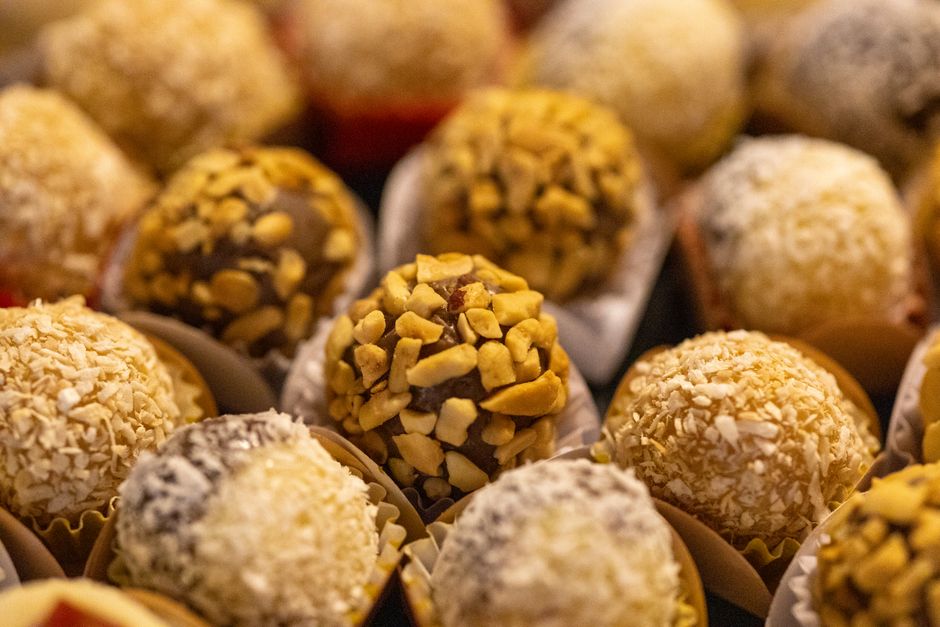
- Coat the truffles in cocoa powder, finely chopped toasted hazelnuts, desiccated coconut or grated dark chocolate. Dust off excess cocoa before serving.
- Store the finished truffles in a sealed container in the fridge. Let them stand for 10 minutes before eating so the centre becomes creamy.
The main timing rule is simple: do not rush the first chill and do not leave the rolled truffles on a warm worktop.
Why do vegan chocolate truffles turn grainy or too soft?
Grainy ganache usually comes from heat
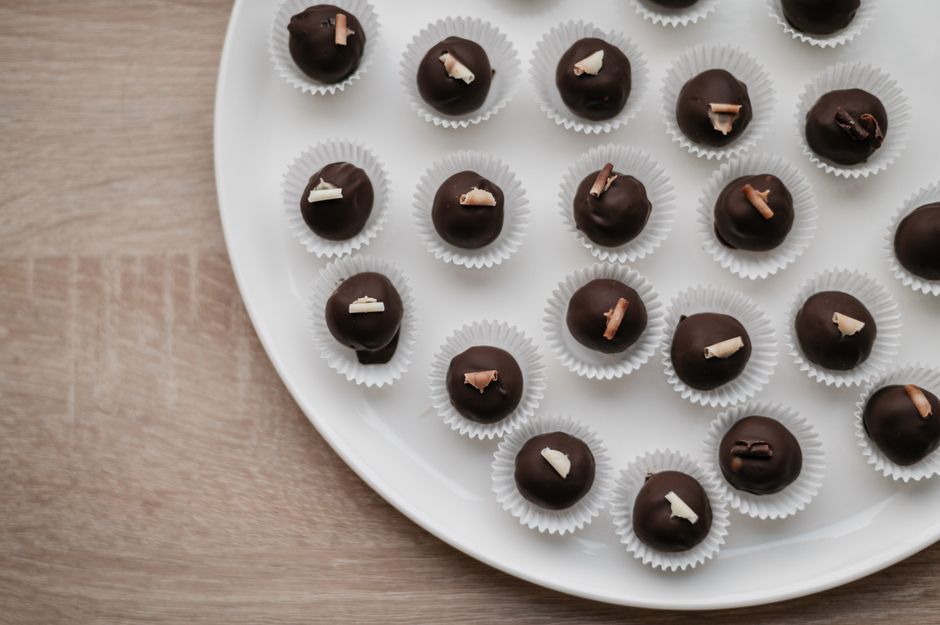
The most common mistake is boiling the coconut cream. High heat can make the fat separate, while overheated chocolate can turn thick and sandy. Keep the cream below a simmer and remove it from the hob as soon as steam rises. The bowl should feel warm, not scorching, when you begin stirring.
Another problem is adding cold orange juice straight from the fridge. The sudden temperature change can make the chocolate seize. Use room-temperature juice and add it only after the chocolate has melted. If the mixture becomes grainy, place the bowl over a pan of barely warm water and stir slowly. A teaspoon of warm coconut cream can sometimes bring it back together, but do not keep pouring in liquid.
Soft truffles need a measured fix
Soft ganache is usually caused by thin coconut milk, too much juice or an inaccurate chocolate measurement. Do not throw in a handful of cocoa powder. That makes the centres chalky. First chill the mixture for four hours. If it still cannot hold a scoop, melt 30g more dark chocolate, stir it into the ganache and chill again.
There are also times when you should not make truffles. Skip this recipe if you need a dessert that can sit in direct summer heat for several hours. Coconut-based ganache softens quickly. Make chocolate bark or dipped fruit instead. Do not use low-fat coconut milk simply because it is already in the cupboard. It saves a small amount of money but often creates a loose mixture that needs rescuing.
Finally, never add orange pith, wet toppings or fresh fruit pieces to the centre. They add bitterness or water and shorten the storage life. Keep the flavour in the zest and extract, then decorate the outside with dry ingredients.
How should you store and serve orange chocolate truffles?
Storage times that work in a real kitchen
Keep the truffles in a single layer or separate layers with baking paper. In a sealed container in the fridge, they are at their best for up to five days. If you need to prepare them earlier, freeze the uncoated centres for up to one month, thaw them in the fridge and coat them just before serving.
| Stage | Temperature | Time | Best result |
|---|---|---|---|
| Set the ganache | Fridge, around 4°C | 2-3 hours | Firm enough to scoop |
| Rest before eating | Room temperature | 10 minutes | Soft, creamy centre |
| Keep finished truffles | Fridge, around 4°C | Up to 5 days | Fresh texture and clear orange flavour |
| Freeze uncoated centres | Freezer, around -18°C | Up to 1 month | Useful for advance preparation |
Serve them with a little contrast
Bring the truffles out 10 minutes before serving and arrange them on a cool plate. A pinch of flaky salt, a little extra orange zest or a thin dusting of cocoa is enough.
The result is a smooth vegan orange chocolate truffle with a clean citrus finish, not a soft coconut lump or a bitter ball of cocoa.