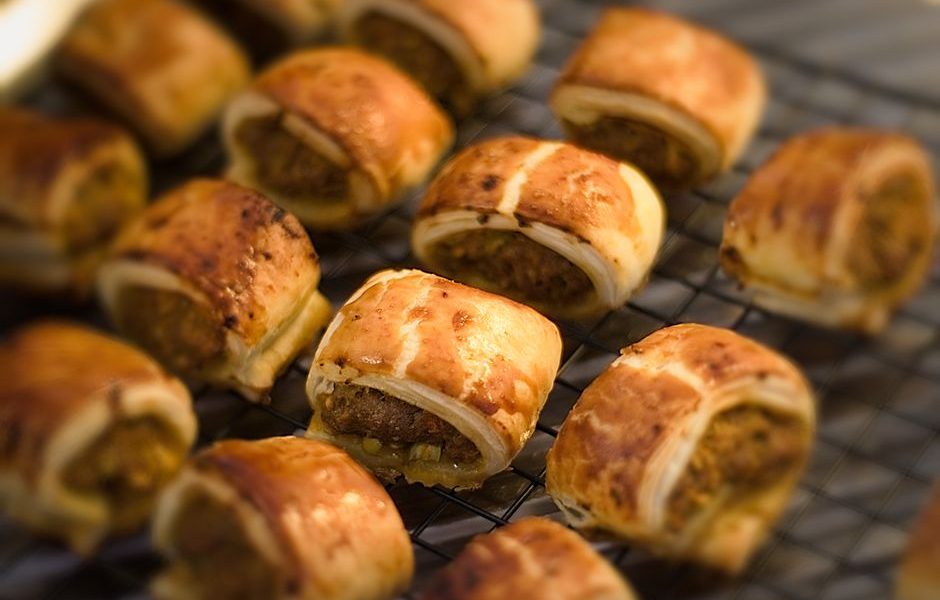
Want vegan sausage rolls with crisp pastry, a savoury filling, and enough fennel and sage to taste like proper British comfort food? The trick is not a fancy ingredient. It is controlling moisture. Keep the filling fairly dry, cool it before wrapping, and bake the rolls on a hot tray so the pastry starts cooking at once.
Why fennel and sage make vegan sausage rolls work
The best vegan sausage roll needs three things: a firm centre, enough fat to taste satisfying, and a sharp herbal flavour that stops the filling tasting flat. Fennel and sage handle the flavour job better than a long list of spices. Fennel gives the familiar sweet, anise-like note found in many traditional sausages, while sage adds a savoury, earthy edge.
Fennel seeds build the sausage flavour
Use 2 teaspoons of fennel seeds for 500g of vegan sausage mixture. Crush half of them lightly with the side of a knife and leave the rest whole. This gives you both a background flavour and small bursts of fennel in the finished roll. Toast the seeds in the pan for 30 to 45 seconds before adding the onion. Dry-toasting wakes up their oils, but stop as soon as they smell fragrant. Burnt fennel turns bitter quickly.
Sage gives the filling a savoury backbone
Fresh sage works best here because its flavour survives the oven without becoming dusty. Use 10 to 12 finely chopped leaves, or 2 teaspoons of dried sage if that is what you have. Add fresh sage after the onion has softened so it keeps some of its aroma. A teaspoon of Dijon mustard and 1 tablespoon of nutritional yeast add depth, but neither should dominate the herbs.
More garlic, smoked paprika, or chilli can make the rolls interesting, but too many strong flavours hide the sausage-like character.
Ingredients and amounts for 12 evenly sized rolls
Measure the filling before you start cutting the pastry. Uneven portions create thin rolls that split at one end and bulky rolls that stay soft in the centre. The quantities below make 12 snack-sized rolls or 6 larger lunch portions.
The filling and pastry list
| Ingredient | Amount | Purpose |
|---|---|---|
| Vegan sausages or sausage-style mince | 500g | Main filling |
| Ready-rolled vegan puff pastry | 2 sheets, about 320g each | Crisp outer layer |
| Brown onion | 1 medium, about 150g | Sweetness and moisture |
| Fennel seeds | 2 teaspoons | Sausage flavour |
| Fresh sage | 10 to 12 leaves | Earthy herbal flavour |
| Garlic | 2 cloves | Savoury depth |
| Dijon mustard | 1 tablespoon | Sharpness |
| Plant milk | 1 tablespoon | Pastry glaze |
Small additions that improve the texture
Add 1 tablespoon of nutritional yeast if the sausage mixture tastes mild. Add 2 tablespoons of fine breadcrumbs only if the mixture feels wet after mixing. Do not add breadcrumbs automatically; too much makes the filling dry and crumbly. Salt depends on the sausage mixture, so taste a small cooked spoonful before seasoning the whole bowl. Black pepper is usually enough.
Keep the pastry cold but flexible. If it becomes warm and greasy while you work, put it back in the fridge for 10 minutes. Cold pastry puffs better and is less likely to split around the filling.
How to make the rolls without soggy pastry
The most reliable method is to cook the aromatics first, cool the filling completely, then assemble quickly. Warm filling melts the pastry fat before the oven can create layers.
Follow these seven steps
- Heat the oven to 200°C fan or 220°C conventional. Put a heavy baking tray inside while the oven heats. A hot tray gives the pastry an immediate burst of heat.
- Toast the fennel seeds in a dry frying pan for 30 to 45 seconds. Add 1 tablespoon of olive oil, the finely diced onion, and a pinch of salt. Cook for 7 to 9 minutes until the onion is soft but not browned.
- Add the chopped garlic and sage. Cook for 1 minute, then remove the pan from the heat. Stir in the Dijon mustard and nutritional yeast.
- Remove the sausage skins if needed and crumble the filling into a bowl. Add the cooled onion mixture and black pepper. Mix with your hands until the herbs are spread evenly.
- Unroll the pastry and cut each sheet lengthways into three equal strips. Divide the filling into six portions, roll each portion into a log, and place one log along the centre of each strip.
- Brush one pastry edge with water, fold the pastry over the filling, and press the seam closed. Turn the seam underneath. Cut each long roll into two pieces and place them seam-side down on the hot tray.
- Brush with plant milk, slash two small cuts in the top of each roll, and bake for 22 to 28 minutes. They are ready when the pastry is deep golden and the base feels firm.
Cool them before judging the filling
Leave the rolls on the tray for 8 minutes, then move them to a rack. The centre firms as it cools. Cutting one open straight from the oven can make a properly cooked filling look softer than it really is. For packed lunches, cool the rolls fully before storing them in an airtight container. Reheat at 180°C for 8 to 10 minutes rather than microwaving them, which softens the pastry.
What makes vegan sausage rolls fail?
Most failures come from moisture, heat, or overfilling. The good news is that each problem has a clear fix.
Why is the bottom of the pastry soggy?
The filling was too wet, the tray was cold, or the oven temperature was low. Cook the onion until its liquid has evaporated, cool the filling, and preheat the tray. If your oven runs cool, use an oven thermometer; 200°C on the dial does not always mean 200°C inside.
Why did the rolls split open?
Usually the pastry was stretched too tightly or the filling was packed too firmly. Leave a small border around the filling, seal the edge with water, and place the seam underneath. Two shallow slashes on top let steam escape. Do not cut a deep channel through the pastry.
Why is the filling dry and crumbly?
The mixture probably contains too many breadcrumbs or spent too long in the oven. Add breadcrumbs only when the raw mixture is genuinely wet. If the sausage base is already firm, skip them. A tablespoon of olive oil in the onion mixture helps, but adding extra water does not; water creates steam and weakens the pastry.
Some products contain dairy or egg, and some have a very soft texture that leaks fat during baking. Check the label, then cook a teaspoon of the filling in a pan before committing to the whole batch.
Which vegan sausage filling gives the best result?
Richmond Meat Free Sausages are softer and milder, so they need careful cooling and may benefit from 1 tablespoon of breadcrumbs. THIS Isn’t Pork Sausages bring a stronger peppery flavour and work well when you want a bolder roll, but use less extra seasoning.
How the common options behave
| Texture | Best use |
|---|---|
| Firm and easy to crumble | Best all-purpose choice |
| Soft and mild | Good for children or gentle seasoning |
| Coarse and strongly seasoned | Best for a peppery, savoury filling |
When not to use a ready-made sausage
Skip ready-made vegan sausages when you need a very smooth filling, want to control the salt closely, or are cooking for someone with a specific allergy. A homemade base of cooked green lentils, walnuts, mushrooms, oats, and seasoning gives more control, but it will not copy the springy texture of a sausage product. It also needs more work to bind.
For a party tray, use the firmest option and cut each roll into three small pieces after baking. For a family lunch, make six larger rolls and serve them with mustard, pickle, or a sharp green salad. The recipe succeeds when the filling stays savoury and compact, the pastry stays cold, and the fennel remains noticeable without taking over.
| Goal | Best decision |
|---|---|
| Crisp pastry | Cold filling and a preheated tray |
| Classic flavour | Fennel, sage, mustard, and firm sausage filling |
| Less risk of splitting | Moderate filling, sealed seam underneath |