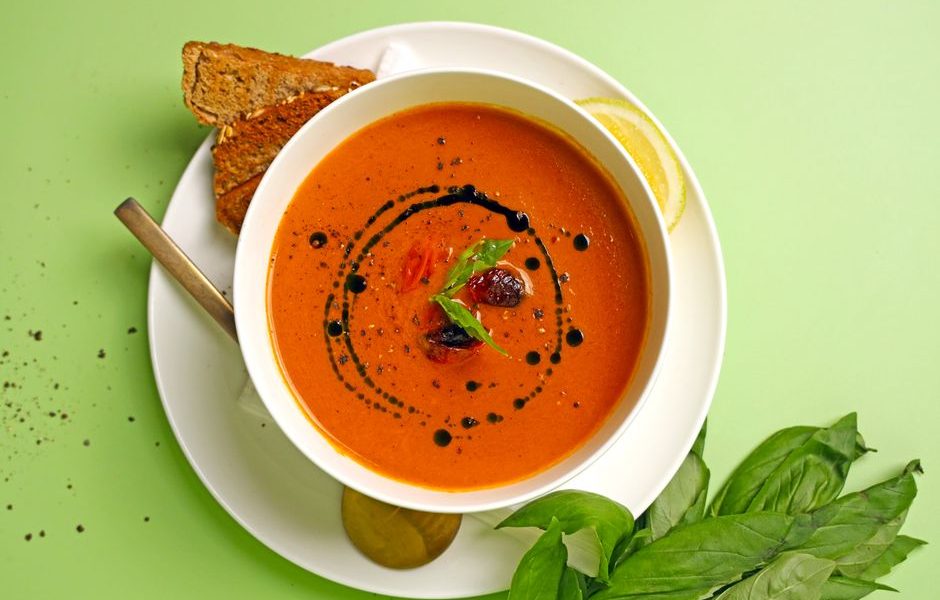
A common misconception is that tomato soup needs cream to taste rich. It does not. The real flavour comes from roasting ripe tomatoes until their edges darken, softening the onion, and blending the vegetables with enough stock to keep the taste bright. This recipe makes about 1.4 litres, or four generous bowls. It uses UK measurements, everyday ingredients and a simple oven method.
What goes into roasted tomato and basil soup
The best version starts with tomatoes that have enough flesh and natural sweetness to survive roasting. In the UK, ripe plum tomatoes work well in summer. In colder months, use good-quality vine tomatoes or combine fresh tomatoes with a 400g tin of chopped tomatoes. The tinned tomatoes add body without making the soup taste like pasta sauce.
Ingredients for four bowls
- 1.2kg ripe plum or vine tomatoes, halved
- 1 medium brown onion, cut into wedges
- 4 garlic cloves, left in their skins
- 2 tablespoons extra virgin olive oil
- 1 teaspoon fine sea salt
- Half a teaspoon of black pepper
- 500ml vegetable stock
- 20g fresh basil leaves, plus a few leaves to finish
- 1 teaspoon caster sugar only if the tomatoes taste sharp
- 1 tablespoon balsamic vinegar, added after blending if needed
Why these quantities work
The 1.2kg tomato base gives the soup a strong flavour after roasting. The onion supplies sweetness, while the garlic becomes soft and mellow inside its skin. Start with 500ml stock rather than adding the whole carton at once. Thick soup is easy to loosen; watery soup takes longer to correct. Salt also matters more than many cooks expect. Tomatoes can taste dull when the soup lacks salt, even after plenty of herbs have been added.
Choose vegetable stock with moderate salt. A very salty cube can hide the tomato flavour. For a nut-free and dairy-free recipe, use oat cream only as an optional finish, not as part of the base.
How to roast the vegetables without burning them
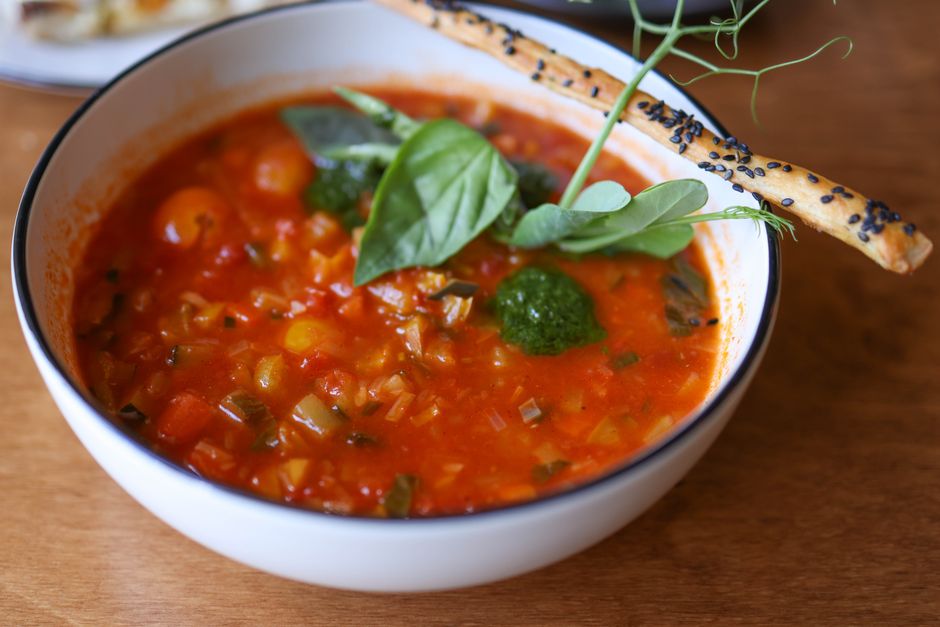
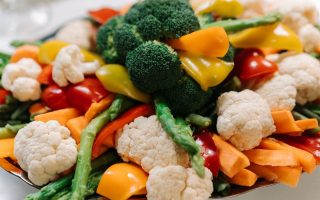
Roasting is the main flavour step, so give the tray enough space. Crowded vegetables steam instead of browning. Heat the oven to 220°C, or 200°C fan, and use a large shallow roasting tin. Place the tomato halves cut-side up for the first part of cooking. This keeps their juices in the tray and lets the exposed flesh colour gradually.
Roasting method
- Heat the oven to 220°C, or 200°C fan.
- Put the tomatoes, onion wedges and unpeeled garlic on a large tray.
- Toss with the olive oil, salt and pepper. Keep the tomatoes mostly cut-side up.
- Roast for 30 minutes.
- Turn the onion pieces and roast for another 10 to 15 minutes, until the tomato edges are dark golden and the garlic feels soft.
- Cool for 5 minutes. Squeeze the garlic from its skins.
- Transfer everything to a saucepan, add the stock and simmer for 10 minutes.
How to judge the tray
Do not wait for every tomato to become black. A few browned edges create depth; a fully charred tray creates bitterness. The onions should be soft and lightly coloured. If the tomatoes release a lot of water, leave the tray in for an extra 5 minutes. If the base starts catching, reduce the oven to 200°C and move the tray to a lower shelf.
This timing gives the soup a roasted taste while keeping enough fresh tomato flavour for the basil to lift. Add the basil after simmering, not before roasting. High heat turns its delicate flavour flat and can make the leaves look grey.
Why roasted tomato soup tastes flat or too sharp
Tomatoes contain a lot of water, and roasting removes some of it while browning the natural sugars. If the tray looks pale, the finished soup will often taste thin. Roast until the tomato edges have colour and the onion has softened.
Fixing a flat flavour
Taste the blended soup before changing it. Add salt in small amounts, using an eighth of a teaspoon at a time. Wait 30 seconds between additions. Then add one teaspoon of balsamic vinegar or a small squeeze of lemon juice. Acid gives the soup shape, but too much makes it sharp. A teaspoon of sugar can help only when the tomatoes are genuinely sour. It should not replace proper roasting.
Fixing bitterness and excess sweetness
Bitterness usually comes from burnt garlic, blackened tomato skin or too much vinegar. Remove any fully black pieces before blending. If the soup tastes sweet, add stock gradually and balance it with a little salt and vinegar. Fresh basil should go in at the end, when the soup is warm but no longer boiling hard. This preserves its green, peppery flavour.
For extra depth without cream, blend in 1 tablespoon of tahini or 2 tablespoons of cooked white beans. Both add body, but the white beans keep the tomato flavour cleaner. Add either option only after the main seasoning is right.
Which blender gives the smoothest vegan soup
Texture changes the result as much as flavour. A stick blender gives a rustic soup with visible tomato skin and basil flecks. A jug blender creates a smoother finish, but hot liquid expands, so never fill the jug to the top. Let the soup cool slightly, remove the centre cap if the manufacturer allows it, cover the opening with a folded tea towel and blend in small batches.
Equipment comparison
| Equipment | Best result |
|---|---|
| Foodi Blender & Soup Maker HB150UK | One-pot smooth soup with little hands-on work |
| E310 | Very smooth texture from cooled soup |
| Russell Hobbs 21480 Soup Maker | Small batches and simple weekday cooking |
| Basic stick blender | Fast, washable and slightly rustic soup |
What can go wrong with roasted tomato soup?
Why is the soup watery?
Watery soup usually comes from too much stock or tomatoes that released a large amount of juice. Simmer it uncovered for 10 to 15 minutes, stirring often. Do not add flour. It can make the texture pasty and hides the clean tomato taste. A tablespoon of cooked white beans is a better thickener if the soup still needs body.
Why does the soup taste bitter?
Check the garlic and tomato skins. Small dark spots are useful; black pieces are not. Remove them before blending. If the bitterness remains, add a little stock, half a teaspoon of sugar and a teaspoon of olive oil. Taste after each change. More basil will not fix burnt vegetables.
Can the soup be made without fresh basil?
Yes. Use 1 teaspoon of dried basil during the simmering stage, then add a small amount of parsley at the end if available. Dried basil has a deeper, less fresh taste, so the soup will not be identical. Frozen basil works better than dried basil for a green finish. Add it after blending and keep the soup below a hard boil.
The most common mistake is seasoning before the soup has reduced. Roasting, simmering and blending all change the balance. Taste once after blending, then make one adjustment at a time.
Which variations are worth making?
Keep the classic version if you want the clearest tomato and basil flavour. Variations help when you need more protein, heat or a different texture, but each one changes the balance. Add only one major variation at a time so the soup remains recognisable.
For a creamier soup without dairy
Blend in 100g of cooked cannellini beans or 75ml of unsweetened oat cream. Beans give a thicker, more filling soup with little extra flavour. Oat cream gives a softer finish but can make the tomato taste less sharp.
For heat or extra savoury depth
Add half a teaspoon of smoked paprika before roasting for a gentle smoky note. Use a pinch of chilli flakes when you want heat. For a deeper savoury taste, stir in 1 teaspoon of white miso after blending, once the soup has cooled slightly. Miso is salty, so reduce the stock seasoning first. Avoid adding all three options together. Smoked paprika, chilli and miso can cover the basil.
Do not choose this recipe when you need a clear consommé-style soup or a very light starter. Roasting creates a thick, concentrated bowl. For a lighter result, use 800g tomatoes, 650ml stock and skip the beans or oat cream.
How to store, reheat and serve the soup
Cool the soup quickly after cooking. Transfer it to a shallow container, leave the lid slightly open until the steam disappears, then refrigerate it within two hours. It keeps for up to three days in a fridge at 5°C or below. Reheat one portion in a saucepan over medium heat until steaming hot throughout. Stir often because thicker soup can catch on the base.
Freezing and reheating
Freeze the soup in 300ml portions for up to three months. Leave space in each container because liquid expands as it freezes. Defrost overnight in the fridge or use a saucepan over low heat, stirring as the ice melts. Add a splash of stock after thawing if the soup has thickened. Fresh basil added after reheating tastes better than basil frozen in the soup.
Final comparison
| Goal | Reason |
|---|---|
| Richest tomato flavour | Concentrates the tomatoes without making the soup heavy |
| Smoothest texture | Breaks down skins and onion more finely |
| Fastest clean-up | Blends in the cooking pan |
| Most filling vegan bowl | Adds body and plant protein without dairy |
| Best fresh finish | Keeps the colour and peppery aroma bright |