Verdict: The best vegan miso noodle soup uses a concentrated broth, keeps the miso below a hard boil and cooks noodles separately. That gives you a salty, savoury bowl with fresh greens instead of cloudy soup and swollen noodles.
This UK-friendly recipe makes two generous bowls in about 25 minutes.
What goes into a balanced vegan miso noodle soup?
The soup needs four things in the right order: savoury depth, salt, freshness and texture. Miso brings fermented flavour, but it does not replace every other seasoning. Soy sauce adds a sharper saltiness, rice vinegar stops the broth tasting heavy, and ginger and garlic give the bowl a clean lift.
The base for two bowls
| Ingredient | Amount | Purpose |
|---|---|---|
| Water or vegan stock | 750ml | Soup base |
| White or yellow miso | 3 tablespoons | Fermented savoury flavour |
| Soy sauce or tamari | 2 teaspoons | Salt and depth |
| Fresh ginger | 15g, finely grated | Warm spice |
| Garlic | 2 cloves, minced | Aromatic base |
| Noodles | 200g | Body and energy |
| Leafy greens | 150g | Freshness and texture |
| Rice vinegar | 1 tablespoon | Balance |
The balance to aim for
Use 750ml of liquid for 200g of noodles and 150g of greens. That ratio leaves enough broth for two bowls without washing out the miso. If you add mushrooms, sweetcorn or tofu, keep the liquid at 750ml unless the extra ingredients are very dry. More water means more seasoning, and adding miso by guesswork often produces a broth that is salty but still flat.
Choose white miso for a mild, slightly sweet soup. Yellow miso gives a stronger middle ground. Red miso tastes deeper and saltier, so start with two tablespoons and adjust after tasting.
How do you build a savoury miso broth without boiling it?
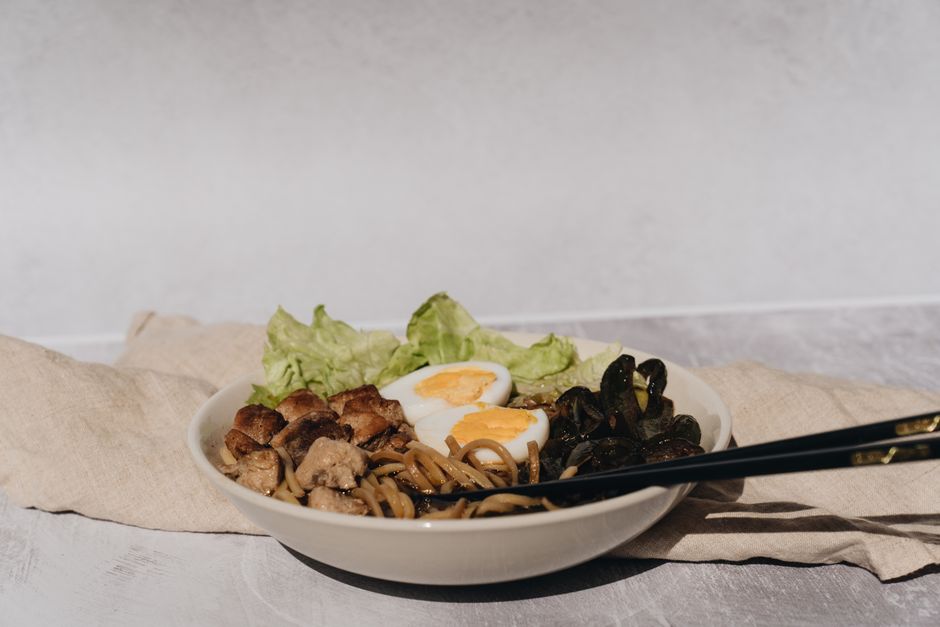
The main cooking mistake is treating miso like an ordinary stock cube. A rolling boil dulls its delicate fermented flavour and can make the broth taste harsh. Build the soup base first, then stir in the miso near the end.
Start with aromatics and a concentrated base
Warm 1 tablespoon of neutral oil in a medium saucepan over medium heat. Add the garlic and ginger and cook for 60 to 90 seconds, just until fragrant. Do not brown the garlic; burnt garlic spreads bitterness through the whole pot.
Add the water or vegan stock, 2 teaspoons of soy sauce, 1 teaspoon of sesame oil and 100g of sliced mushrooms if using them. Bring the liquid to a gentle simmer, then cook for 8 minutes. This gives the aromatics time to flavour the broth and lets the mushrooms soften without turning watery.
Add miso off the heat
Turn the heat to low. Ladle about 100ml of hot broth into a mug, add the miso and whisk until smooth. Pour that mixture back into the saucepan and stir. Add the rice vinegar, taste, and adjust with another teaspoon of soy sauce only if the broth needs more salt.
Keep the soup hot but below a hard boil for the rest of the recipe. The broth should taste a little stronger than you expect before the noodles and greens go in, because both dilute the seasoning. This simple check prevents the most common failure: a large bowl of noodles surrounded by weak, beige-tasting liquid.
How should you cook noodles and greens so they stay fresh?
Cook each ingredient for the time it actually needs. Noodles release starch, greens lose colour and mushrooms absorb liquid; putting everything into the saucepan at once gives you poor control.
- Prepare the greens first. Strip tough stems from kale, separate pak choi leaves from the thicker stalks, and leave baby spinach whole. Wash everything well, especially gritty kale.
- Cook the noodles separately. Use a second saucepan of boiling water and follow the packet time, removing the noodles about 30 seconds early. Drain them well. This keeps excess starch out of the miso broth.
- Add firm greens before tender greens. Put kale into the hot broth for 3 minutes. Add pak choi stalks for 90 seconds, then the leaves for 30 seconds. Add spinach only during the final 30 seconds.
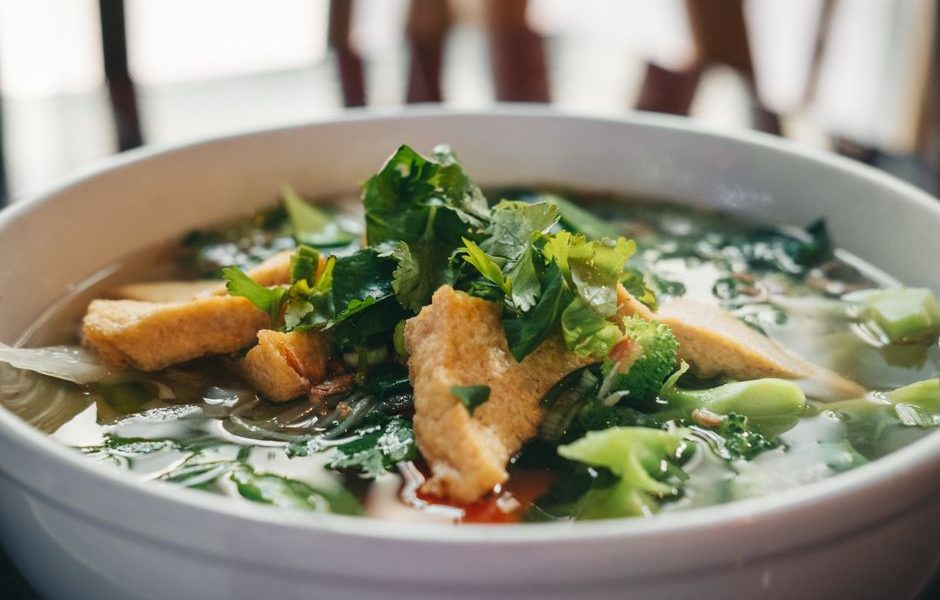
- Assemble rather than overcook. Divide the noodles between two bowls, pour over the broth, then place the greens on top. The residual heat finishes the vegetables without turning them grey.
- Finish with contrast. Add sliced spring onion, chilli flakes, toasted sesame seeds or a small squeeze of lime. Use one or two toppings, not all of them, so the miso remains the main flavour.
The two-minute finish
For the best texture, aim to serve the soup immediately after assembly. If it sits for 10 minutes, the noodles continue absorbing broth and the greens soften. Keep noodles and soup separate if you are cooking ahead, then reheat the broth gently and combine them just before eating.
Which UK ingredients can you swap, and when should you?
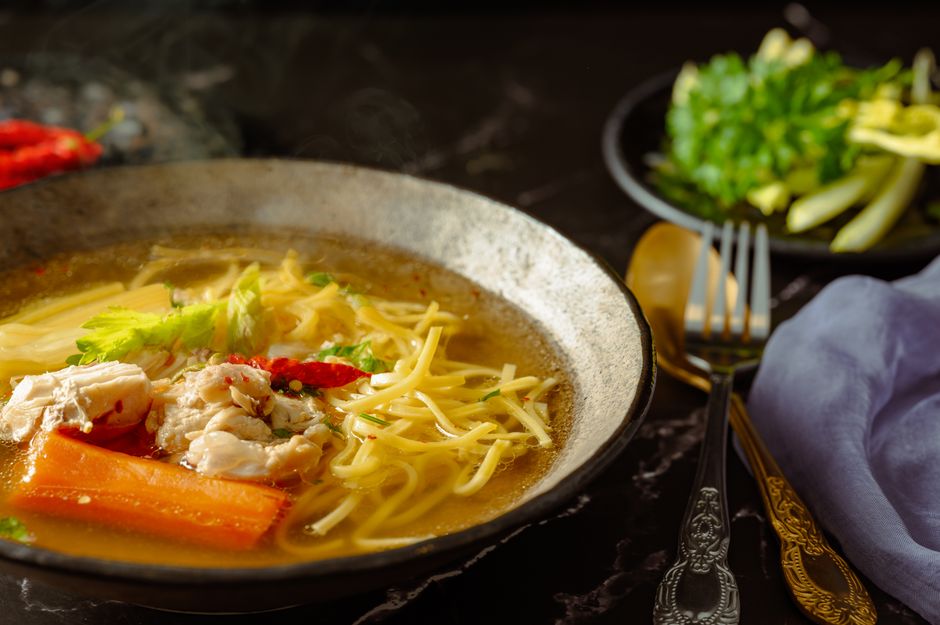
You do not need one exact noodle shape or a specialist green, but each swap changes the bowl’s texture and salt level.
Which noodles work best?
Fresh or vacuum-packed udon gives the chewiest result and can usually handle a short rinse before serving. Yutaka Udon Noodles are a practical example. Blue Dragon Rice Noodles cook faster and feel lighter, but they can turn soft if left in the broth. Dried wheat noodles also work; cook them separately and reduce the miso slightly if the cooking water tastes salty.
What can replace stock, pak choi or tamari?
Use spring greens, Savoy cabbage, tenderstem broccoli or frozen peas instead of pak choi.
Bottom line: For the most forgiving UK version, choose white miso, udon, spinach and a low-salt vegan stock. That combination gives the clearest broth and the smallest risk of an over-salted dinner.
Why does vegan miso noodle soup taste flat or go soggy?
When the broth tastes salty but lifeless, use ginger, spring onion or chilli rather than another spoonful of miso, because salt cannot create freshness. When the noodles are soft, cook them separately next time and serve at once; when the greens look grey, shorten their cooking time and use the residual heat in the bowl. This method keeps the recipe inexpensive, flexible and useful through the colder months, when fast soups with beans, greens and fermented ingredients will only become more practical in a UK kitchen.