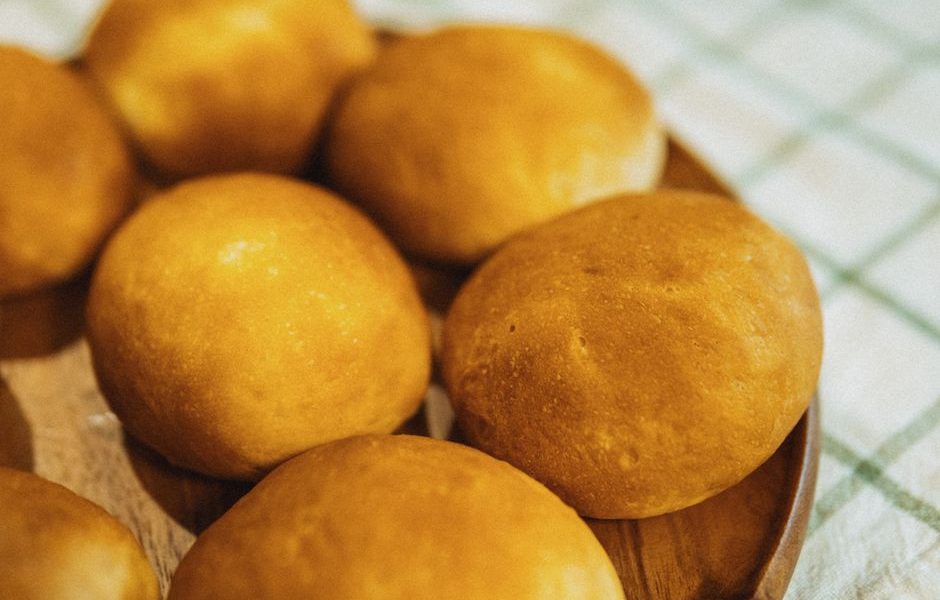
You pull the tray from the oven and find eight pale, heavy buns where soft, glossy spirals should be. The common misconception is that removing milk, butter, and eggs automatically makes hot cross buns dry. It does not. The real problem is usually too much flour, weak yeast, or a short second rise.
Vegan dough needs a little more care because eggs normally add water, fat, and structure at the same time. Plant milk replaces the liquid, while vegan butter supplies tenderness. The dough still needs enough gluten to trap gas, but adding flour until it feels completely dry creates tight buns with a crumbly centre.
The best method uses warm plant milk, a modest amount of fat, soaked fruit, and two full rises. Keep the dough slightly tacky, proof the shaped buns until visibly puffy, and brush them with syrup while they are hot. That combination produces soft centers, clear spice, and the traditional sticky finish.
Why vegan hot cross buns turn dense
The strongest verdict is simple: dense buns usually come from excess flour, not from the absence of dairy. Flour measurements vary by weight, humidity changes how much liquid the dough absorbs, and currants pull moisture from the crumb during baking. A recipe that feels firm before its first rise will often bake up heavy.
Yeast also needs the right environment. Plant milk should feel warm rather than hot, around 38°C to 43°C. Liquid above roughly 55°C can weaken or kill yeast. Salt improves flavour but slows fermentation when it sits directly on the yeast, so mix it through the flour first. Sugar feeds flavour and browning, yet a very sweet dough rises more slowly because sugar competes for available water.
Strong kneading matters because gluten forms the net that holds carbon dioxide. Knead by hand for 8 to 10 minutes, or use a stand mixer on low speed for 6 to 7 minutes. Stop when the dough stretches into a thin membrane before tearing. A smooth ball is not enough; the dough must also feel elastic. For most kitchens, a two-rise dough with 60 to 75 minutes for the first rise and 35 to 50 minutes for the second rise gives the best balance of volume and flavour.
Which vegan ingredients give the best texture?
Choose ingredients by function, not by label alone. A neutral, unsweetened plant milk keeps the dough balanced. A solid vegan butter gives a softer crumb than oil, while oil creates a slightly more tender but less rich bun. If your milk is already sweetened or vanilla-flavoured, reduce the added sugar and expect a different flavour.
| Ingredient | Useful specification | Best role in the dough |
|---|---|---|
| Oatly Barista Edition | 1 L carton, higher-fat oat drink | Rich liquid for a tender crumb and strong browning |
| Califia Farms Unsweetened Almondmilk | 48 fl oz carton, low-fat and neutral | Light dough with less sweetness and a clean spice flavour |
| Miyoko’s European Style Cultured Vegan Butter | 227 g tub, firm block-style vegan butter | Buttery flavour and soft texture without excess liquid |
| Earth Balance Vegan Buttery Sticks | 113 g sticks, measured like standard butter | Easy weighing for dough, filling, and pan greasing |
These brands are examples, not requirements. The label matters more than the logo: choose unsweetened milk, block-style vegan butter, and a fat that is solid when cool. Soft tub spreads can contain more water, which makes the dough sticky and can weaken the bun structure. For the clearest spice flavour, use fresh orange zest, ground cinnamon, and a small amount of ground allspice rather than a large quantity of mixed spice.
How to control moisture, gluten, and proofing
The dough should look slightly too soft before the first rise. That is the correct starting point. Follow these steps and adjust only after the dough has had time to hydrate.
- Warm the liquid carefully. Heat the plant milk until it feels comfortably warm on your wrist, about 40°C. Stir in the sugar and yeast, then wait 5 to 10 minutes. A creamy foam shows that the yeast is active, although instant yeast may produce only a small amount of foam.
- Hydrate the flour before adding more. Mix the flour, salt, cinnamon, allspice, and orange zest with the liquid. Rest the rough dough for 10 minutes. This short pause lets the flour absorb moisture and reduces the temptation to add too much flour.
- Build elasticity. Knead in softened vegan butter after the flour has formed a rough dough. Continue until the dough is stretchy and only lightly tacky. If it sticks to the bowl in a thick paste, add flour one tablespoon at a time.
- Soak the fruit. Cover raisins or currants with hot water for 10 minutes, then drain and pat them dry. Dry fruit steals less moisture from the dough after soaking, and dry surfaces prevent slippery pockets during shaping.
- Proof by appearance. The first rise is complete when the dough has nearly doubled. After shaping, the buns should look swollen and spring back slowly when pressed. A fast spring means under-proofing; a deep collapse means over-proofing.
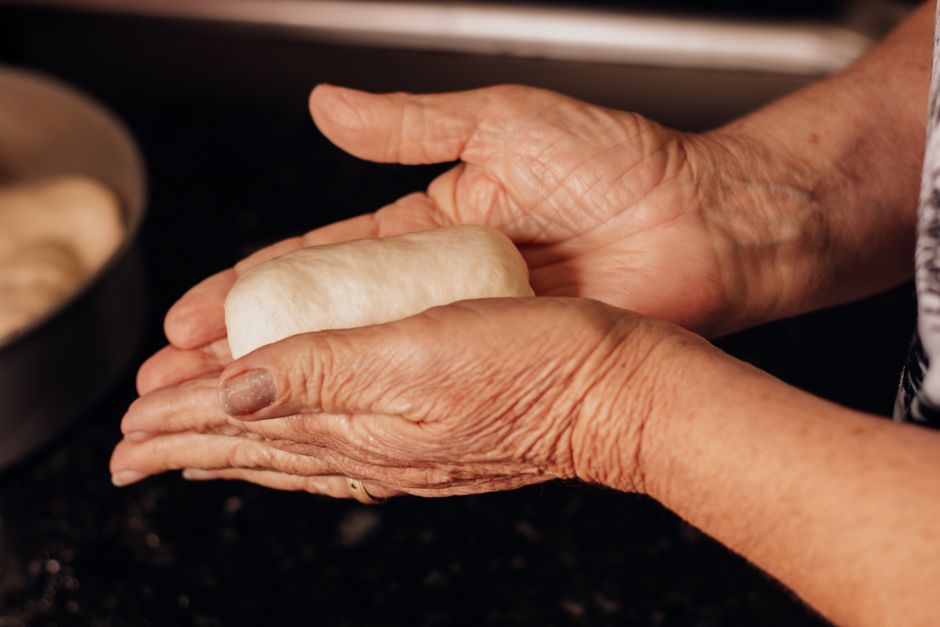
Use a kitchen scale for equal portions. Eight buns of about 95 to 105 g each bake more evenly than pieces cut by eye. Leave 2 to 3 cm between them so the sides touch during the second rise and create the familiar pull-apart shape.
What is the reliable vegan hot cross bun formula?
How much dough makes eight buns?
Use 500 g strong white bread flour, 300 g warm unsweetened plant milk, 60 g caster sugar, 7 g instant yeast, 8 g fine salt, 60 g softened vegan butter, 1 teaspoon cinnamon, one-half teaspoon allspice, the finely grated zest of one orange, and 150 g soaked raisins or currants. This ratio gives enough liquid for a soft dough without making shaping difficult.
When should the fruit and butter go in?
Mix the flour, yeast, sugar, salt, spices, zest, and plant milk first. Knead for 3 minutes, then add the butter in small pieces. Knead until elastic before folding in the drained fruit. Adding the fruit too early can tear the developing gluten, while adding butter before the flour hydrates can make the dough greasy and slow to strengthen.
How do you make the crosses and glaze?
For the cross paste, mix 75 g plain flour with 55 to 65 g water until smooth. Pipe thin crosses over the fully proofed buns. Bake at 200°C conventional or 180°C fan for 18 to 22 minutes, until deep golden. Brush immediately with a glaze made from 2 tablespoons apricot jam and 1 tablespoon hot water, or use a simple sugar syrup. Cool for at least 20 minutes before cutting so the crumb can finish setting.
Five mistakes that ruin the crumb
My firm recommendation: protect moisture before chasing a neat-looking dough. Most failed buns show one of five problems, and each has a clear fix.
- Adding flour until the dough feels dry. This is the most common error. Flour continues absorbing liquid during the rest and first rise. Stop adding flour when the dough is tacky but can be lifted with lightly greased hands. A dry dough cannot expand well, even when the yeast is active.
- Using cold ingredients. Cold plant milk and chilled butter can keep the dough below its useful fermentation range for a long time. The yeast still works, but the rise becomes slow and uneven. Bring the milk to about 40°C and soften the butter before mixing.
- Skipping the fruit soak. Dry raisins pull water from the crumb, especially near the fruit pockets. The result is a bun that seems soft on the outside but dry when torn open. Ten minutes in hot water solves much of the problem. Drain thoroughly so the dough does not become wet.
- Under-proofing the shaped buns. A shaped bun should look plump and tremble slightly when the tray moves. If the dough springs back immediately after a light finger press, wait another 10 minutes and check again. Baking too soon forces the oven to do the rising, which creates split sides and a tight centre.
- Over-baking for colour. Dark tops do not prove that the middle is ready. Vegan buns can brown quickly because plant milk and sugar react at the surface. If the tops darken after 12 minutes, cover them loosely with foil. Bake until the centre reaches about 93°C to 96°C, then glaze while hot.
Do not cut a bun straight from the oven to inspect it. Steam is still moving through the crumb, and an early cut can make a properly baked bun seem gummy. Let the batch cool for 20 minutes, then test one from the centre of the tray. That small pause gives a more accurate reading than judging the crust alone.