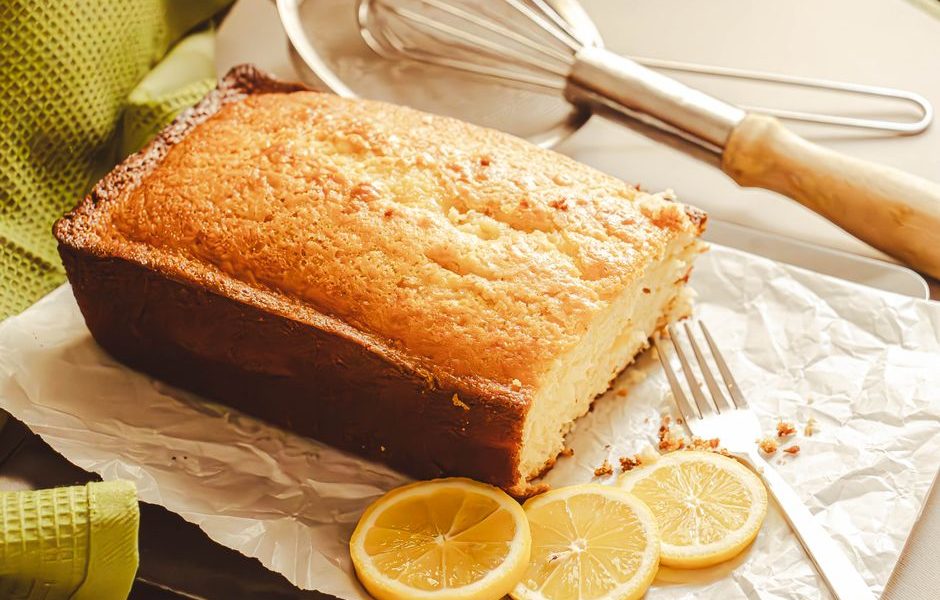
A medium lemon usually gives only 2 to 3 tablespoons of juice, but its zest carries most of the sharp, fresh flavour people expect from lemon cake. That is why this vegan lemon drizzle traybake uses zest in the sponge, juice in the syrup and a little more zest in the icing. The result is a soft UK-style cake with golden edges, a fine crumb and enough lemon flavour to cut through the sweetness.
What ingredients make the best vegan lemon traybake?
The exact ingredient list
Use a 20cm by 30cm rectangular tin for a traybake that cuts into 15 generous squares. Weigh the ingredients rather than measuring flour by volume; a packed cup can add enough flour to make a vegan sponge dry.
- 300g self-raising flour
- 200g caster sugar
- 1 teaspoon baking powder
- Half a teaspoon fine salt
- 250ml unsweetened plant milk
- 100ml neutral oil, such as rapeseed or sunflower oil
- 2 unwaxed lemons, finely zested
- 3 tablespoons lemon juice
- 1 teaspoon vanilla extract
- 100g icing sugar for the drizzle
- 2 tablespoons lemon juice for the drizzle
Why each ingredient earns its place
Oil keeps the crumb soft after chilling, while plant milk supplies the liquid that eggs would normally provide. Baking powder gives the cake lift, but the batter still needs gentle handling because overmixing develops gluten and makes the centre rubbery. Caster sugar dissolves quickly and gives a cleaner texture than granulated sugar.
The lemons should be unwaxed if possible. Wash them, dry them and zest only the yellow skin. The white pith underneath tastes bitter. For the most reliable flavour, zest the lemons before squeezing them because a squeezed lemon is awkward to hold and easy to scrape unevenly.
| Ingredient | Amount | Job in the cake |
|---|---|---|
| Self-raising flour | 300g | Structure and lift |
| Caster sugar | 200g | Sweetness and tender crumb |
| Plant milk | 250ml | Moisture and steam |
| Neutral oil | 100ml | Softness after cooling |
| Lemon zest | From 2 lemons | Fresh lemon aroma |
How do you make a vegan lemon drizzle traybake?

Mix the batter without making it heavy
- Heat the oven to 180°C conventional or 160°C fan. Grease the tin and line the base and two long sides with baking paper.
- Whisk the flour, caster sugar, baking powder and salt in a large bowl. Break up any flour lumps with the whisk.
- In a jug, combine the plant milk, oil, lemon zest, lemon juice and vanilla.
- Pour the wet mixture into the dry mixture. Fold with a spatula until no dry flour remains. Stop there.
- Spread the batter into the tin. Push it into the corners, then level the top with the back of a spoon.
- Bake for 30 to 35 minutes. The centre should spring back when pressed lightly, and a skewer should come out with a few moist crumbs.
Make and apply the lemon drizzle
Stir 100g icing sugar with 2 tablespoons lemon juice while the cake bakes. The mixture should run slowly from a spoon. If it looks thin, add more icing sugar by the teaspoon. If it is stiff, add a few drops of juice.
Leave the baked cake in the tin for 10 minutes. Pierce the surface all over with a skewer, reaching almost to the bottom, then spoon the drizzle across the warm sponge. It will soak into the holes and form a thin, bright layer on top. Do not pour it over a piping-hot cake straight from the oven; the syrup will run to the edges and leave the centre less flavoured.
Cool completely before cutting. A sharp knife gives cleaner squares if you wipe the blade between cuts. The cake tastes good warm, but the crumb becomes more settled and moist after two hours.
Why does vegan lemon cake sometimes turn out dry or dense?
The texture problems that matter most
Dry cake usually starts with too much flour. Scooping flour straight from the bag compresses it, so use scales. The second common cause is overbaking. Start checking at 28 minutes, especially if your tin is dark metal, because dark tins absorb heat faster than pale aluminium.
Dense cake often comes from mixing after the flour disappears. Vegan batter has no eggs to trap air in the same way, so the lift comes from baking powder, steam and the air you keep in the mixture. Fold with a spatula using broad strokes. Ten extra turns can make a noticeable difference.
How to rescue common mistakes
- If the top browns before the centre cooks, cover it loosely with foil and continue baking in 5-minute bursts.
- If the sponge is dry, pierce it while warm and brush it with 2 tablespoons of extra lemon juice mixed with 1 tablespoon of caster sugar.
- If the cake sinks, check that the oven was fully heated and that the baking powder was fresh. A sunken centre also means the oven door opened too early.
- If the drizzle tastes harsh, add 1 tablespoon of icing sugar. Lemon intensity softens after the cake rests.
- If the cake sticks, chill it for 20 minutes, then lift it out using the baking-paper overhang.
Do not add extra lemon juice to the batter simply because you want a stronger flavour. Too much liquid weakens the structure. Put the extra lemon into the drizzle instead.
Which plant ingredients work best in this cake?
Can you use oat, soy or almond milk?
Yes, but each one gives a slightly different result. Oat milk gives a softer, sweeter sponge. Almond milk works, but its flavour can disappear under the lemon.
Choose an unsweetened version. Sweetened milk adds sugar that you have not measured, and flavoured milk can make the finished cake taste artificial. Avoid thick coconut milk from a can; its fat and water separate, and the batter can bake unevenly.
Which vegan block or oil should you choose?
Oil gives the most reliable moisture because it stays liquid when the cake cools. Let the melted block cool until warm rather than hot before mixing it with the plant milk.
A vegan butter version tastes richer on the day, but the oil version stays soft for longer and has less risk of a heavy base. Do not use extra-virgin olive oil unless you specifically want a grassy, savoury note.
What should you serve with a vegan lemon drizzle traybake?
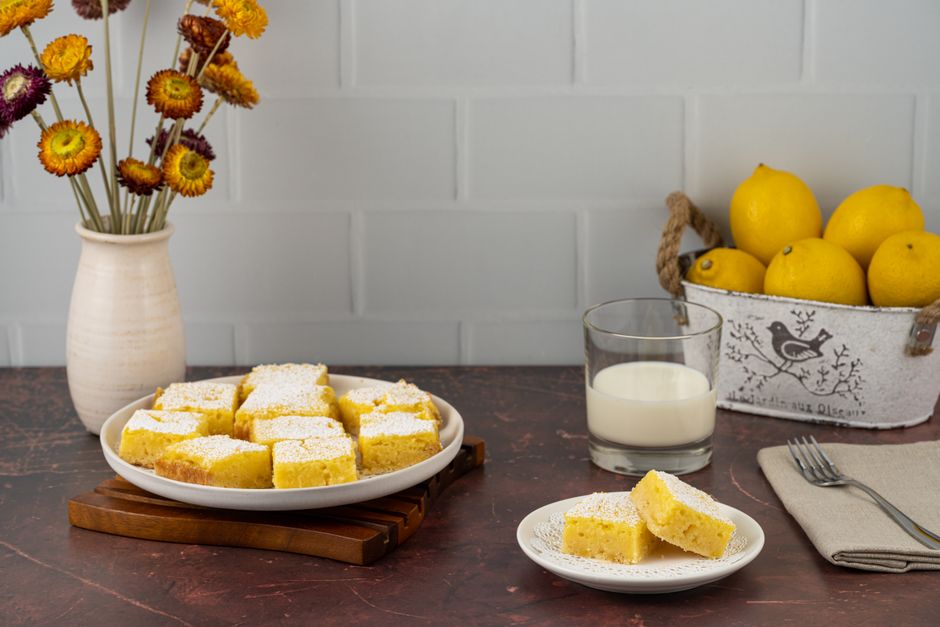
When a simple finish is the right choice
Let the cake cool fully, then dust the top with a small amount of icing sugar. Add thin strips of lemon zest only if you want a sharper look; they do not need extra sugar.
Serve each square at room temperature. Cold cake firms up because the oil thickens, while a warm slice can seem softer and sweeter than it really is. Store the traybake in an airtight tin for up to four days. Do not refrigerate it unless the room is very warm, as the fridge makes the crumb feel firm and dull.
When a topping improves the cake
A thin lemon icing works when the sponge needs a more polished finish. Mix 150g icing sugar with 2 to 3 tablespoons lemon juice and spread it over the completely cold cake. The icing should set in about 30 minutes.
Do not cover the cake with a thick buttercream. It hides the lemon, makes the portions messy and turns a light traybake into a heavy dessert. The best version keeps the sponge, syrup and citrus in balance.
How long does vegan lemon drizzle traybake keep?
Storage and freezing
Keep the cooled cake in a sealed tin at room temperature for up to four days. Place baking paper between layers if you stack the squares. The drizzle may remain slightly sticky, so avoid plastic wrap pressed directly onto the surface.
To freeze it, cut the cake into squares and wrap each piece in baking paper followed by foil or a freezer-safe container. Freeze for up to three months. Thaw at room temperature for 90 minutes, then leave the pieces uncovered for 10 minutes so condensation does not soften the top.