A vegan plum tart does not need egg, dairy butter, or a complicated substitute to hold together. The real problem is excess moisture: juicy plums soak the pastry, then turn a crisp tart into a soft one. Control the water, chill the dough, and bake the crust before adding the fruit. That is the whole game.
Why this vegan plum tart works without eggs
The common misconception is that eggs provide all the structure in a fruit tart. They do not. In this recipe, the almond crust gets its shape from flour, ground almonds, chilled vegan block, and a short bake before the filling goes in. The fruit stays in place because cornflour thickens the plum juices as they heat. No flax egg or commercial egg replacer is needed.
The best result comes from managing three things: fat temperature, fruit moisture, and oven heat. Cold fat creates small pockets in the dough, while the flour and almonds form a firm shell around them. Ripe but firm plums give you flavour without releasing a flood of juice. A hot oven sets the base before the fruit has time to steam it soft.
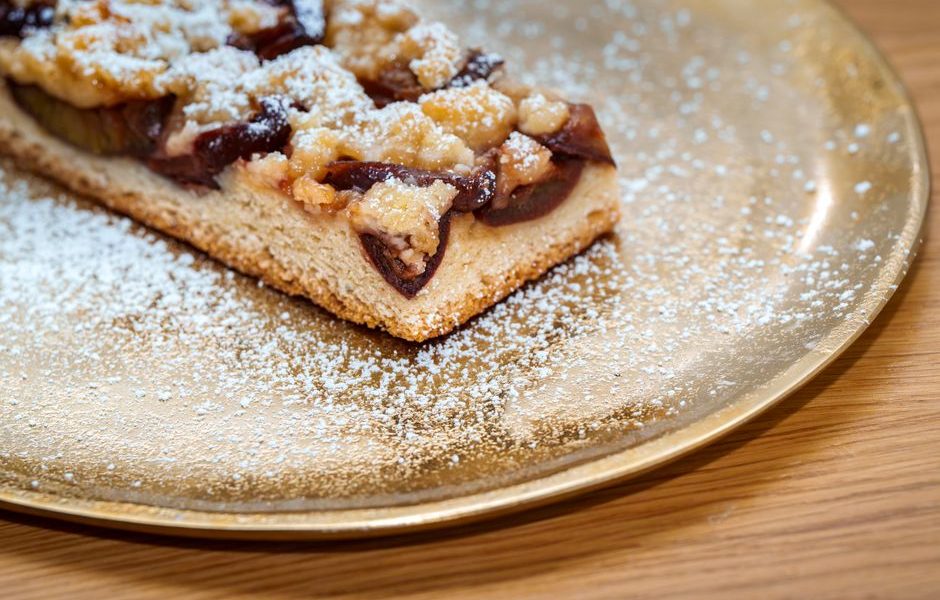
Use a 23cm loose-bottom tart tin. It gives the crust enough depth for the plums and lets you lift the finished tart out without attacking the edges with a knife. The finished tart should have a browned rim, a dry-looking base, and plum slices that still hold their shape.
Ingredients, quantities, and the best UK swaps
Weigh the ingredients. Cups invite errors here, especially with flour and ground almonds.
| Ingredient | Amount |
|---|---|
| Plain flour | 200g |
| Ground almonds | 75g |
| Icing sugar | 60g |
| Vegan block | 120g |
| Plums | 700g |
| Caster sugar | 45g |
| Cornflour | 25g |
| Lemon juice | 1 tablespoon |
Choose the right vegan fat
Use a firm block, not a soft tub spread. Tub spreads contain more water and can make the crust greasy or weak. Keep the block in the fridge until the moment you use it. If you only have a spread, reduce the cold water to 1 tablespoon and chill the shaped crust for an extra 20 minutes.
Choose plums that hold their shape
Press the skin gently. A good tart plum gives slightly but does not collapse. Very soft plums are better for compote. Cut each plum into 6 or 8 wedges, depending on size, and discard the stones. Do not peel them; the skins add colour and help the slices stay intact.
How to make the tart without a soggy bottom
The method is simple, but the order matters. Keep the dough cool and give the base a head start in the oven. A fan oven runs hotter around the edges, so use 170C fan or 190C conventional. Heat the oven fully before the tart goes in.
- Make the dough. Mix 200g plain flour, 75g ground almonds, 60g icing sugar, and a pinch of salt. Rub in 120g chilled vegan block with your fingertips until the mixture resembles coarse breadcrumbs. Add 2 tablespoons of cold water and press the mixture together. Add the third tablespoon only if dry crumbs remain.
- Chill it. Shape the dough into a flat disc, wrap it, and chill for 30 minutes. Do not knead it like bread. Kneading develops gluten and makes the baked crust tough.
- Line the tin. Roll the dough between two sheets of baking paper to roughly 3mm thick. Peel away the top sheet, lower the pastry into the tin, and press it into the corners. Patch cracks with scraps. Trim the rim, then chill the lined tin for 20 minutes.
- Blind bake the shell. Prick the base lightly with a fork. Cover it with baking paper and fill with ceramic baking beans or dried pulses. Bake for 15 minutes, remove the paper and weights, then bake for another 8 minutes. The base should look dry but not dark brown.
- Prepare the fruit. Toss 700g plum wedges with 45g caster sugar, 25g cornflour, 1 tablespoon lemon juice, and 1 teaspoon cinnamon. Leave the mixture for no more than 5 minutes. Longer resting draws out more liquid.
- Fill the tart. Arrange the plums in overlapping circles, leaving any watery liquid in the bowl. A crowded centre is fine; a pool of juice is not.
- Finish baking. Bake at 170C fan for 30 to 35 minutes, until the crust is deep golden and the plum juices bubble thickly. Cool in the tin for at least 45 minutes before slicing.
The tart may look slightly loose when it first leaves the oven. That is normal. The cornflour thickens as the fruit cools, and the crust firms as the vegan fat sets again.
What goes wrong with vegan fruit tart pastry
Most failed tarts do not fail because vegan baking is difficult. They fail because the baker treats the pastry like a sponge and the plums like decoration. Pastry absorbs water. Plums release water. Your job is to keep those two stages apart for as long as possible.
Why is the crust soft underneath?
The usual cause is underbaking during the blind bake. If the base still looks pale and damp when you add the fruit, it will stay pale and damp. Bake it uncovered for the full 8 minutes after removing the weights. A metal tart tin transfers heat faster than ceramic, so it gives the strongest base. If you use ceramic, add 5 minutes to the blind bake.
Why did the sides collapse?
Warm dough slides down the tin. The pastry needs two chilling stages: 30 minutes before rolling and 20 minutes after lining. Do not stretch the pastry to fit the corners. Stretching creates tension, and the sides pull down when the dough heats. Press the pastry gently into place and trim it level with the rim.
Why did the filling turn watery?
Some plums simply contain more juice. Very ripe fruit, a long sugar rest, and an overcrowded tart all increase the problem. Use firm plums, coat them with cornflour just before filling, and leave the liquid behind. If the baked filling still looks loose, cool the tart completely before judging it. Slicing at 10 minutes is almost guaranteed to produce a puddle.
Do not solve a wet filling by adding extra flour to the crust. That makes the pastry heavy while leaving the fruit problem untouched. Fix the fruit at the fruit stage.
Can you change the flour, fruit, or sweetener?
Yes, but each swap changes the texture. The almond crust is forgiving until you remove too many of its dry ingredients or add too much liquid.
Can you make it nut-free?
Replace the 75g ground almonds with 50g plain flour and 25g fine oat flour. The crust will taste less rich and will brown a little faster, but it will still hold. Do not replace the almonds with 75g extra flour without adding the oat flour; the result can become dense and chalky.
Can you use apples or berries instead of plums?
For apples, use 700g peeled and thinly sliced cooking apples, add 35g sugar, and bake for 40 to 45 minutes. For blackberries, use 500g berries with 20g cornflour and 40g sugar. Blackberries release more liquid than firm plums, so keep the tart chilled before baking and expect a softer filling.
Can you use wholemeal flour?
Use no more than 75g wholemeal flour and keep 125g plain flour. More wholemeal flour makes the crust crumbly because the bran cuts through the gluten network. The flavour is good, but the tart becomes harder to lift in neat slices. For the cleanest finish, plain flour wins.
Spend the effort on firm vegan block, good plums, and a proper blind bake.
How to serve and store the finished tart
Serve it slightly warm with cold vegan custard. That contrast gives the tart its best texture: crisp edges, soft almond crumb, sharp fruit, and a cool sauce. Leave the tart in the tin for at least 45 minutes, then lift it onto a board and cut it with a sharp serrated knife.
Best serving temperature
For clean slices, serve it at room temperature after a full hour of cooling. For a softer dessert, warm individual slices at 150C for 8 minutes. Do not microwave the whole tart; the microwave softens the crust unevenly and turns the fruit juices runny again.
How long does it keep?
Keep the cooled tart covered at room temperature for up to 24 hours. After that, refrigerate it for up to 3 days. The fridge protects the fruit but makes the pastry firm, so warm slices briefly before serving. Freeze individual slices for up to 1 month, wrapped tightly, and reheat them from frozen at 160C fan for 15 to 18 minutes.
The final verdict
This vegan plum tart works best when you stop trying to imitate an egg custard tart. It is a crisp pastry shell with a nutty almond base and concentrated plum filling. The winning method is clear: firm vegan block, 23cm metal tin, 3mm pastry, two chill stages, an 8-minute uncovered blind bake, and 45 minutes of cooling.
The tart does not need eggs to hold together. It needs less water, more control, and enough time to set before the first slice hits the plate.