One 300g pack of noodles can make four generous lunch portions, but only if you cool them properly.
What makes a cold peanut noodle salad work?
The real problem is balance
A cold noodle salad needs more contrast than a hot bowl. Chilled food tastes less aromatic, so a mild sauce can seem flat after an hour in the fridge. Peanut butter brings fat and body. Soy sauce adds salt. Lime or rice vinegar supplies the sharp edge that stops the dressing tasting heavy. A little maple syrup rounds it off, while chilli and ginger keep the bowl lively.
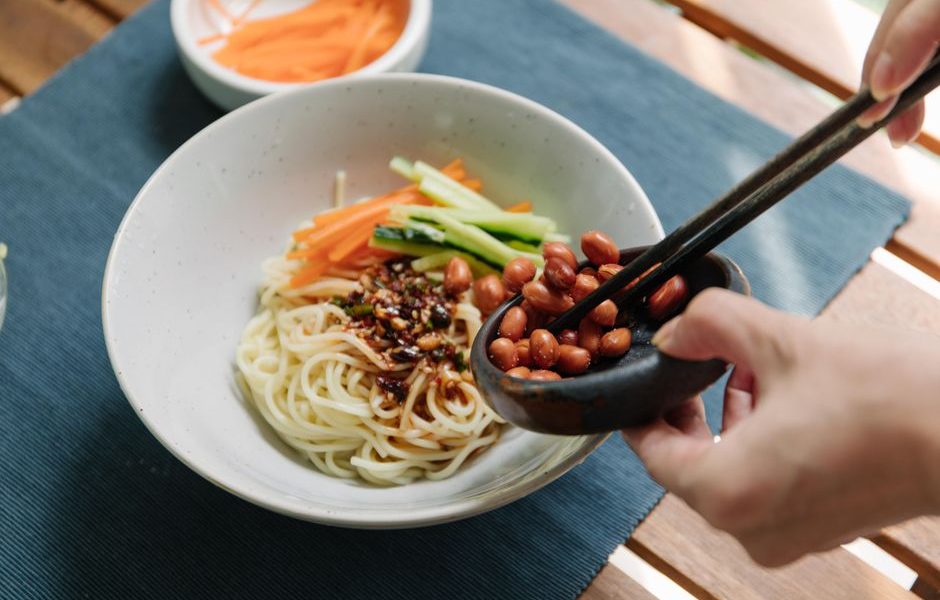
You want noodles coated in a thin, glossy layer, with crisp vegetables doing some of the work. If the sauce sits in a thick puddle at the bottom of the bowl, you have made peanut porridge with noodles.
The best texture has three layers
Use springy noodles, crunchy vegetables and a smooth dressing. Cucumber gives cool wateriness, carrot gives sweetness and bite, and spring onion adds a fresh onion flavour. Toasted sesame seeds are useful because they add crunch without making the salad bulky.
Keep the vegetables raw and slice them thinly. Large chunks make each forkful awkward, while fine matchsticks spread the flavour through the bowl. The winning ratio is roughly two parts noodles to one part vegetables by weight. That gives you a proper meal rather than a bowl of noodles wearing a few garnishes.
How do you cook noodles that stay springy when cold?
The reliable four-step method
- Bring a large pan of water to a full boil. Use at least two litres for 300g dried noodles so the water does not cool too much.
- Cook the noodles for one minute less than the packet time. They should feel firm in the centre because the dressing softens them later.
- Drain immediately, then rinse under cold running water for 30 to 45 seconds. Toss them with your fingers so the water reaches the middle of the pile.
- Drain again and shake off excess water. Leave them in the colander for five minutes before adding the dressing.
The mistake that ruins the bowl
Do not leave cooked noodles sitting in warm water while you prepare the sauce. They keep cooking and release starch, which creates the gummy texture people often blame on peanut butter. Do not rinse with lukewarm water either. Cold water stops the cooking and washes away loose surface starch.
If it feels soft already, the finished salad will be softer still. For fresh straight-to-wok noodles, skip boiling and rinse them in hot water for 30 seconds before cooling. The verdict: undercook slightly, cool fast and drain thoroughly.
What is the correct peanut sauce ratio?
Start with the paste, not the liquid
Put 120g peanut butter in a bowl with the soy sauce, rice vinegar, maple syrup, sesame oil, garlic, ginger and lime juice. Stir until it becomes a thick paste. Only then add 60 to 90ml cold water, one tablespoon at a time. This order matters. Adding all the water at once can leave lumps floating in a thin sauce, while stirring the peanut butter with the salty and acidic ingredients first gives you a smooth base.
The finished dressing should fall from a spoon in a slow ribbon. It should coat the noodles without clinging in heavy clumps. If it tastes dull, add lime juice. If it tastes harsh, add half a teaspoon more maple syrup. If it tastes too salty, loosen it with water and add more peanut butter. Do not solve every problem with soy sauce.
Why chilled sauce needs extra sharpness
Cold temperatures mute aroma and make fat feel heavier on the tongue. That is why a dressing that tastes perfect while warm can seem greasy from the fridge. The noodles absorb flavour quickly.
Keep a few spoonfuls aside if you plan to eat the leftovers the next day; the noodles will absorb more dressing overnight.
Why does cold peanut noodle salad fail?
Why is the sauce too thick?
Peanut butter tightens as it meets cold noodles. Whisk in cold water one tablespoon at a time until the dressing moves easily. If you add more oil, the salad may taste greasy without becoming looser. Water is the correct fix.
Why does the salad taste flat the next day?
The noodles have absorbed salt, acid and moisture. Add one teaspoon of rice vinegar, a squeeze of lime and a splash of water, then toss again. Fresh spring onion or coriander also wakes up a stored portion.
Another common failure is adding cucumber too early and storing the salad for several days. Cucumber releases water and turns the bottom of the container thin.
How can you adapt the salad without losing its balance?
For a fuller meal
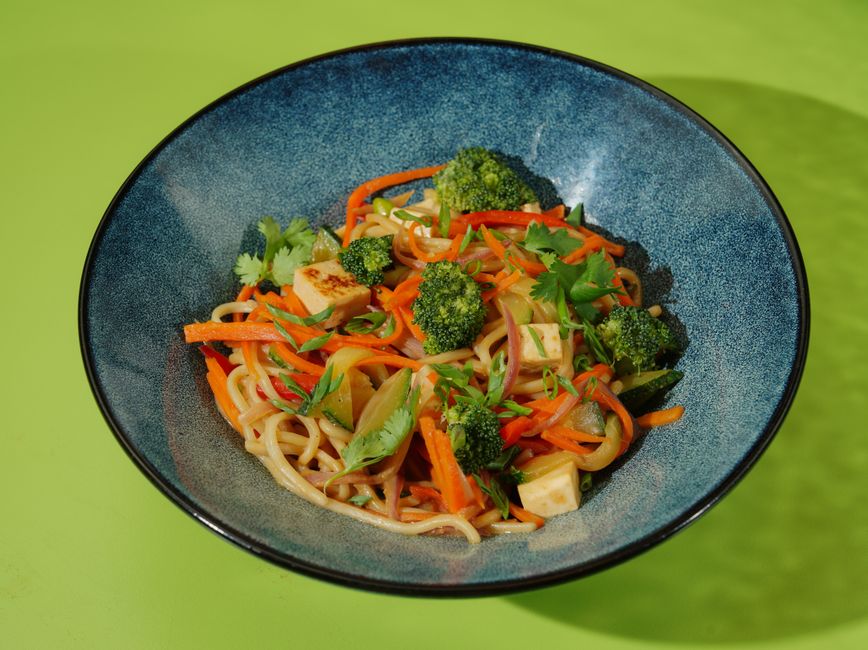
- Add 200g edamame or 250g pressed tofu for extra protein.
- Use shredded red cabbage when you need vegetables that stay crisp overnight.
- Add sliced radish for peppery crunch, but keep the amount below 100g so it does not overpower the sauce.
- Scatter roasted peanuts on top just before serving rather than stirring them through.
When not to use peanut butter
Skip peanut butter if you are feeding someone with a peanut allergy, even if you plan to use a separate spoon. Use sunflower seed butter and add a little extra lime, or make a tahini dressing with one tablespoon of maple syrup and more water. The result will be less sweet and more bitter, but it still works.
Skip cold noodles altogether if you want a warming dinner or if the salad needs to travel without refrigeration. A hot noodle stir-fry is safer for a long journey and handles soft vegetables better. For picnics, pack the dressing separately and mix it just before eating.
Cold noodle salads are moving beyond a summer side dish; with better plant proteins and sharper sauces, they are becoming one of the most practical vegan lunch formats in the UK.